




Table of contents
In San Francisco, experimentation can feel impossible for many small business owners. High rent, long leases, permitting hurdles, and upfront startup costs make it difficult to try something new without committing years of your life and a significant amount of capital.
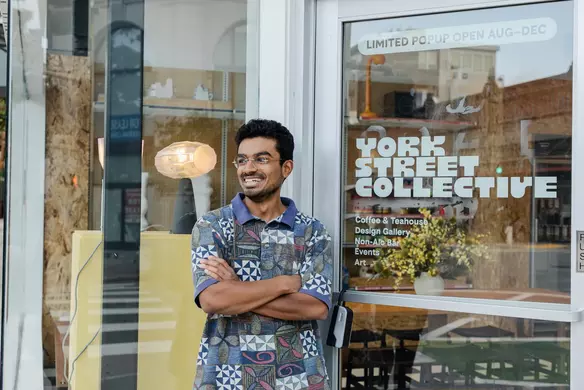
These features led to a type of cultural evolution and creation of a new class of multi-concept business: really serious pop-ups. San Francisco’s pop-up scene is a whole thriving ecosystem of its own — from line-worthy Asian pastries to hidden alley yakitori grill masters. My experience running our nonalcoholic cocktail bar and community space, York Street Collective, at the Corner Store was like a laboratory of what intentional gathering and business experimentation could look like — one where neighbors were invited to participate and co-create together with us.
What started as a pop-up retail, cafe, bar, and event space on one of the city’s highest-traffic corridors became a way to rethink what business ownership can look like in San Francisco today.
The community pop-up concept that started everything
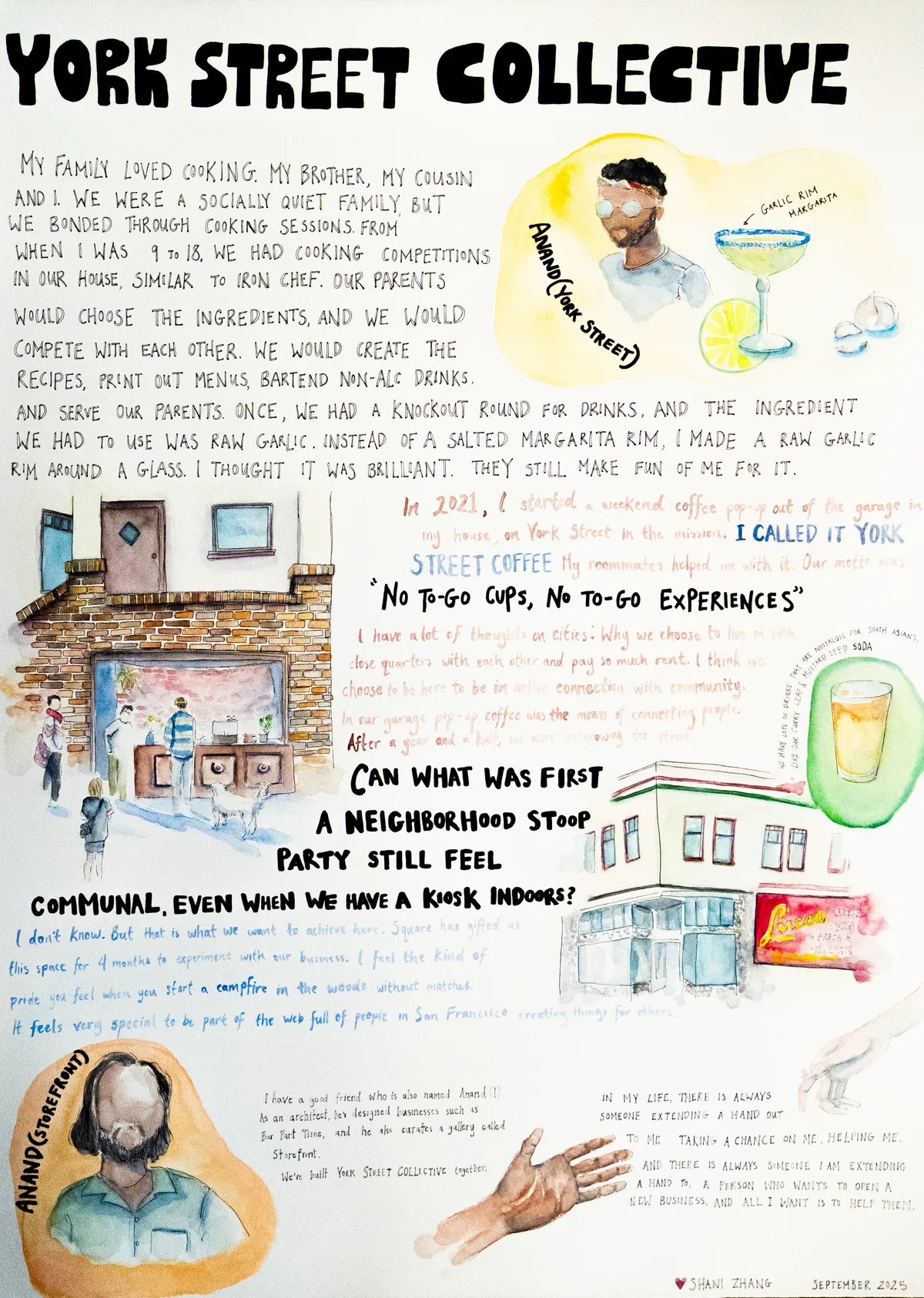
I started the precursor to York Street Collective after moving back to the Mission during the pandemic. My roommates and I opened our garage and served coffee to neighbors. The goal was simple. Create a safe, approachable place where neighbors could meet each other over something affordable and familiar. We called it York Street Coffee.
Sixty events and two years later, that garage became much more than a coffee pop-up. We invited other San Francisco neighbors with a passion or dream: ceramicists and DJs, winemakers and bakers, vintage collectors and even local politicians. The early seeds of our future “collective” approach were already planted. Every collaborator who came was courageous in sharing their creations with others — and that was reflected in how our audience showed up. People had their guards down and often came alone, knowing they’d meet someone new. People impressed first dates, jumping the line to say hi to us. Intergenerational book clubs and pickleball groups formed.
It showed me that community will grow to fill the container it is given. Community is a powerful force, and nurturing it can power real growth.
When we were invited to do the residency at the Corner Store with Square and SF New Deal, I kept returning to one question: What if a business treated its relationship with the neighborhood as an ongoing conversation, not just a transaction? What if we loosened the grip on what York Street was and allowed for experimentation, identity-bending, and platforming of other brands besides our own?
Turning the Corner Store into a shared neighborhood space
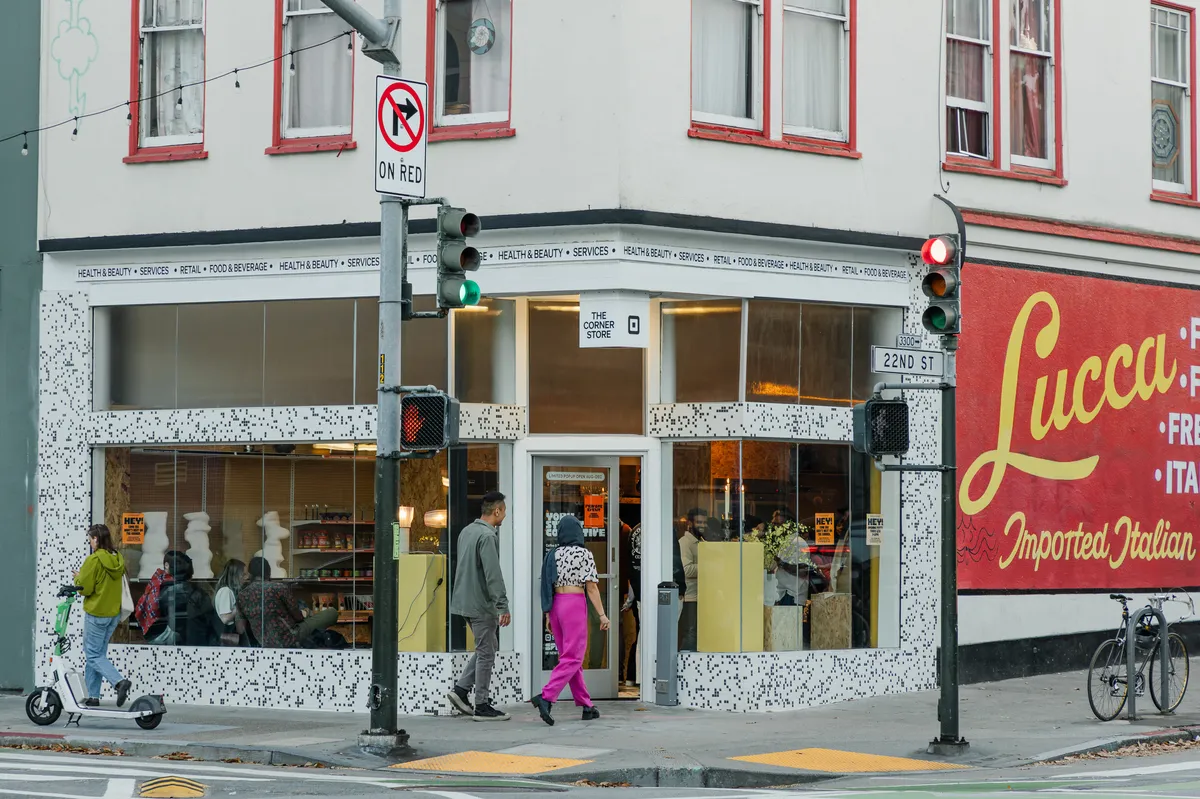
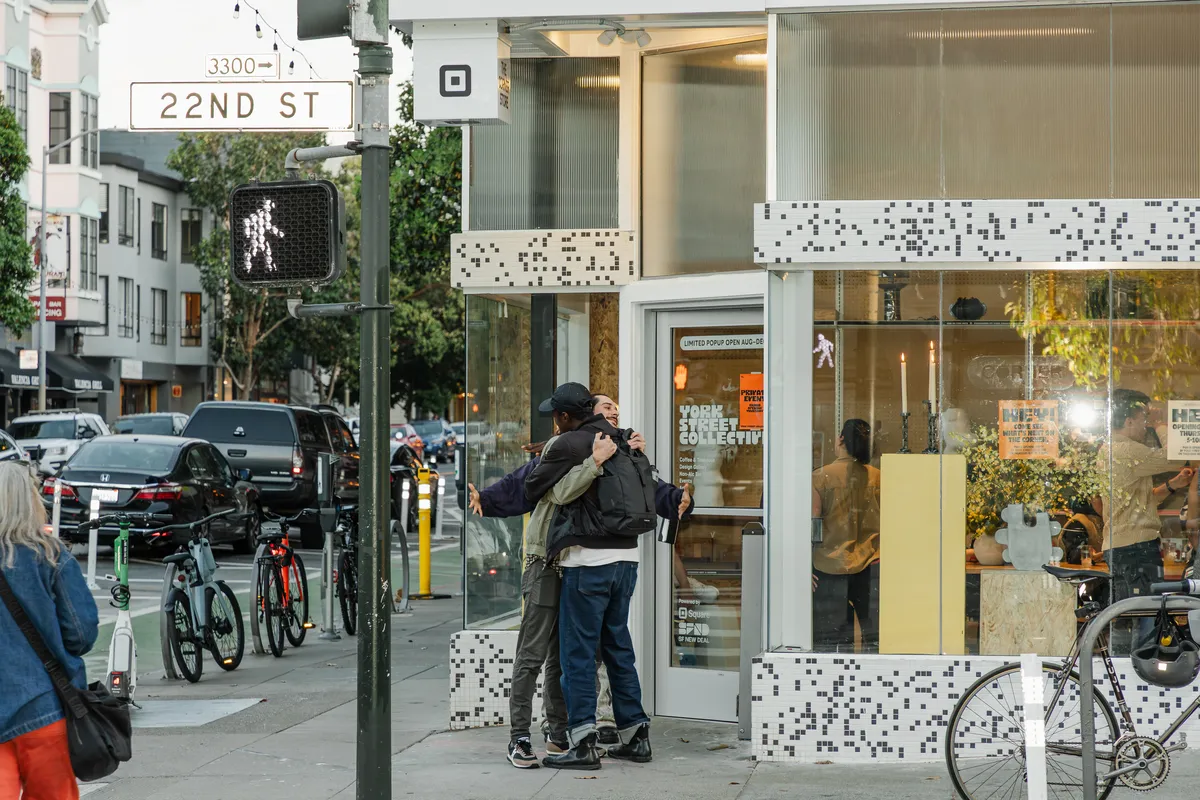
Before opening, I hung out outside the Corner Store at 22nd and Valencia St. with my friend and architect, Anand Sheth (yes, we share the same first name!). We listened to nostalgic stories about the original Lucca Ravioli Co., which had been a neighborhood institution for generations, and the loss of a public community space when the family decided to shut down in 2019. People felt a desire to be “let in” to 1100 Valencia as if it was more of a public stoop than a commercial storefront.
Credit: Selina Pan
And so, two Anands set out to design a radically open, multi-concept, welcoming, and uncommercial commercial space. We rebranded the coffee pop-up to York Street Collective because the space was larger than anything we had done before, and we wanted to share that opportunity with others, especially local business owners.
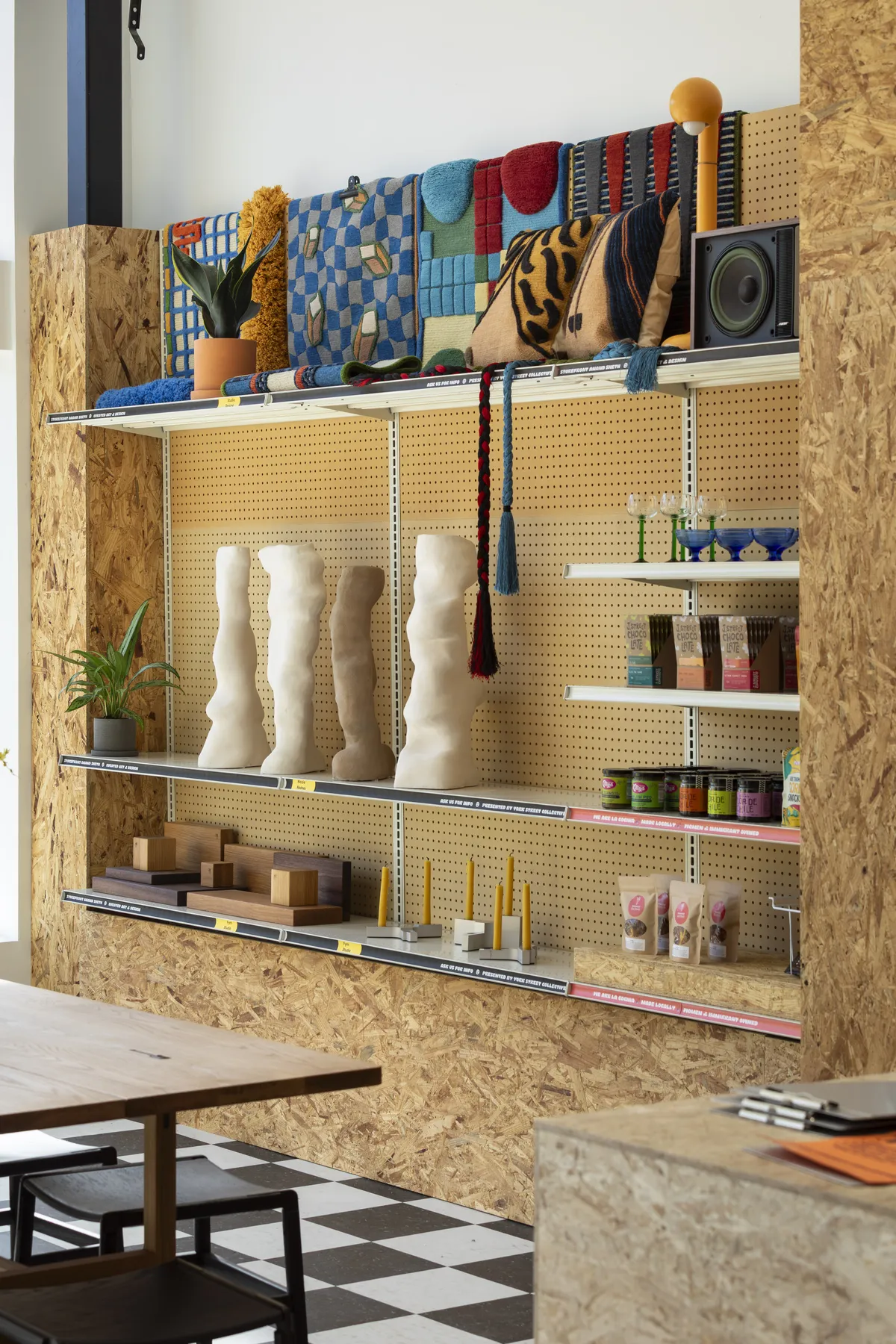
The collaboration started with bringing in Sheths’ nomadic art gallery pop-up, Storefront. Over four months, we featured more than 50 emerging artists on the space’s walls and shelves. We brought in furniture and goods from local brands that people could use in the space and made them available to purchase. We hosted over 25 concerts curated by my friend Trijeet Mukhopadhyay, featuring Indian Classical musicians, vinyl collectors/storytellers, and other local bands, inviting people to slow down and connect. To extend the space’s value into the morning, we brought in our friends at Kopê House, another garage-founded coffee pop-up with some serious expertise and craft.

Credit: Selina Pan and York Street Collective
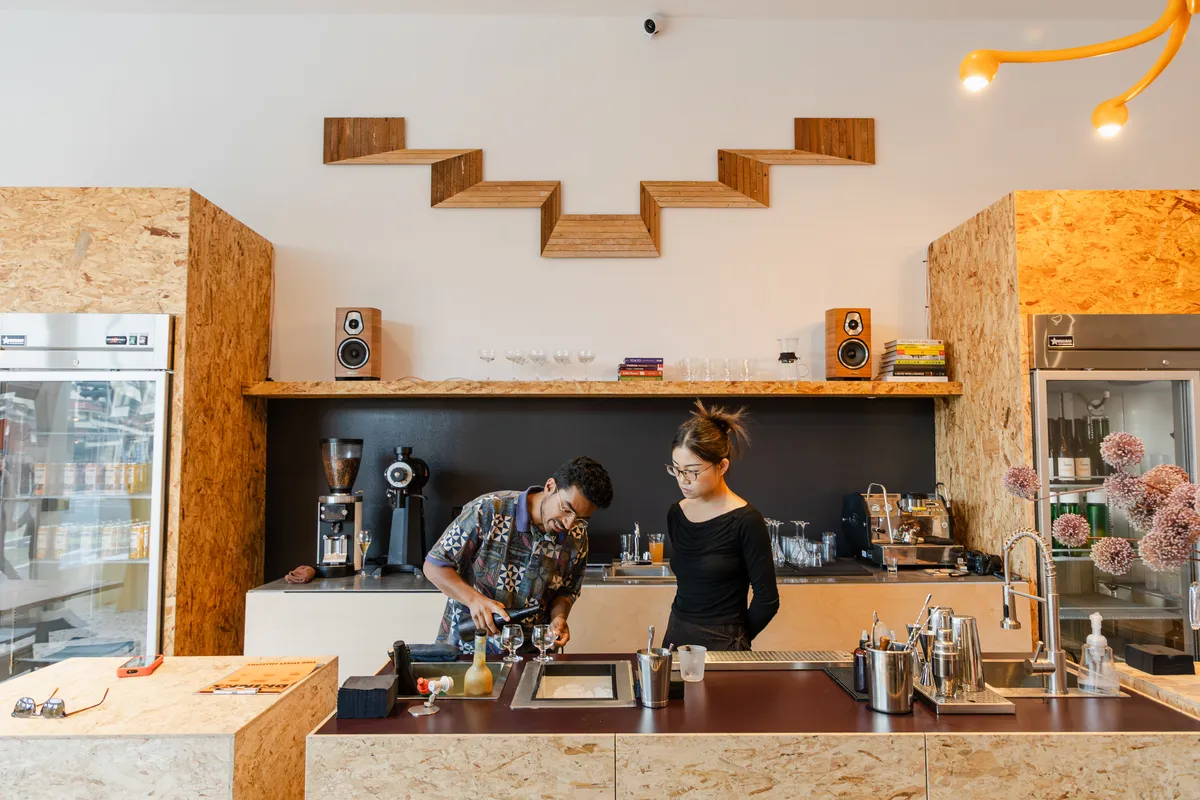
At the center of it all was our nonalcoholic cocktail program. Valencia Street has no shortage of bars, but we saw a gap for people who wanted an evening experience without alcohol. Parents with kids, teenagers, people in recovery, and anyone looking for a more inclusive space to hang out finally had somewhere to go. One time, a group of 14 people slowly grew to inhabit our stage seating — one of the women in the group just found out she was pregnant and the family was celebrating! Another night a couple was celebrating their two-year sober anniversary, and wanted to join us after their fancy dinner reservations.
These moments showed how even a temporary pop-up can fill a space with real meaning and purpose.

Why temporary pop-ups work for San Francisco businesses
I learned during our pop-up residency that pop-up shops can be a competitive advantage, especially for business owners wanting to learn quickly and build a customer base in a high-cost city like San Francisco.
At our Corner Store pop-up, we tested ideas that weren’t ready to become full-time concepts quite yet. We rotated new mocktails weekly. We experimented with different types of event programming. We invited collaborators to shape the space with us. Some ideas worked immediately. Others did not. But since I was there every night, washing nearly every glass, every experiment gave me direct feedback from our guests.
Pop-ups also help build momentum. Instead of opening quietly and hoping customers find you, you build relationships early. When people start asking where to find you next, you know the demand is real and you’re ready to look for a permanent location.
The role of the right community partners
This residency would not have been possible without SF New Deal and Square. It also allowed us to get more publicity for York Street Collective. Recently, I had the honor of winning a 2025 Eater Award, profiling our nonalcoholic bar program, and I likely got on their radar because of the pop-up exposure.
Credit: Selina Pan
SF New Deal made the space accessible to us. They helped reduce barriers that would’ve made this location out of reach. With support from SF New Deal and the Office of the Mayor under Mayor Lurie, we were able to go from keys in hand to opening in under a month. In San Francisco, that kind of timeline is rare for a full-scale buildout, and it made our experiment possible.

Square supported us on the operational side, enabling all of our different revenue streams to run smoothly. We used Square Handhelds instead of a fixed counter POS, which allowed transactions to fade into the background. Our team could move through the space, talk to people, and sell wherever interactions happened. That flexibility aligned with our values and helped us build community. We didn’t want a hard line between staff and customers. We wanted people to feel like participants in the space, not just buyers.
La Cocina played an important role in helping us spotlight local food entrepreneurs, many of whom are building businesses without access to traditional storefronts. Offering their food and snacks in our retail section and hosting collaborations reinforced the idea that neighborhoods thrive when businesses support one another.
My top tips if you’re considering starting a pop-up
If you’re a business owner thinking about testing a new idea, especially in a city where cost and risk feel overwhelming, here are a few lessons I learned:
- Focus on the pop-up experience, not just the product. People go out to feel something and to feel seen. The products are sometimes secondary to some intentional hospitality. (Recommended reading: Unreasonable Hospitality by Will Guidara)
- Work with existing community partners. Look at who is already doing good work in your neighborhood and talk to them. Access, flexible tools, and operational support make experimentation possible. It can also give you the ability to snag an incredible location for your pop-up.
- Don’t guard your brand too tightly. Sharing space and spotlighting other businesses can strengthen your identity along the way, not dilute it.
- Test ideas that might not survive full-time yet. Temporary spaces give you room to learn without overcommitting and can help you fine-tune new concepts. Let your concept evolve based on real feedback, and use your tech to help elicit and collect that feedback.
Credit: Selina Pan
The lasting impact of a temporary pop-up
When our Corner Store residency ended, customers shared stories through post-its and polaroids of what our residency meant to them. Full of gratitude, it gave us that sense of accomplishment when you’ve summited a large mountain. Most of the time, you’re trudging through mud, walking up unpaved slippery hills, eating lightweight rations (I wish this was just a metaphor). But when you reach the top — for us, that was our final week of opening — the view is breathtaking.
All we can hope for is that people saw the intention behind every decision in our collective space — and that perhaps some of that creative energy will find its way into the DNA of the next cohort of pop-ups in San Francisco.