




Table of contents
A great haircut never goes out of style, and neither does the barbershop experience. Whether it’s the satisfaction of a perfect fade or the camaraderie that comes with a familiar chair, people still love visiting their local barbershop to look and feel their best. If you’re opening a barbershop or looking into a second or third location, this guide will walk you through everything you need to do to succeed.
Step 1: Perform market research to learn how to stand out from the competition
You could be a barber starting from scratch, leaving your clients with the old barbershop. Or you could be bringing your own book of business with you as you open a new shop yourself. Whatever the case, it’s critical to do market research to determine who your target audience is, whether it’s men, women, kids, families, or simply anyone with hair. Depending on where your location is, an understanding of your audience will help you acquire and retain clients.
Next, you’ll want to research other local barbers and businesses. Find out what other barbers charge in your area, which services they offer, and where their shops are located. You’ll want to stand out from the competition and avoid opening a location too close to another well-established barbershop.
When looking for a location and thinking about your marketing strategy, find a niche that you can serve. To really stand out, look for underserved audiences in the area. Do you want to market to high-end clientele? To families? Only to children? Whichever niche it might be, ensure that it’s in line with the market and competitor research you’ve done to set yourself up for success.
Step 2: Decide on your barber business’s legal structure
Now for the crucial part of opening a barbershop: the legal structure. If this is your first location, you’ll have to determine whether you want to operate as an LLC, as a sole proprietorship, as a corporation, or as a partnership with another owner. You’ll want to do research or ask a trusted accountant about the tax implications related to each structure and how they can benefit your business. Reliable sources such as the U.S. Small Business Administration (SBA) and the U.S. General Services Administration (GSA) offer helpful guidance for small business owners exploring these options.
Once you register your business, it’s time to get an EIN (employer identification number) if your business will be an LLC, a partnership or a corporation. You can apply directly through the IRS website. As with any business, you’ll also need to obtain the necessary licenses to operate in your state and an insurance policy. Contact a trusted attorney and a licensed insurance agent in your area to help you get started on both.
Step 3: Figure out your finances and expenses
How much does it cost to open up a barbershop? Setup costs can begin to pile up when establishing licenses and policies for a new business, so be sure to budget for all operating costs. Developing a clear financial plan helps you understand how much you’ll need to bring in each month and how to keep your overhead low so your business stays profitable. If you process payments with Square, you may qualify for Square Loans. A customized offer based on your card sales through Square will appear in your dashboard if you qualify.
Here’s what to consider when planning your finances:
- Choose whether to buy or rent the property for your barbershop
- Estimate how much you can expect to bring in per year
- Find out how much you can charge for services based on your market research
- Figure out the cost of all physical tools needed to perform those services (i.e., scissors, razors, etc.)
- Estimate marketing costs to acquire or retain clientele
Once you establish your budget, you’ll want to open business banking accounts to separate your personal and business finances. Keeping your finances separate not only simplifies tax filing but also helps establish credibility with lenders.
If you don’t have a trusted accountant, take time to research small business accounting basics about the financial accounting for your small business and what your financing options are. If you’re looking into loans, into lines of credit, or even dipping into your savings, be sure to account for each of those scenarios and what fees or interest are associated with each.
To keep track of incoming payments and revenue accurately and efficiently, you’ll want to have a point-of-sale system that best suits your business in place. With the extensive product options at Square, you can keep all your data, earnings, sales, and team performance reports in one place. There’s no need to integrate any additional subscriptions since everything connects together with Square. With products such as Square Appointments, Square Payroll, and Square Banking, your business can be up and running smoothly in no time.

Step 4: Build your brand and marketing plan
While this is step four in our guide, the branding of your barbershop should be top of mind throughout the entire process. Depending on how you structure your business, you’ll need to provide the name of your barbershop to apply for your legal entity status, EIN, insurance, and licenses. Once your business name has been approved, it can be a challenge to change it, so be thorough when discussing and deciding on a name.
Once you choose a name, it’s time for your marketing and creative side to kick into high gear.
Create a visual identity
You can choose to design a logo yourself with free accessible tools such as Canva. Or, if you aren’t the artistic type, you can hire a freelance illustrator to design one for you. Remember, your name and logo will be your clients’ first impression of your business, so you’ll want your branding to be approachable to your target client.
Think about your color palette and the overall feel of your brand. Creating a simple mood board can help guide decisions later when you’re setting up your location, choosing decor, or buying equipment. The goal is for your visual identity to reflect the atmosphere you want clients to experience from the moment they see your logo to the moment they step into your shop.

Define the customer experience
Before your clients ever walk into your shop, think through the experience you want them to have: from discovering your business to booking an appointment and sitting in your chair for a cut. For example, you may want to deliver a smooth booking process and send reminders after they book. That means you need tools, such as barbershop software, that support this experience. Your tools should be properly set up before the first customer walks in.
You can start by drawing a simple flowchart of the customer journey through your business and identifying areas where you can add personalized touches that help your brand stand out. Small gestures such as offering refreshments, playing great music, or remembering a client’s preferred style help build loyalty. The most important thing is to keep the experience consistent. You wouldn’t want things to feel smooth and premium one day and disjointed and cheap another.
Step 5: Choose the right location
Once you are clear about your brand direction, start looking for a suitable location. To choose the right spot for your new barbershop, consider a few essentials from the outset.
- Visibility and foot traffic. How much natural foot traffic does the area get? Is the storefront tucked away or easy to spot as people walk or drive by? Is it in a busy area with complementary businesses? The more visible and active the area, the stronger your potential for walk-ins.
- Convenience and access. Is your storefront easy to reach? Is there adequate parking, or is parking difficult? Is the entrance accessible and welcoming? Convenience and accessibility can make or break a first location.
- Fit with your target client. Clarify what you want from the space before you buy or rent. Your brand and ideal customer should guide the choice. If you want your barbershop to be a local hangout, select a neighborhood and unit that support that vibe. If you are relying on walk-ins to jump-start growth, make sure your sign is visible and the interior feels inviting from the doorway.
Having your brand direction and desired experience defined before you commit to a lease helps you evaluate spaces consistently and avoid costly changes later.
Step 6: Invest in barbershop equipment
After you’ve secured your location, it’s time to make it look and feel like a barbershop. Your tools play a big role in shaping your customer experience and your brand’s reputation.
An investment in high-quality clippers, shears, razors, and other shaving equipment can go a long way to create a brand for your business. When you evaluate barber tools, be sure to pick the right ones for your business and your budget. These are tools you’ll use every day, so splurging on the higher-quality brands such as Wahl or Andis could make all the difference for your client experience.
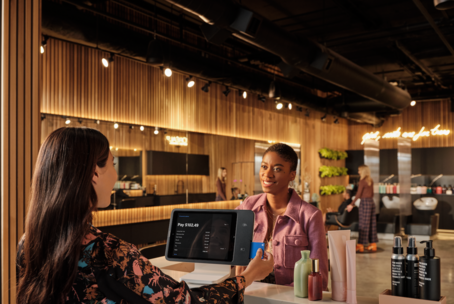
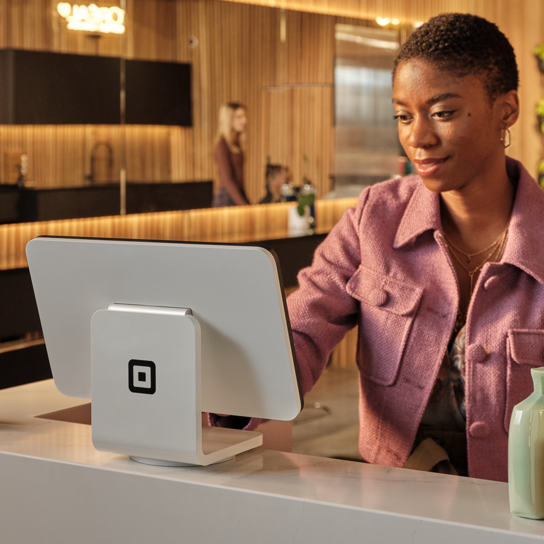
If you want to create a clean and sophisticated look, the Square Stand transforms your iPad into a sleek and stylish POS system. Complete with tap and chip reader capabilities, you can have your appointments, rebooking, and checkout all in one without extra cords or clunky chargers. With less clutter you can keep your space minimalistic or create more space for upsells at checkout. If efficiency and convenience are your game, the Square Reader or Square Handheld allows you to take payments while the client is in the chair, giving them a more seamless experience before they walk out the door.

Step 7: Build your team
Once your business and location are established, it’s time to build your team. If you’ve been in the industry for a while, recruit barbers who you know will have your business’s success in mind. If they have the motivation to grow, they’ll want to support the growth of your business as well.
If you’re deciding whether to hire employees or to rent or lease chair space in your barbershop, there are a few things you’ll want to consider:
- Will you want to hire less experienced barbers with the expectation of training them?
- Will you want to accept payment up front for rented or leased chairs, or will you take a percentage of each cut?
- Do you want to promote your barbers, or will you want to empower them to promote themselves?
You may want to hire a receptionist to help with scheduling and to welcome clients when they walk in, an accountant to help with the finances, and maybe even other supportive part-time employees to help stock or clean the barbershop throughout the day.
A motivated and passionate staff is essential to building a successful business with a welcoming atmosphere. One way you can incentivize staff members is by offering commission if they sell more services or products. Square Payroll makes it easy to manage wages, commissions, and tips, whether your barbers are hourly employees or independent contractors. You can customize commissions as tiers based on a sales or service types offered.
As your team grows, Square will grow with you. Square Team Management is an all-in-one solution to manage your team that allows you to schedule, to manage, and to pay your employees right from your POS. It also helps you set permissions, monitor hours worked, and ensure everyone gets paid correctly and on time. With the right team structure, tools, and systems in place, your barbershop can run smoothly day-to-day and scale efficiently as your business grows.
Step 8: Get discovered by potential clients
When you’re opening a barbershop, visibility is key. Begin with digital channels that make it easy for new clients to find and book you. You can even start marketing before your grand opening to build anticipation and attract early bookings.
Take some time to craft a marketing plan that outlines how you’ll introduce your barbershop to your community and scale your efforts as you grow.
Create social media profiles
Social media is one of the most cost-effective ways to promote your shop. Focus on platforms where your target customers already spend time. If your audience is local and visual, Instagram and Facebook are great starting points.
Square Appointments integrates directly with social platforms, allowing clients to book instantly from your Instagram, Facebook Business, or Reserve with Google profiles. This reduces back-and-forth messages and helps you fill your schedule faster.
Create a Google Business Profile
A Google Business Profile (formerly Google My Business) is one of the most powerful tools for promoting your barbershop locally. It’s free and allows you to share your business address, hours, photos, reviews, and services directly on Google Search and Maps. When people in your area search for “barber near me” or “barber business near me,” your profile can help them discover your shop.
Use your Google Business Profile to:
- Share upcoming events or promotions.
- Post photos and updates to show off your space and style.
- Collect and respond to reviews to build trust and social proof.
- Link your booking page so clients can reserve appointments instantly.
You can also connect your Google Business Profile with Square Appointments, for seamless scheduling and review management.
A complete profile, paired with strong SEO practices, helps your barbershop appear in Google and Maps searches and makes a great impression on potential clients.
Build a website
Even if you rely on walk-ins, having a professional website gives your business credibility and acts as your digital storefront. Your website should include key details such as your services, pricing, and booking link. It’s also the best place to showcase your work, share testimonials, and highlight your brand story.
Square Online makes it easy to create a simple, mobile-friendly site with built-in SEO tools. The website builder offers extensive layout options, customizable templates, and plenty of flexibility to make the site your own. You can even embed your Square Appointments booking system so clients can reserve their preferred times directly from your website.
Once your website and Google Business Profile listing are set up, you can test and run paid ads to target clients based on their demographics, interests, and locations. As you grow more confident, you can expand your efforts with promotions, print advertisements, and loyalty programs.
Step 9: Manage your clientele
When it comes to word-of-mouth marketing for your business, it’s all about a positive client experience. Your customers want to feel welcome from the moment they walk in the door to the moment they leave, but their experience with your barbershop doesn’t end there.
Managing your clientele and their preferences can make all the difference when it comes to providing an extraordinary experience and setting your business apart from competitors. With a strong management and scheduling system, you can have all the details and preferences of each client ready to go before they walk in the door. You can know what style of cut they received last time and when their last visit was, allowing you to provide a more personalized visit for them.
You can also use the free booking app Square Go, which allows clients to discover, book and rebook with Square Appointments sellers easily. The app saves time by eliminating the traditional scheduling back and forth over the phone. It also sends booking reminders that have helped lead to a 23% increase in rebooking.
Build your barbershop with Square
Opening a barbershop takes planning, patience, and the right tools. You bring the barbering and business skills while Square handles the rest. With everything from appointments and payments to payroll and marketing in one place, Square helps you launch, manage, and grow your barbershop with confidence. Get started quickly with Square for Barbershops.
Opening a barbershop FAQs
How much does it cost to open a barbershop?
Startup costs depend on factors like your location, the size of your shop, the equipment you choose, and any renovations required. You’ll also need to account for licensing, insurance, and marketing expenses. Creating a detailed budget and financial plan before you start helps you estimate the exact amount you’ll need to launch and keep your barbershop running smoothly.
How profitable is a barbershop?
A barbershop can be a highly sustainable business if managed well. Profitability depends on how efficiently you manage expenses, retain clients, and price your services. Many owners increase their revenue by offering additional services such as beard trims or grooming products, or by building loyalty programs that encourage repeat visits. Using tools like Square Appointments and Square Loyalty can also help you track performance, manage clients, and grow your customer base.
What do I need to start a barbershop?
The key requirements for opening a barbershop include:
- A valid business license and barbering certification (requirements vary by state).
- A registered business structure such as an LLC or sole proprietorship.
- An Employer Identification Number (EIN) for tax purposes.
- Insurance coverage for your business and employees.
- Essential barbershop equipment — chairs, mirrors, clippers, razors, and cleaning supplies.
- A marketing plan to attract and retain clients.