






Table of contents
When Square first launched its white reader in 2009, it did more than change how small businesses accept payments. It rewired the relationship between commerce and community. Suddenly, independent sellers could step into the financial system on equal footing with larger competitors. When Square went public in 2015, a banner unfurled above the New York Stock Exchange declared: “the neighborhood is going public.”
That declaration wasn’t symbolic. It was a promise that Square would continue to bet on the idea that thriving neighborhoods depend on thriving local businesses. Sixteen years later, Square supports more than 4 million sellers and processes over $240 billion in annual payment volume worldwide. Yet at the heart of its innovation is a simple truth: small businesses are where communities gather, connect, and grow.
Local businesses don’t just fuel economies, they’re where culture and community take root. Across the country, Square sellers are shaping neighborhoods through the shops, salons, and restaurants that bring people together. This fall, Square is spotlighting those connections with in-person Neighbor Day pop-ups in New York, Los Angeles, and Atlanta, where beloved local businesses are offering one-day-only experiences and collaborations designed to give back to the communities that built them. Meet the sellers behind the pop-ups: three local legends giving back in unforgettable ways.
Neighborhood: Edgewood and Southside, Atlanta
Business: The SWAG Shop
Owner: Killer Mike
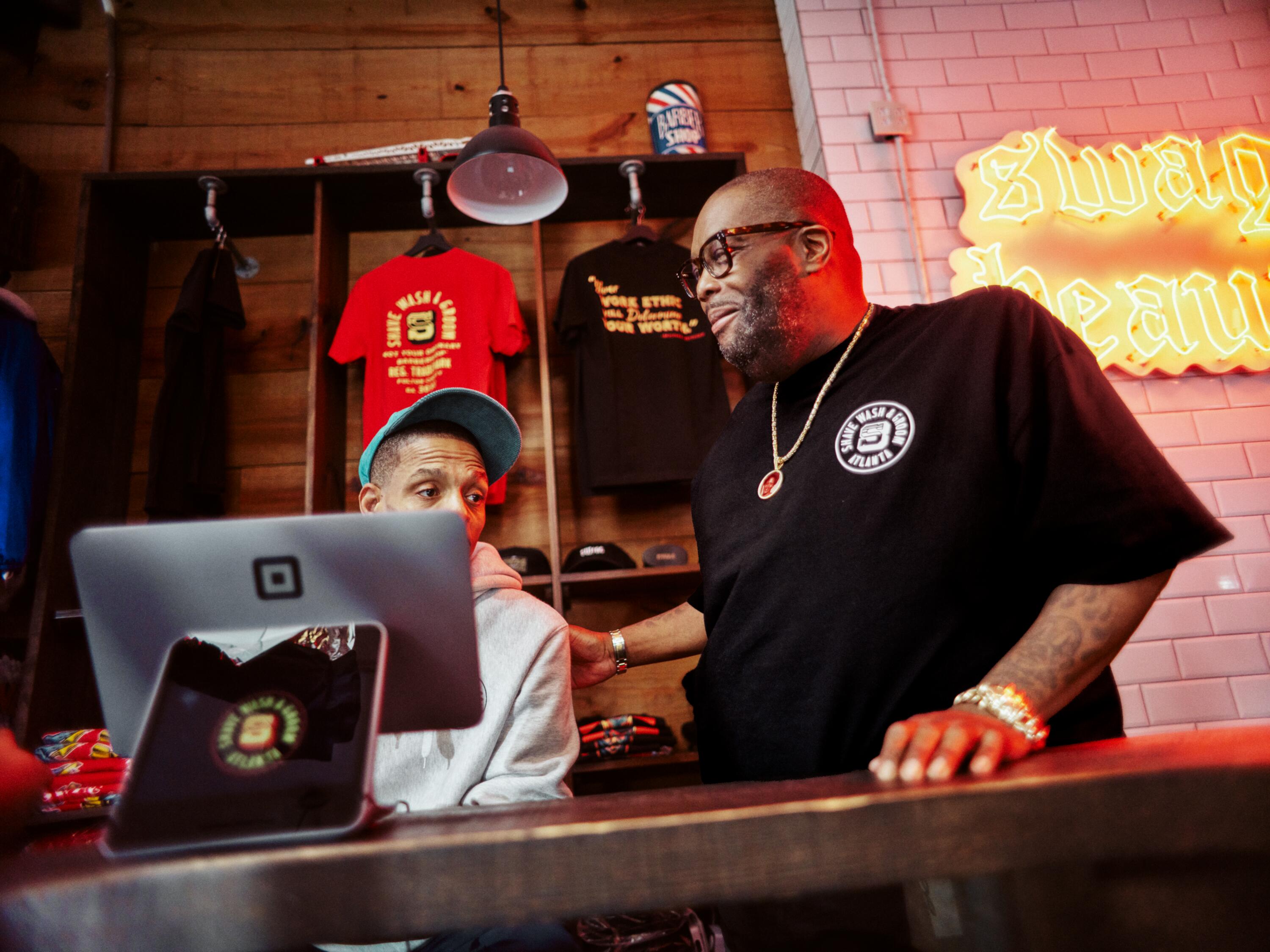
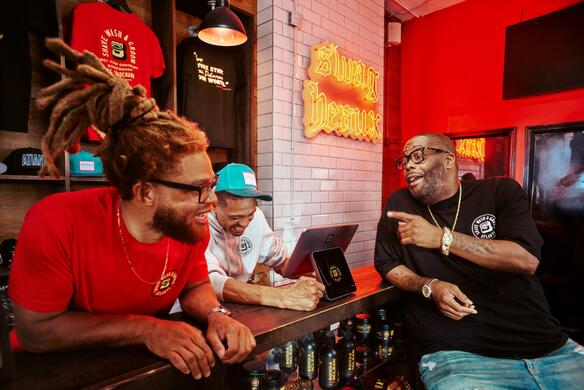
In Atlanta’s Edgewood neighborhood, barber chairs hum inside a shop that feels more like a community center than a salon. This is The SWAG Shop, the grooming brand co-founded by rapper and activist Killer Mike and his wife Shana.
For Killer Mike, the neighborhood is more than a location; it’s the foundation. “The neighborhood is our lifeblood as a business,” he says. “If it wasn’t for this neighborhood believing in us the way it did, I would have closed the shop years ago. If I can spend my dollar a block from where I live, I know that dollar will be reinvested in the community. I want to make The SWAG Shop a global brand and I’m determined never to lose the values of this neighborhood.”
Since opening, Killer Mike and Shana have transformed The SWAG Shop into a space where young men apprentice as barbers, where artists and locals gather, and where the community decides together how to move forward. With Square, they track sales, reorder products, and grow with confidence, freeing them to stay focused on what matters most: the neighborhood.
The shop is informed by the block, by elders, by skaters, by legacy residents, and by artists. “The greatest lesson I’ve learned in this neighborhood was from Mr. John a couple of doors down. And that is buy your business, service your neighborhood with honesty and integrity and teach your children the value of that business. That they may never sell it but rather scale it.” For Killer Mike, that means protecting and passing on neighborhood values. “Kids have to learn to value their neighborhood because even if you don’t live in the neighborhood, if your parents have business in the neighborhood, then you are part of that neighborhood and you should treat it with honesty and integrity.”
The shop doesn’t just respond to the community, it lets the community guide it. “There’s a lot of cultural diversity, whether you’re from the north or from the south, what foods you like to eat, how you like to party. So what this has given me an opportunity to do is not just be neighbors with other business people, but be neighbors with the people that live in the community that support these businesses as well.”
At The SWAG Shop, culture and commerce are inseparable. Kids biking past the store dictate which t-shirts get reordered. Neighbors debate city council elections in barber chairs. Customers weigh in on new product prototypes. As Killer Mike puts it, “The neighborhood lets us know what’s cool…Our neighborhood inspires every product we have because we get direct customer feedback… Our customers informed us on our products before we ever brought them to market.”
That vision extends to growth. “Right now our focus is product. We think more locations is great and I’d love to be Great Clips or Super Cuts and have thousands of locations, but before that I like to protect the three locations we have and until then, make sure that they can get product beyond our locations. I live for people in Iowa who might’ve heard of Killer Mike or Run the Jewels and want to try a product to be able to order online.” And Square is helping him get there. “Square has helped us. It makes us very efficient. I know which t-shirts are selling what… when she looks at the numbers and she looks at the projections and what we do, it’s based on the information we gather from Square. So Square has been an amazing enhancement for us as a shop.”
The Neighborhood: Melrose, West Hollywood, Venice, Highland Park, and Studio City, Los Angeles
The Business: Ggiata
The Co-Owners: Noah Holton-Raphael, Max Bahramipour, and Jack Biebel
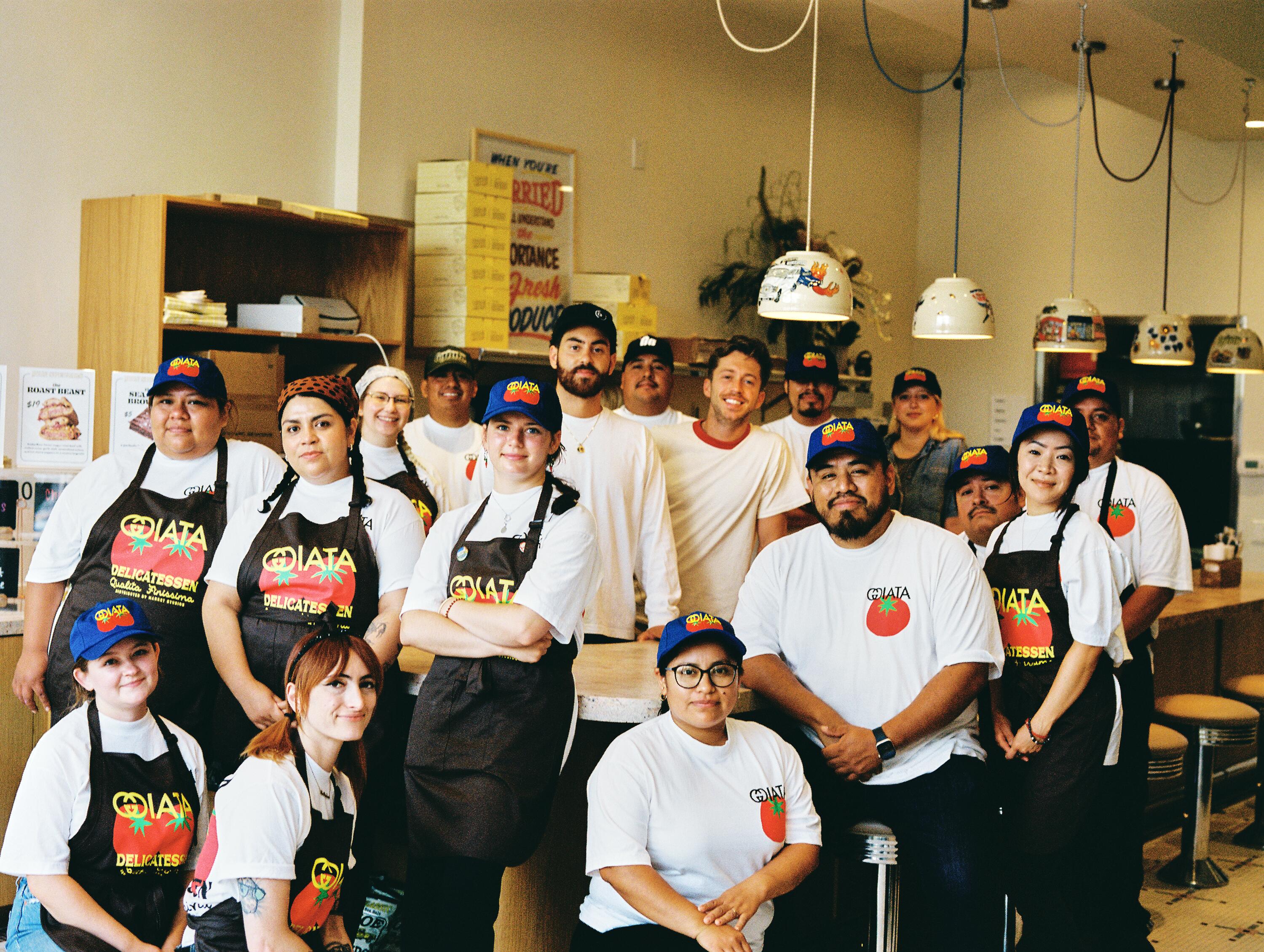
Across the country in Los Angeles, another small business has turned the community into a compass. Ggiata, a New Jersey-inspired sandwich shop, now has five locations across the city. But growth, says co-owner Max Bahramipour, is about more than numbers.
Bahramipour explains their philosophy simply: “The neighborhood is everything to us, you know. We’ve got five locations now and as we think about opening more of course we look at things like foot traffic, but really it’s like, what do you feel when you walk down the street and are we joining a community? Because even as we grow, community is really what we’re after.”
That focus on community extends into every menu item and every detail of the customer experience. And Square’s data has become a quiet but crucial part of that process. “One thing that we love about working with Square is we get a better sense of who our customer is based on the data that we’re able to get… It helps us to better understand what neighborhoods Ggiata can and should exist in… And I also think it helps us to design not only a menu, but also a guest experience that actually fits the folks who are coming to eat our food.”
The insights keep Ggiata grounded, even as it scales. “At this stage, the most important thing we can do is really drill down and learn who our customer is because it allows us to build the business and products that are better for them. Square… allows us to paint that picture of who our customer is really clearly. Whereas some other tools… that level of accessibility in the data is not there.”
In a city known for constant reinvention, Ggiata is proving that authenticity, supported by the right tools, can anchor a business in its community. To bring that to life, Square brought Ggiata together with a local neighborhood foodie, Owen Han, to create a limited time menu item to celebrate their Melrose location’s community.
The Neighborhood: Lower East Side, New York City
The Business: Rogue
The Owner: Emma Rogue
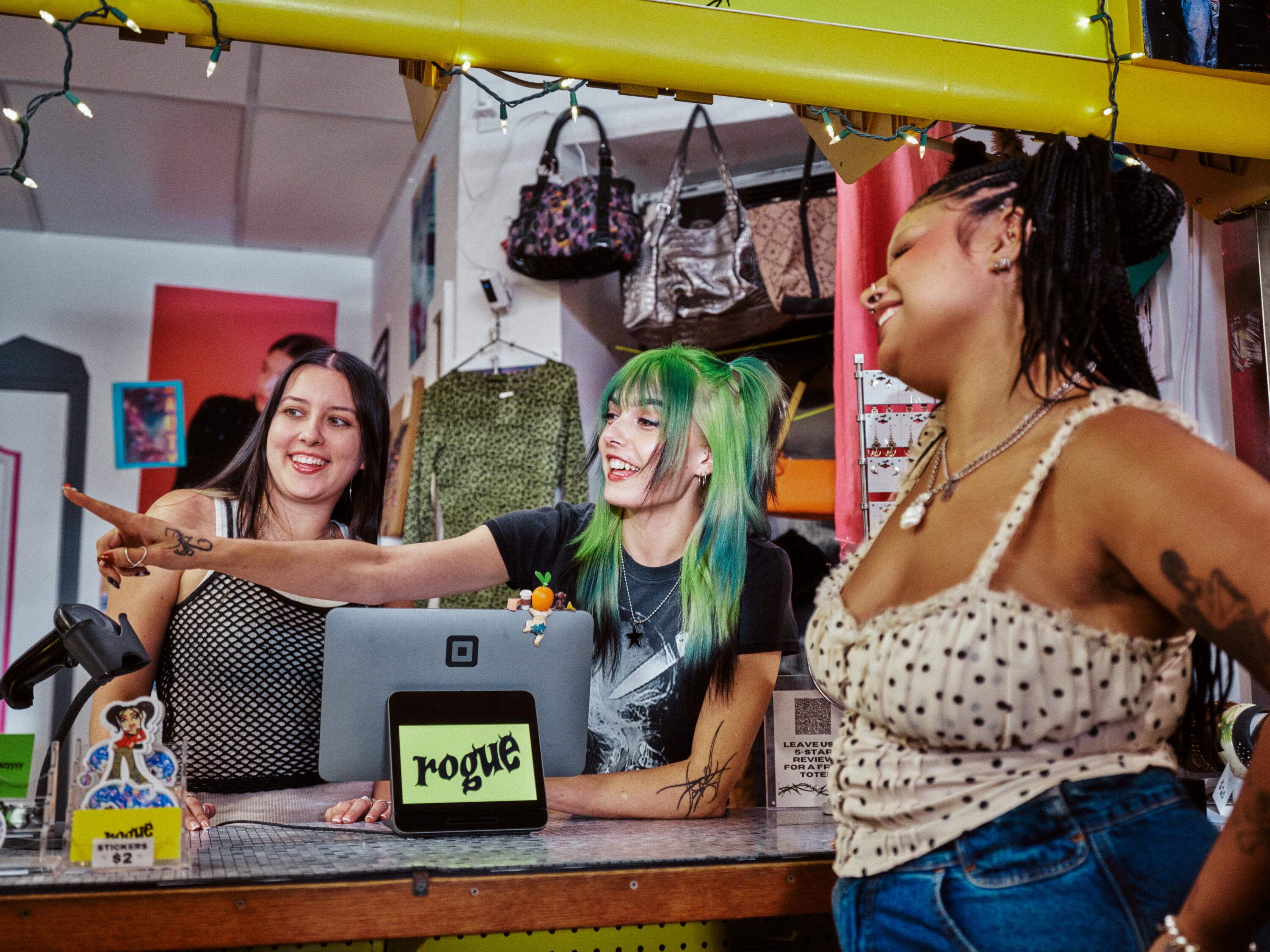
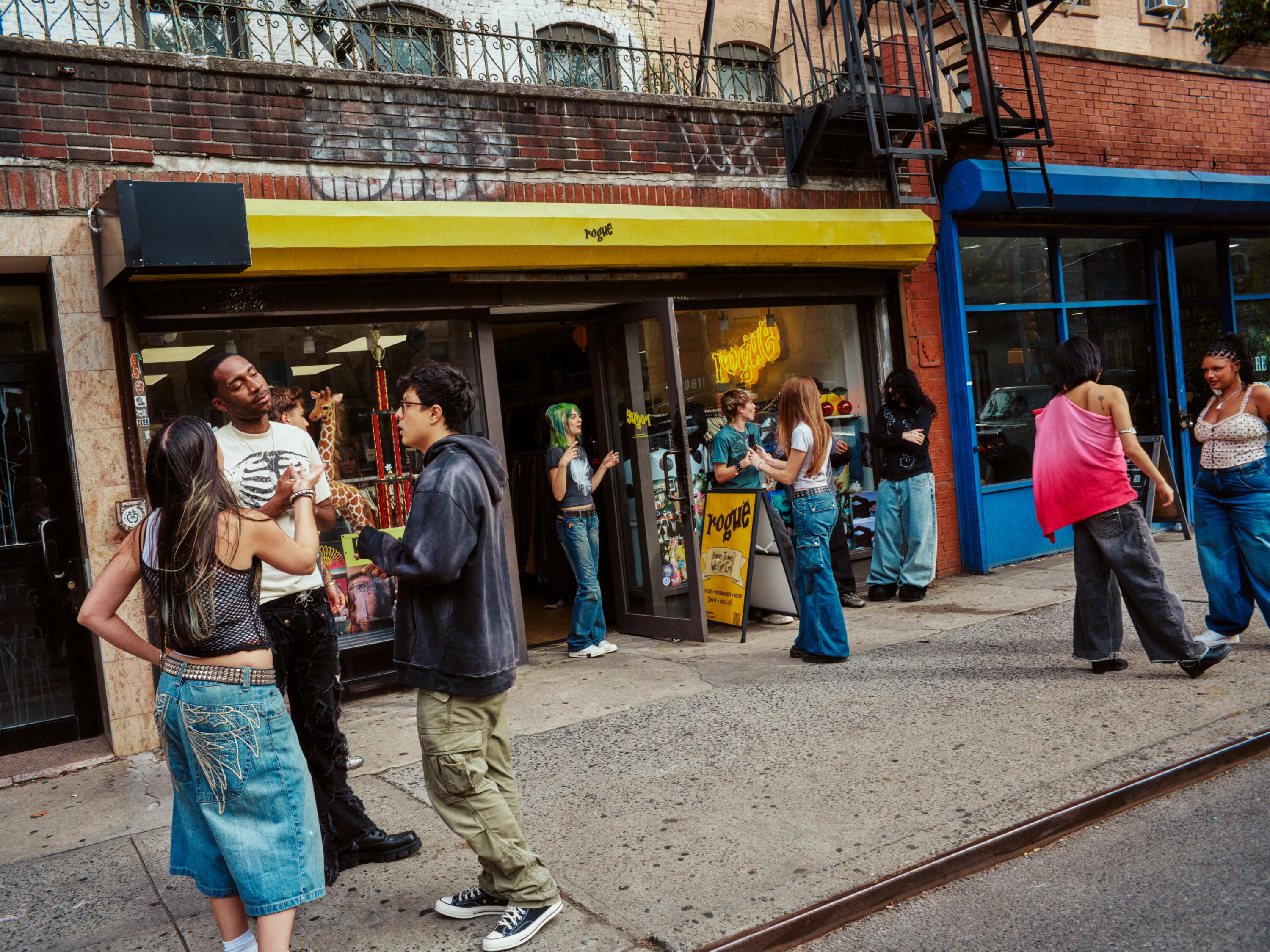
On the Lower East Side, vintage racks crowd the walls of Rogue, a shop founded by Emma Rogue that feels as much like a cultural clubhouse as it does a retail space. Rogue’s ethos is simple: “Rogue’s core values are individuality, acceptance and pushing boundaries.”
Since opening a 275-square-foot storefront four years ago, Rogue has grown into a larger location just around the corner. “We’ve grown… to now being in a 450 square foot shop that’s around the corner on a main street. We love growing with the neighborhood,” Emma says. Growth, though, has never meant leaving the LES behind. “The Lower East Side is just the coolest neighborhood in the city, in my opinion. It’s so rich with culture, fashion, diversity. It’s just like the spot to be… I just feel so intertwined with the Lower East Side.”
That connection comes alive in her events. On summer Saturdays, Rogue hands out free snow cones. At the end of each month, it hosts “bin sales,” where pieces are priced between $5 and $20 so young customers can afford to splurge. During drops, the shop pulses with energy: three fit checks happening at once, a stylist pulling pieces for a concert, kids making TikToks, friends planning their next stop. “It’s chaotic in the best way, the best energy,” Emma says.
For her, Rogue is about more than sales, it’s about inspiration. “I always hope and think about my business as being a jumping point for inspiration to the youth or honestly to anyone… I also want to inspire kids to start their own businesses… If I could inspire kids to go off and start their own clothing brand or start their own online vintage store, that will make me so happy.”
Square has been a quiet partner in sustaining that energy. “We use Square every single day to process our tens of thousands of transactions over the past four years. Since day one… Using the Square handheld, it makes the checkout process so much faster… Square is already built into the growth. It’s our permanent POS system.”
And throughout that journey, Square has been there. “We use Square every single day to process our tens of thousands of transactions over the past four years. Since day one. We have two registers and we just recently got two handhelds, which have been a lifesaver… Using the Square handheld, it makes the checkout process so much faster… Square is already built into the growth. It’s our permanent POS system.”

See you in the neighborhood
Neighbor Day may be one moment on the calendar, but the stories behind it span years. In Atlanta, Los Angeles, and New York City, businesses like The SWAG Shop, Ggiata, and Rogue show how neighborhoods shape sellers and how sellers, in turn, shape neighborhoods.
For Square, supporting these entrepreneurs isn’t just about providing a point-of-sale system. It’s about sustaining the culture, connections, and creativity that make communities thrive. Neighbor Day is proof that local businesses are not just engines of commerce, they are anchors of community.


