






Table of contents
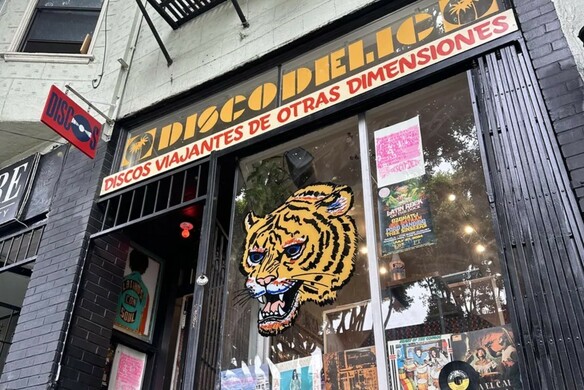
As you walk in through the doors to San Francisco record shop Discodelic, you’ll likely be greeted by 1970s-era Latin Rock, cumbia, or salsa, playing over the speakers, the sound spilling into 24th Street. Inside the shop everything is vibrant and colorful, the walls adorned with original artwork, vintage posters, and a display of Bolivian silkscreen covers you can literally feel.

Vinyl as a cultural time capsule
“We say in Spanish, vinyl is culture,” said Maria Jose (Majoo) Salguero Discodelic co-owner, “That’s basically what we do, try to preserve all these records because they’ve survived so many things.” Salguero says these records are preservations of cultures that you can touch, feel, and embrace. Records that are survivors of earthquakes, revolution, political upheaval, and more. And, in a time where history can be ephemeral, vinyl records are a way to revisit the past in a meaningful way.
Discodelic co-owners Ruben Rangel, Maria Jose (Majoo) Salguero, and Miles Ake have created a place where this mission comes to life. The business started over 10 years ago, first as a brick-and-mortar location in El Salvador, then Guatemala, and finally Mexico City. Today, its first U.S. outpost sits in the Mission neighborhood of San Francisco in 2023. This journey inspired the slogan, “Discos Viajantes de Otras Dimensiones” (“Traveling Vinyl Discs from Other Dimensions”).
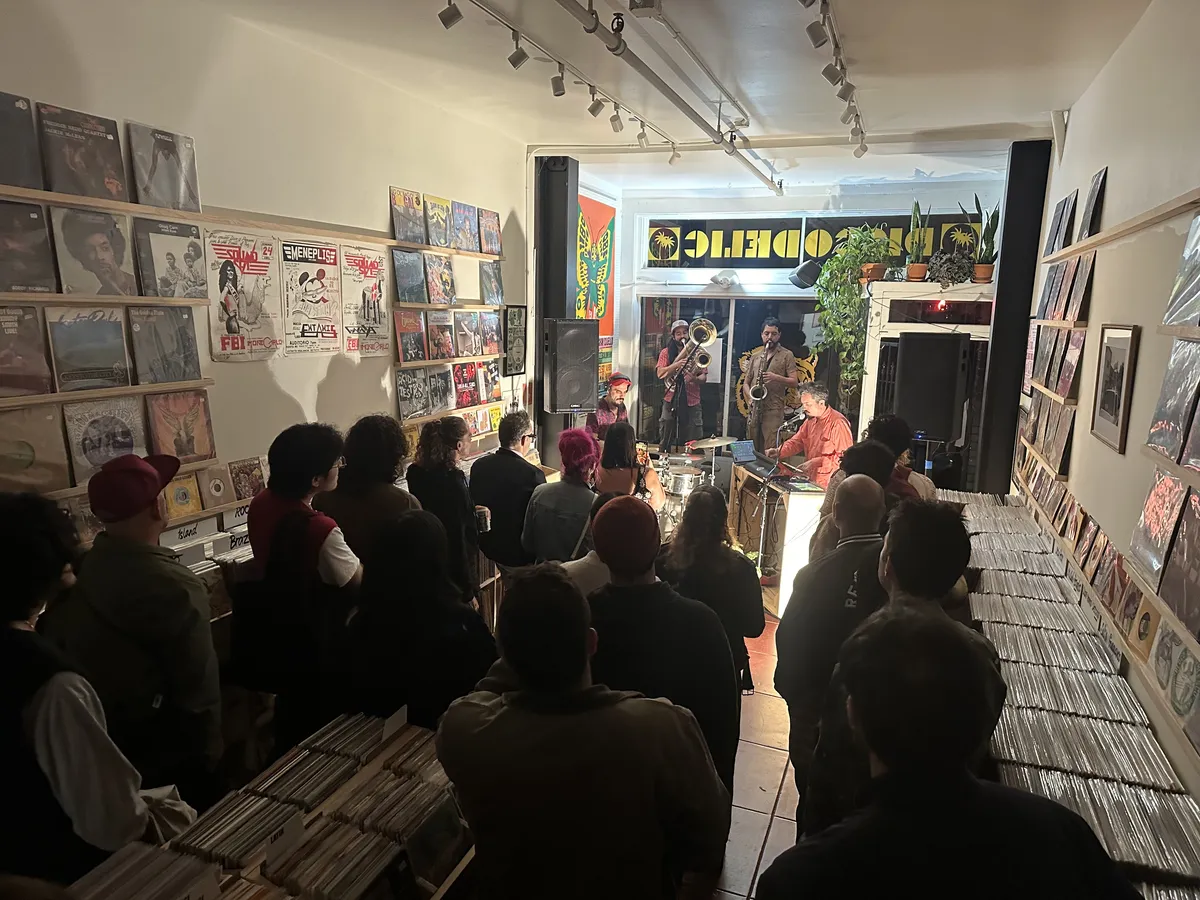
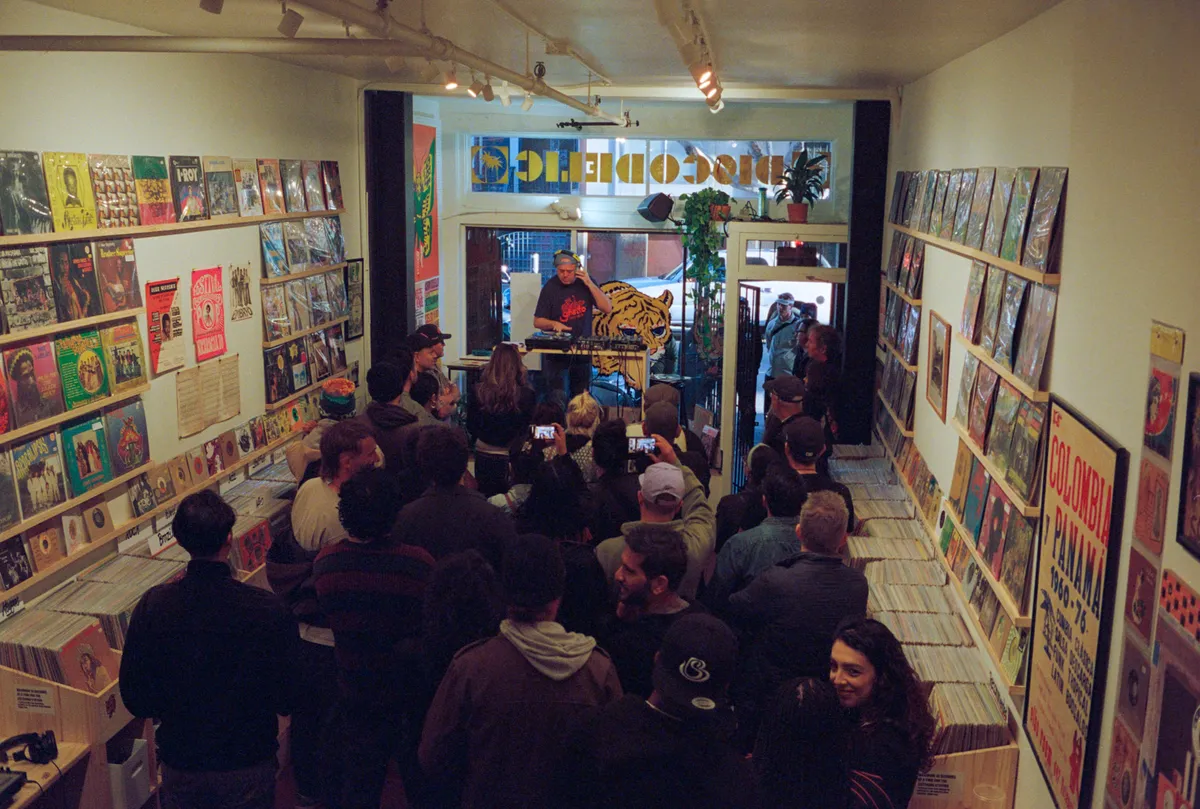
Discodelic is more than its brick-and-mortar record shop. It’s also an indie re-issue label by the same name. The team discovers original artists, negotiates rights, and pays royalties to forgotten 70s Latin-rock and funk albums. They then play these vinyl records live. Since opening its doors, Discodelic has quickly become a part of the Mission District community.
Technology as the backing track
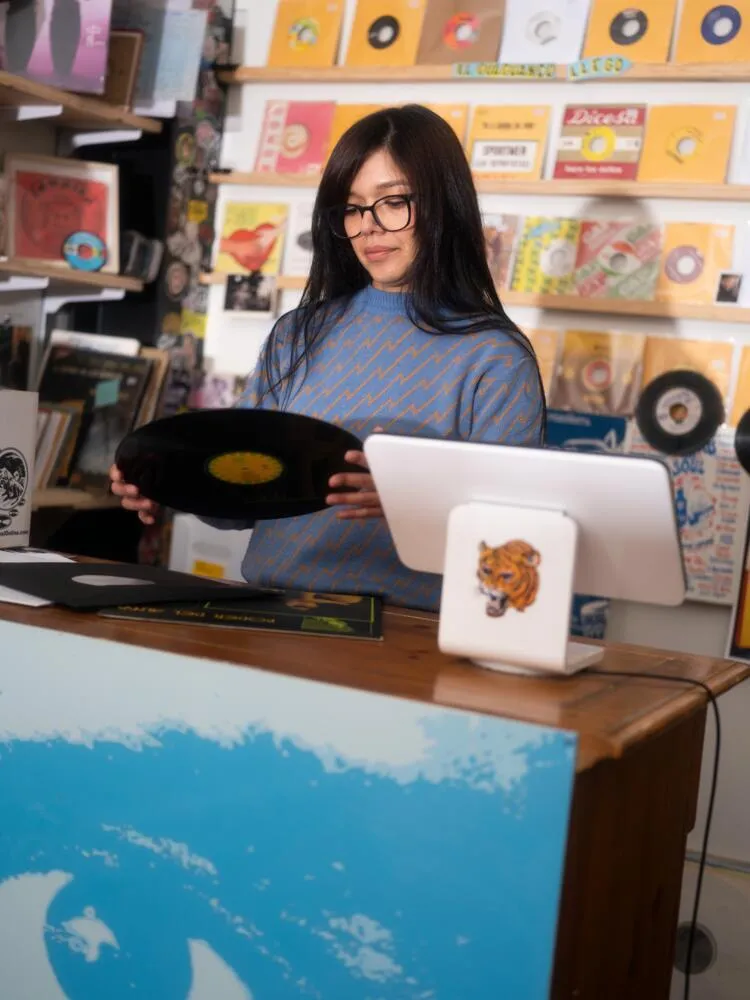
Square solutions help support the shop behind the scenes while the business stays center stage. Salguero says she likes the convenience. “It’s been really helpful because some people are like, ‘Oh, can I pay you cash? I don’t have cash.’ You can do Apple Pay, you can pay with your phone, you can pay with your Apple Watch, whatever. So Square can make it for you,” said Salguero, adding that she loves when customers leave feedback. Allowing customers to pay how they like while keeping the focus on products and services is important for Discodelic.
“We deal with a very analog medium mostly, which is vinyl records. They are definitely on the up as far as younger people wanting to get into physical mediums of music.” said Ake “We utilize several different technologies. There’s the store we use Square for sales and also checking inventory.” He adds that Discodelic also does online sales through eBay, Instagram, and private sales. Extending sales to digital channels has helped them reach a larger, often global audience. Some customers even discover them through their YouTube channel, Discodelic Discos Viajantes.
A neighborhood love affair
“I say it’s like a record karma or your good karma. Destiny, whatever you want to call it.” said Salguero. She says the record store back in the ’60s and ’70s was called Musica Latina. That shop closed and the owner, then in his 90s, was ready to sell his whole inventory. Discodelic’s owners built a relationship with him, inviting him to the new shop where he reconnected with people who hadn’t seen him in years. In this way the shop, the community, even their predecessor are all connected.
Success for the business isn’t just about money. “What we’re good at is finding records and new sounds. As long as we can continue to find records in unusual places and present them to people and the customers being happy, I think that’s success. We want to make enough to survive, but the store is more than a record store. It’s community. So keeping people happy and presenting new music to them I think is success for us for sure.”


