




Table of contents
Earlier this year, my business partners and I celebrated Trestle’s 10th anniversary. That’s a big milestone in the restaurant industry. Many places don’t last as long.
People often ask how we’ve done it. We’ve stayed true to our mission of providing affordable fine dining in San Francisco. Trestle offers a four-course prix fixe menu — with choices for every course — that changes every other week. We use only fresh, seasonal ingredients. And we serve it all for $52 — the same price some places charge for an entree. This approach earned Trestle a Michelin’s Bib Gourmand award for 10 years running and OpenTable Diners’ Choice Award for Best Value.
But quality and value aren’t the only reasons Trestle keeps going strong. Some things are non-negotiable if you want to bring people back year after year, especially in a competitive market like San Francisco. Here’s a look at the restaurant success strategies that have kept Trestle thriving for a decade.
Care for your staff and they’ll care for your customers
Before Trestle, I ran Michelin-starred restaurants for chef Michael Mina. And I can say our service matches anything you’ll find at restaurants that charge two or three times more.
In fact, most of our servers come from four-star restaurants. And we have very little turnover, so our staff really gets to know our guests. They remember guest preferences and guests recognize their favorite servers. That hospitality turns first time visitors into regulars.
How do we keep great staff? Several years ago, we moved away from tips and began paying a much higher hourly wage, plus health insurance, paid sick leave, and two weeks’ paid vacation. It’s more expensive, but it pays off in a better guest experience. Plus, it’s easier for the guest: no tipping, just sign the check.
Labor is our biggest cost, but it’s also our best investment.
Never stop evolving: A proven restaurant success strategy
Restaurants survive because they adapt.
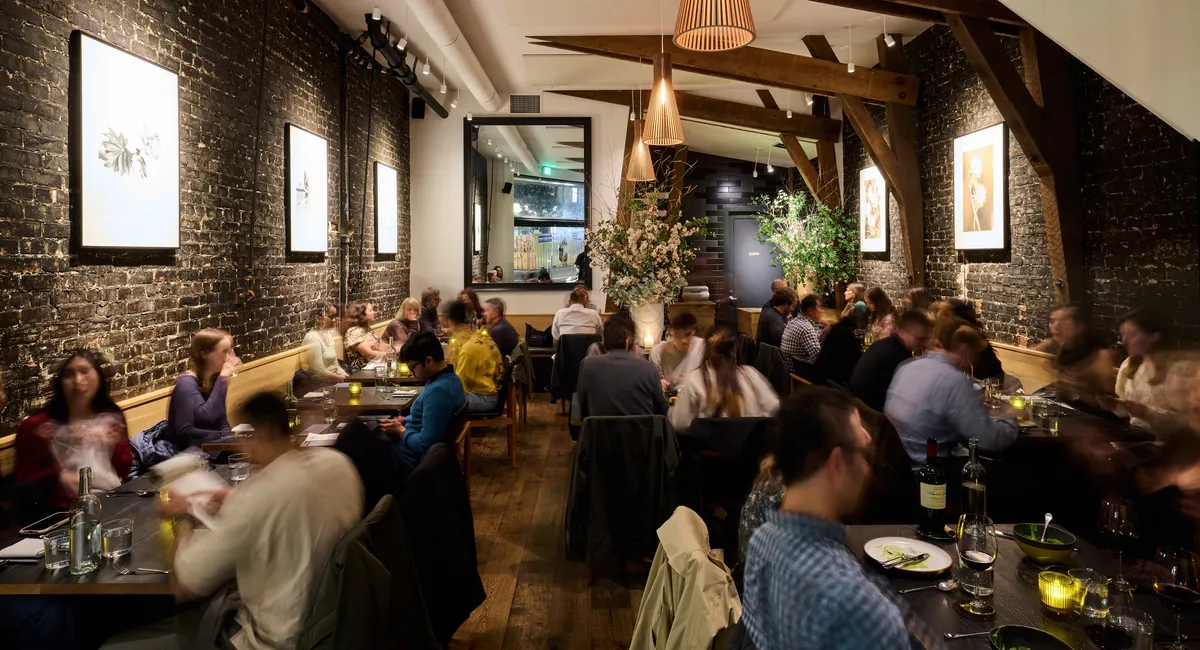
Guests today care a lot more about a restaurant’s look and feel — how “Instagrammable” it is. So we recently refreshed Trestle’s space: new colors, lighting, silverware, plateware, and soundproofing. It feels brand-new.
Our menu has evolved, too. Prix fixe dining was unusual when we opened in 2015. Now it’s everywhere. To stand out, we lean into seasonality. For example, instead of just featuring all tomato dishes in August, which has been a huge success in years past, we’re running with our “Summer of Seasonality” menu. We’ll highlight corn throughout July, peppers in early August, and tomatoes in late August.
Turn neighborhood diners into loyal regulars
Adapting can also mean rethinking who your customers are and how to reach them. Pre-COVID, Trestle catered to office workers and tourists downtown. But now, many of those offices and hotel rooms sit empty.
Our focus is on locals. That starts with strong marketing — both short-term and long-term.
Email marketing has become one of our most effective tools. Over the years we’ve built up a huge email list, and we use email to announce new menus, promote events, and highlight things like Michelin awards. It’s one of our most effective tools for driving return visits.
Don’t neglect operations
I’ve been running restaurants for two decades, and one of the biggest lessons I’ve learned is that struggles usually aren’t about the food. The back end of the business is what sinks restaurants.
How can your restaurant succeed if you don’t know how to run the front of house, or control costs, or set up payroll and inventory systems, or deal with licenses and other legal issues?
That doesn’t mean you need to be an expert in every single operational area. It does mean you need to ask for help.
I love something I heard from Shaquille O’Neal. When asked how he built his business empire, he said, “I always surround myself with experts and people who are smarter than me. I never want to be the smartest guy in the room. And then listen.” The reality is you don’t know what you don’t know. And if you don’t align yourself with people who have the experience and creativity to find good solutions, you’ll set yourself up to fail.
Build efficient systems
To survive in an expensive, regulation-heavy city like San Francisco, you need smart systems.

Take sales taxes. San Francisco businesses collect state, county, and special local taxes. And the California Department of Tax and Fee Administration (CDTFA) conducts audits to ensure compliance.
I know one owner whose recent audit took a month. Trestle’s was just four emails. Why? Because we’ve used the Square POS from day one. Square locks in each check as soon as it’s rung up, so you can’t go back and change anything. The CDTFA understands that. So when you present them your reporting for sales tax calculations, it’s very black and white.
Some other POS systems let you reopen checks and change data — which can raise red flags during an audit.
Trestle was one of the first restaurants in the country to use Square as a full-service tool. We chose it because we needed systems set up to handle all the rules. Take payroll. Some payroll systems don’t automatically calculate double time. Having to manually log overtime leaves room for human error, and it can expose your business to being accused of cheating staff out of wages.
Our ordering system is super-simple. Although Trestle’s menu always changes, the structure stays the same: soup or salad, pasta or risotto, fish or meat, fruit or chocolate dessert.
Staying small can be a winning strategy
Trestle plans to be around for another decade, and staying small is part of that plan.
Big restaurants can work, but they carry risks. It’s harder to fill a large space and maintain quality. Trestle still seats only 44 people. This intimacy allows us to maintain the quality and hospitality our guests expect, and it keeps us connected to them every night.
That’s what keeps people coming back. That’s how you build something that lasts.