




Table of contents
Every quick-service restaurant operator knows the lunch rush.
The line builds quickly. The team is taking orders, preparing food, bagging delivery orders, and trying to keep everything moving. A guest pauses at the door, sees the line, and leaves. Another reaches the counter but feels the pressure of everyone behind them, so they order the first familiar thing instead of asking a question or trying something new.
These moments can seem small. But in a business where margins are already thin, a handful of missed orders or upsells can add up. Restaurants need to serve more guests during the busiest parts of the day without making the experience feel rushed, confusing, or impersonal.
For years, that has been framed as a tradeoff: Restaurants can optimize for speed or they can offer great service. They can automate or they can offer a personal touch.
I think that’s a false choice.
The right technology can help restaurants move faster while making it easier for guests to have a great experience. It can give a restaurant another way to express its point of view, guide a decision, and make someone feel taken care of – even during the rush.
Speed and hospitality can co-exist
Hospitality is often associated with conversation: a warm greeting, a thoughtful recommendation, or a team member remembering a regular’s order. Those moments matter. But hospitality can also be practical.
It’s not making someone wait unnecessarily. It’s giving them enough time to understand a menu without feeling watched. It’s making modifications easy, helping them find the right item, and getting the order right. It’s recognizing that a returning guest may want to move quickly, while someone visiting for the first time may need a little guidance.
Seen this way, efficiency and hospitality are not opposing goals. Efficiency creates the time and space for hospitality to happen.
That is especially important now. Consumers are being more deliberate about where they spend, but they have not lowered their expectations. The Square 2026 Local Economy Report found that 72% of consumers will tolerate price increases when they come with added value, such as a better product or a more meaningful experience.
Guests want convenience, but they also want to feel that their choice was worth it. Restaurants need to deliver both.
Guests have raised the bar
Here’s the thing about value-seeking consumers: They want to feel valued, too. Price sensitivity and the desire for better experiences are not opposites. They’re parallel.
That matters especially in QSRs, where the person coming in during the lunch rush often isn’t a stranger. Square data shows that QSRs are the second-most-visited neighborhood business category, with 59% of consumers saying they frequent local QSRs. And 59% of food-and-beverage regulars place the same order every single visit. They know what they want. What they’re waiting for is an experience that knows this, too.
6X
Regular customers generate six times more annual revenue than one-time visitors, according to Square data.
In many QSR businesses, the regular customer isn’t just a valuable segment – they’re the business model.
What the first generation of kiosks got wrong
QSR operators embraced kiosks for good reasons. Kiosks can add ordering capacity during peak periods, reduce pressure on the counter, and give guests more control over browsing and customization.
But many early kiosk experiences treated ordering as little more than a transaction to be completed. Early kiosks could be clunky, confusing, and impersonal. Every guest saw the same menu in roughly the same way with the same basic steps. Recommendations could feel generic or disconnected from what the restaurant actually wanted to feature – a seasonal special, a new menu item, or a local favorite. And when someone had a question or visited for the first time, the screen often became a dead end rather than a warm welcome and a helpful conversation.
Kiosks themselves weren’t the problem. Where they fell short was in making guests feel like strangers, browsing a menu that felt like a maze where special requests or modifications were cumbersome and questions went unanswered. In doing so, it created the false impression that speed and hospitality were fundamentally incompatible.
What the industry needed, and what is finally becoming possible, is automation that works in service of hospitality – not as a substitute for it.
A kiosk should feel like part of the restaurant
Square data shows that 49% of consumers say they make purchases at local retailers and restaurants in their ZIP code several times a week. And in-person transactions grew 9% in 2025. Guests are still choosing to walk in, because they want the experience of being somewhere familiar.
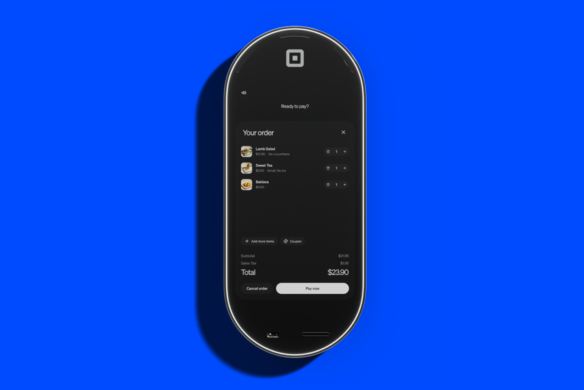
That insight shaped our thinking at Square as we reimagined what a kiosk could be. Guests can browse and order by touch, use voice when they want guidance, ask questions about the menu, and make modifications in a more natural way. Restaurants can use their own menu and sales data to shape what guests see and make recommendations based on what the customer has already added to their cart. And because ordering, payments, loyalty, and back-of-house operations stay connected, teams don’t have to piece together a fragmented experience.
But the product is not the point on its own. What matters is what it makes possible.
A line that keeps moving instead of sending guests elsewhere. A first-time visitor who finds something they’re excited to try.
The restaurants that define the next era of quick service will not choose between efficiency and hospitality. They’ll use each to strengthen the other.
The best technology won’t ask restaurants to sound like an algorithm. Instead, it will learn how the restaurant wants to welcome, guide, and serve its guests – and help deliver that experience when it matters most.
The question operators should be asking
According to the Square Local Economy Report, 90% of businesses using marketing tools maintained their regular customers in 2025. Among those that didn’t, that number dropped to 38%. That shows the operators building systems around recognition are winning in a measurable way.
So the real question isn’t whether to automate, but whether your guest experience makes people feel like regulars or strangers. Does your ordering experience reflect your brand’s hospitality, or undercut it when someone steps up to a screen? And does your team have enough breathing room to actually connect with guests and deliver a great experience, or are they mostly managing the rush?
We built Square Kiosk because we kept hearing the same thing from operators: I don’t want to trade hospitality for efficiency – I want to deliver both.
That’s a challenge we took seriously. The operators who define the next decade of QSR growth will be the ones who stop treating speed and warmth as separate choices and build their businesses accordingly.