







After a decade of being fine dining chefs, Scott Ostrander and Paul DiPierro were ready for something more approachable and inclusive for their community. “That was one of the things we hadn’t been doing throughout our career,” Ostrander said. They’d built their career as executive chefs in a costly fine-dining restaurant 45 minutes outside of Sacramento that doubled as a wedding venue and a bed and breakfast.
Furthermore, their lives, their friends, and their interests were changing, and they needed a change that served that. “Our friends were having kids, and they couldn’t bring small children to a fancy $500 dinner with them. But they could bring them to get a bowl of ramen,” he added. Because they already had longstanding experience crafting dishes for a Japanese-style restaurant, they wanted to bring that Asian flair to a quick-service concept similar to Chipotle. This led to the birth of Origami Asian Grill, an Asian fusion restaurant in East Sacramento that draws inspiration from Japanese, Chinese, Korean, Vietnamese, and Thai cultures .
Aptly named after the Japanese art of folding paper, the name represents Ostrander and DiPierro’s desire to fold in the key elements they wanted to build around under one roof: fine dining cooking techniques and everyday diners. “That was the most foolish ambition we could’ve had,” Ostrander said.
How it started: Using Square Loans to offset high labor costs and debt
For Origami, finances were one of the biggest challenges early on. “Labor is through the roof, so [mixing fine dining into everyday practices] doesn’t really work out monetarily,” he explained. Even though Ostrander and DiPierro had built a nest egg, downsized their lives, and raised additional funds through catering opportunities, unforeseen construction delays and staffing drained their capital. “We had $5 in our account when we opened, and then we made every mistake after opening,” Ostrander said.
The biggest mistake, according to the chef, was not putting aside any money for sales, state, city, or district taxes. “After a while, I think we owed like $20,000 in back state sales tax, and the state put a lien on our account,” he added.
Because the business processed payments with Square, an email about Square Loans was offered to them right on time and changed everything. “We did our first Square Loan for $50,000,” Ostrander said. “We paid off the state, reduced our labor, and started putting money aside.” Origami was able to settle its debts, but by 2019, the business began doing full-fledged fine dining dinners once a week in the restaurant to help cover all of its bills. “We didn’t get a paycheck for the first two years as owners,” he explained. He and DiPierro weren’t in debt, but they were barely breaking even, and the two of them realized they needed to “reassess and rethink the wheel.”

How it’s going: Leveraging Websites to turn a profit
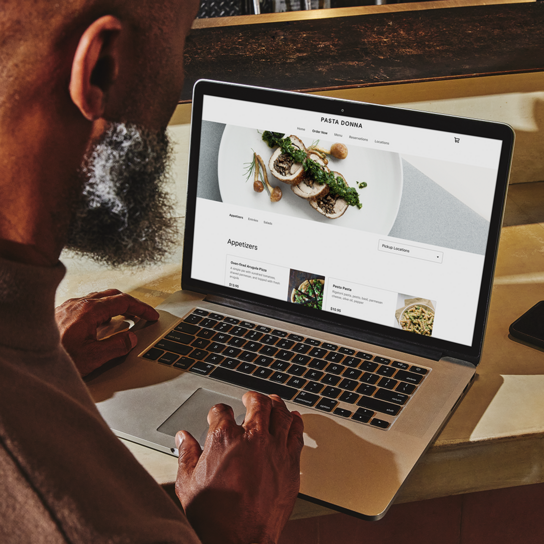
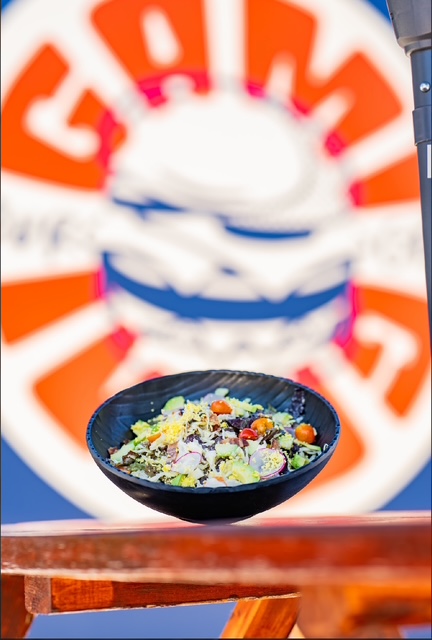
Origami ditched its fine dining component and focused on simply serving high-quality Asian fusion food to the neighborhood. But it wasn’t until the team received another Square email that things really started to change. In 2020, an email announcing Websites (at the time known as Weebly) helped the co-founders launch the online ordering arm of the business. This move helped sustain Origami through the pandemic, leading it to finally turn a profit. With less financial stress, Ostrander and DiPierro were able to take creative risks such as opening an Asian-style smashburger pop-up called Gami Burger in 2021 (an abridged version of the name Origami).
“I had some friends in Chicago that had done a burger pop-up, and it made me realize that all of the burger places in our neighborhood were shut down,” said the chef.
What was meant to be a one-time thing to fill a void in the neighborhood turned out to be a wildly successful endeavor. After hosting the pop-up a few more times to the same success, the team became too busy to operate dual concepts at once, eventually settling to operate Gami on Mondays when Origami was closed. Over time, Gami Burger took on a life of its own, and the co-owners decided to open a brick and mortar location for the business during the summer of 2025.

The impact: Scaling with a knowledgeable team and smart technology
Gami Burger’s continued success has Ostrander and DiPierro planning to open a second location in 2026, with all locations using Square.
“Square has been great [with helping us scale],” Ostrander said. One of the things the team appreciates most is having their account manager help navigate every stage of the business, from helping scout locations to helping set up new technology. “Being able to lean on somebody that’s knowledgeable and understands the technology, even the integrations, has been very advantageous to us,” he explained.
A knowledgeable partner is key because the industry, alongside Square, is always evolving. Having someone who can help navigate both with ease is crucial to success. “Technology has evolved every single time we’ve opened a store, even in the last six months, and the business has to evolve to accommodate that,” Ostrander said.
A few of the evolutions Gami Burger is incorporating into its new locations are Square Handhelds, self-ordering kiosks, and kitchen display systems. “Our account manager has a flowchart for how to set everything up and make sure it’s working,” he said. “That’s the part I really love about Square. We’re able to work with the team in an efficient way to do what we need to do [and get where we need to go].”


