




Table of contents
When Amber Foreman joined PERC Coffee in 2020, it was the start of a new era. The PERC team had spent a decade operating as a wholesale business, supplying Whole Foods stores across the Southeast, but they were embarking on a new exciting challenge: starting up a retail operation to serve customers directly.
Foreman walked into an empty space in East Lake, Atlanta, where the team behind the coffee roastery hoped to open a coffee shop. She brought 13 years of coffee industry experience to PERC, including stints at Blue Bottle Coffee in Los Angeles, a coffee subscription startup, and a neighborhood shop where she oversaw day-to-day operations.
“When I started making coffee, it just kind of clicked,” she recalled. “I knew that was the thing that I wanted to do.” As director of retail at PERC, Foreman has grown the business while investing in team members who feel the same way. “I’m really passionate about providing opportunities for other people to make a career in coffee,” she said.
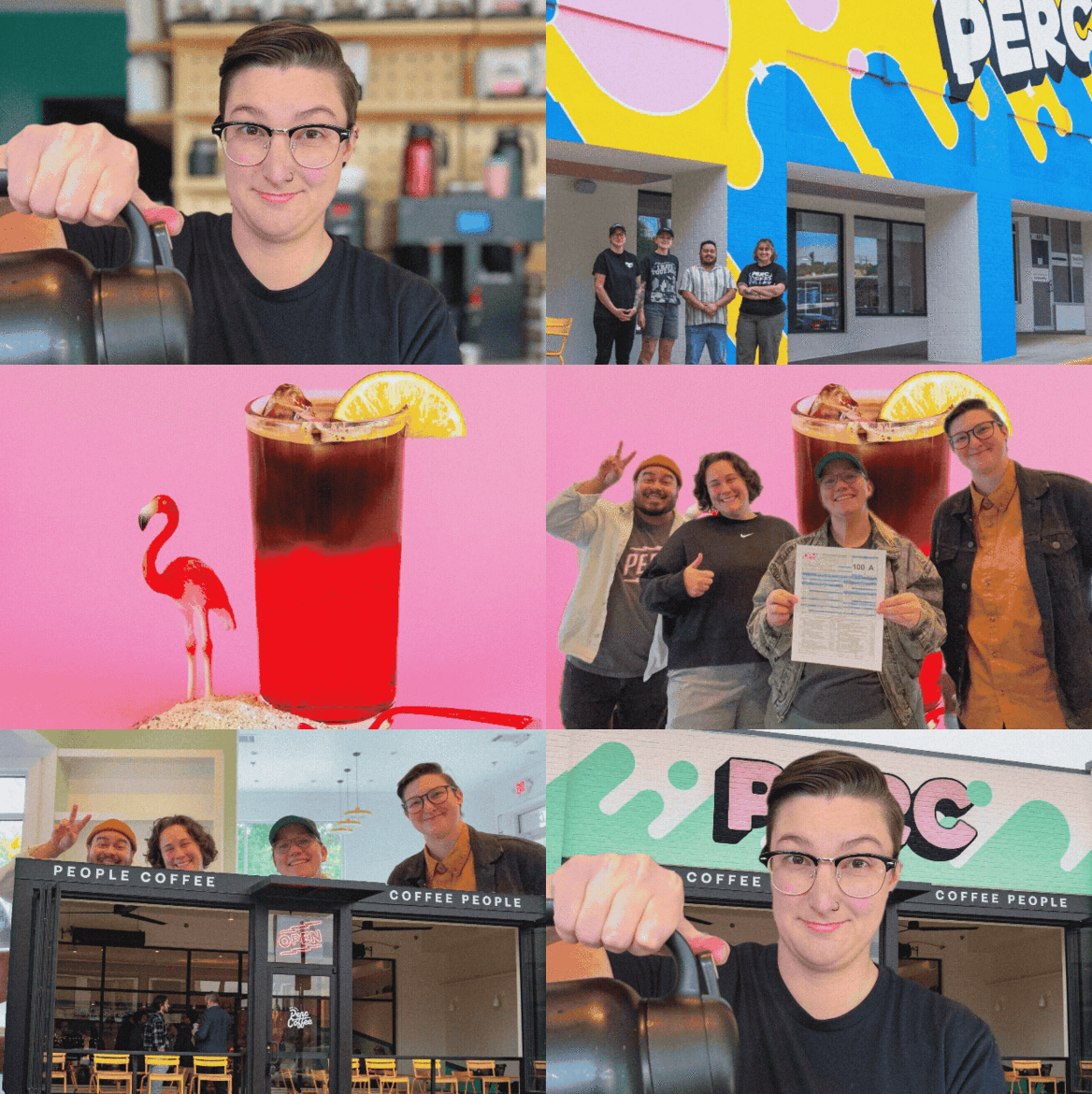
Today, PERC operates six thriving coffee shops across Georgia, in Chastain, Tucker, Grant Park, Vahi, East Lake in Atlanta and one in Savannah. The key to that rapid growth was a deliberate strategy of building and trusting leaders from within PERC’s team of passionate, talented employees, who have become the foundation of its fun-loving culture. With Foreman at the helm, here’s what it took for the PERC team to strategically develop its leaders to make the business scalable.
1. Know how to delegate
As a barista at Blue Bottle, Foreman was passionate about optimizing every process, which meant figuring out how to shave seconds off tasks, setting up openers for success and looking to improve efficiency. Her manager recognized her ambition to move into a leadership position and told her she would be better prepared to lead by learning to delegate work before taking on a manager role.
Foreman was happy to receive the insight. “I’m a nerd on processes and operations,” she said. “As a barista, it was about how I could be the absolute best at all of the things. I found I was taking on a lot of these tasks, not because I wasn’t trying to share the workload, but because I was just so excited about what I was doing.”
Learning to delegate to peers gave Foreman a crucial skill set and taught her that delegation creates development opportunities. That philosophy would become central to how she built PERC’s team structure.
She starts by identifying each team member’s interests and passions, then delegates tasks that align with those strengths. Coffee inventory for example works as a training tool for baristas who are administratively minded, technically focused baristas may help with team coffee tastings, or guest-focused baristas may help with external events. PERC implements initial onboarding conversations that document what new hires are passionate about, what they think they’re doing well, and what they want to improve. Managers then use this as a roadmap for development.
“I really do try to tie it into what that person’s interests and passions are,” Foreman said. “Delegating as a leader creates development for the people that you’re delegating tasks to.”
2. Offer a path for development
Foreman wanted to provide career paths that offered employees real growth opportunities. So she built two leadership tracks at each PERC location: a manager who focuses on administrative responsibilities, and a lead barista who handles technical, hands-on training. “Really early on, it was about identifying good potential and passion in both of those areas and really building upon that and developing people,” Foreman explained.
When PERC opened its second location in Virginia Highlands in April 2021, the leadership team came entirely from within. A barista from the East Lake location became the lead barista, while another team member stepped into the opening manager role. Both already understood PERC’s culture and could carry those values forward. This became the model: by the time PERC opened its sixth location, every shop had launched with a manager who started in a previous role on the team.
“Being able to provide an opportunity for other people to make a career in coffee has been something I’m really passionate about,” Foreman said. “People who are really hungry and motivated have the opportunity to do that here.” That early lead barista, is now PERC’s Quality Assurance Manager, overseeing all training and recipe development. Another first hire progressed from barista to general manager to PERC’s first Area Manager —a new role created to support the company’s growth.
PERC’s promote-from-within approach has created notable retention in an industry known for high turnover. The company has team members at various leadership levels who have been with PERC for three to four years, which is rare in food service and retail. And some employees who stepped into leadership roles later stepped back down to focus on school or other priorities, but chose to stay with the company in a different capacity.

3. Create a manager-in-training program
Foreman recognized that in order to scale, they needed a systemic way to develop leaders. So in 2021, she created PERC’s Manager in Training Program, a comprehensive six-day course spread over three weeks.
The curriculum covers fundamentals that extend beyond how to manage PERC. Participants learn:
-
Inventory and ordering systems
-
Business operations basics
-
Team development
-
How to give effective feedback
-
How to identify future leaders
-
How to create hospitality both internally for staff and externally for guests
Participants spend two full days at PERC’s training center, then return to their shops to see how the concepts apply in real time, before coming back for the next session.
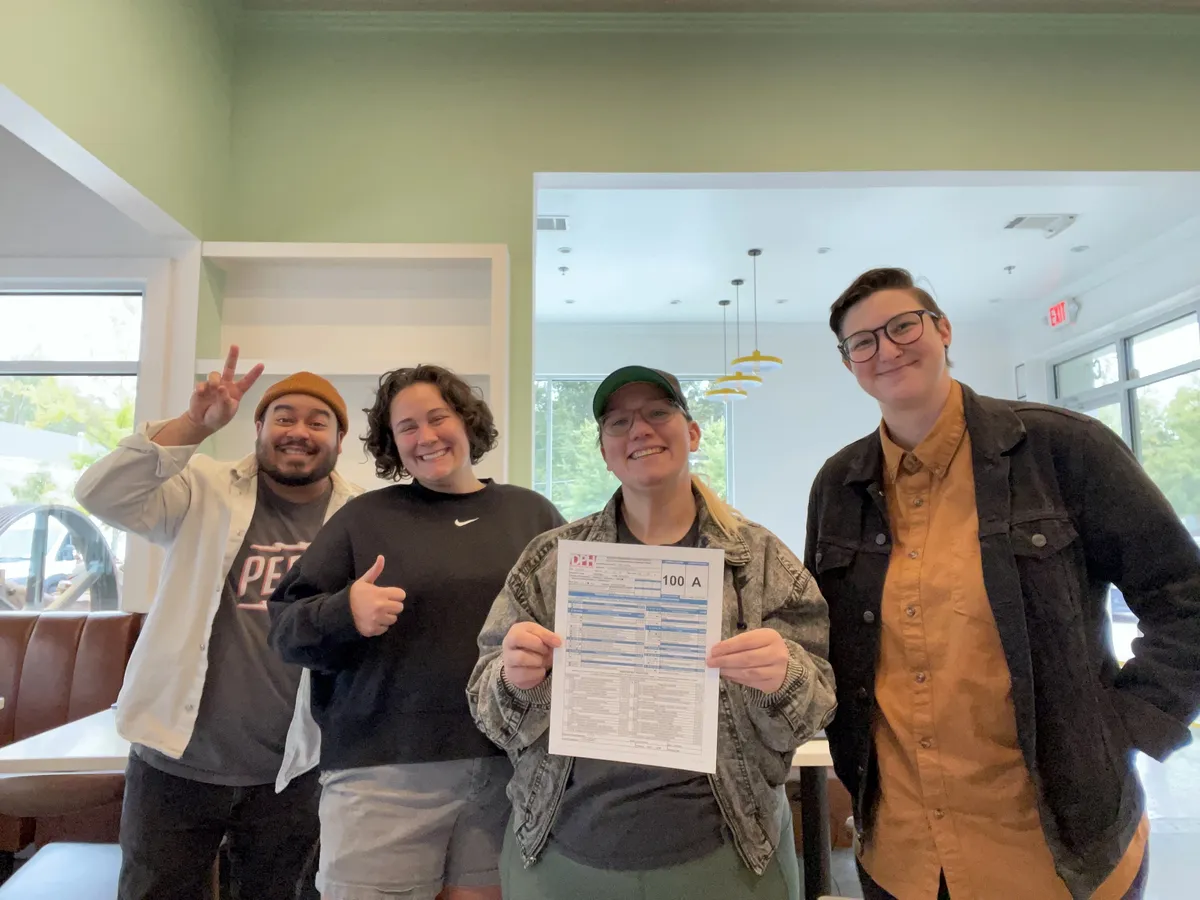
The program has proven remarkably effective: 70% of participants have become leaders at PERC, either as lead baristas or managers, and many people who initially chose the lead barista path later moved into management, bringing with them an understanding of both the technical and administrative sides of the business.
4. Empower leaders to drive decisions with data
As PERC expanded, technology played a crucial role in helping managers take ownership of their locations. The company built spreadsheet tools that integrate with Square data, allowing managers to analyze sales, forecast inventory needs, and make informed ordering decisions.
When PERC opened in Virginia Highlands, the team tested different menu items, thinking lighter fare like salads and grain bowls would attract consumers the most. But the data told a different story. After the team added waffles to their menu, including options like cheddar jalapeño, sales soared. The insight from Square analytics led the team to continue to lean into savory offerings. They added egg and cheese sandwiches and eventually PERC’s now-signature breakfast crunch wrap, which became the top seller at every location.
“We exclusively used Square data to inform when we should change over those menu decisions,” Foreman said. Weeks of tracking sales patterns across different time periods revealed customers preferences, which allowed PERC’s management team to act on the insights, steer its food program accordingly, and grow their impact on the business.
5. Shift from operator to strategist
Today, Foreman’s role looks dramatically different from what it did in 2020. Instead of hiring every barista and managing daily operations, she focuses on quarterly and annual planning.
“It’s easy to put your head down and just focus on your department and what you’re doing,” she said. “But I always get excited to hear what everyone else is doing. That really gets me motivated.”
Every week, she meets with her area managers, who then check in with their shop managers. Information flows both up and down: initiatives trickle down from Foreman to area managers to shop managers, while feedback about what’s actually working on the floor moves back up the chain.
Each quarter focuses on a major goal. Last quarter emphasized hospitality. The quarter before targeted cost of goods sold. And every Monday, Foreman and her leadership team dedicate an hour to hospitality education by watching videos, discussing prompts, and learning from people in the industry.
The formula for scaling
For other operators looking to scale their teams, Foreman’s advice comes down to a few core principles. First, hire the right people – people who align with the company’s mission, are excited about the product and care about the customers.
Second, identify what makes a great leader in your organization. For Foreman, it’s hospitality, positivity and being solution-oriented.
“If somebody’s passionate, hospitable and genuinely wants to do a good job, we can teach them all the technical coffee and administrative skills they need to be successful,” she said. PERC has hired baristas with five years of coffee experience and baristas who’ve never worked in coffee. Both can learn to make the perfect breakfast crunch wrap or Good Times Latte. The differentiator is attitude and approach.
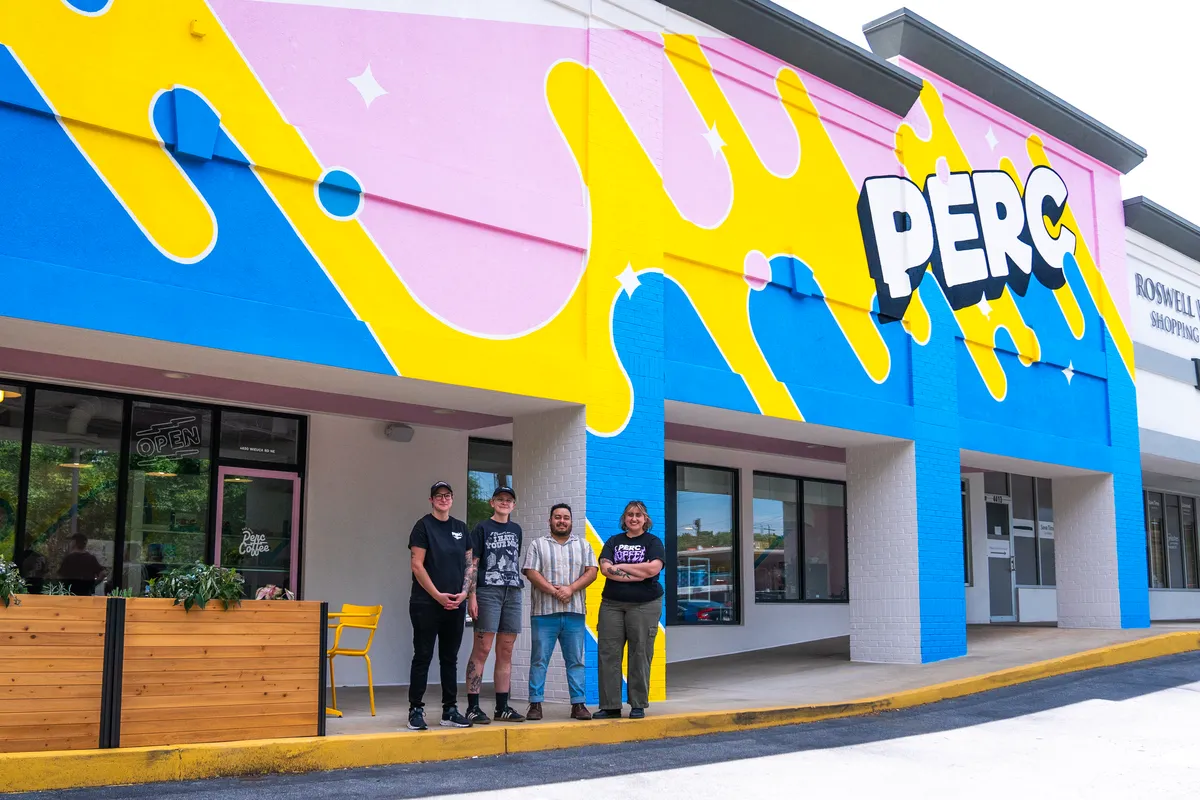
Third, once you’ve put people in leadership positions, trust them, but make sure that trust comes with support and resources.
PERC’s rapid expansion happened because the team was ready. “We grew a lot in five years,” Foreman said. “Right now, it’s just about trying to do the absolute best we can. And if we have the team and the leaders behind us, that is always our trigger point for let’s go find the next thing.”
This piece is part of the Square content collection, Around the Corner: Atlanta Edition. It’s packed with hyper-local data and community-first advice, just like this feature.