




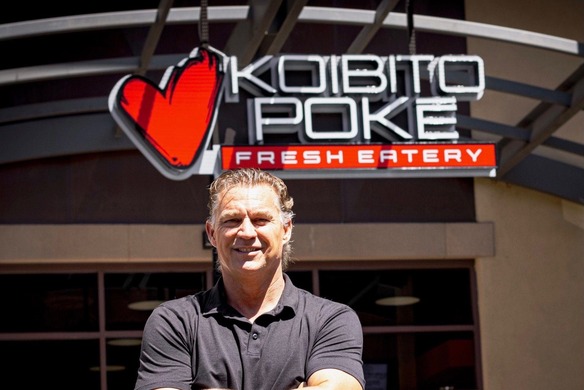


Long before Todd Stottlemyre began thinking about poke as a business, he was already drawn to the food itself. Growing up in the Pacific Northwest, he developed an early appreciation for seafood. So when he started looking for a business opportunity, poke felt like a natural fit. In 2018, he launched Koibito Poke with a business partner.
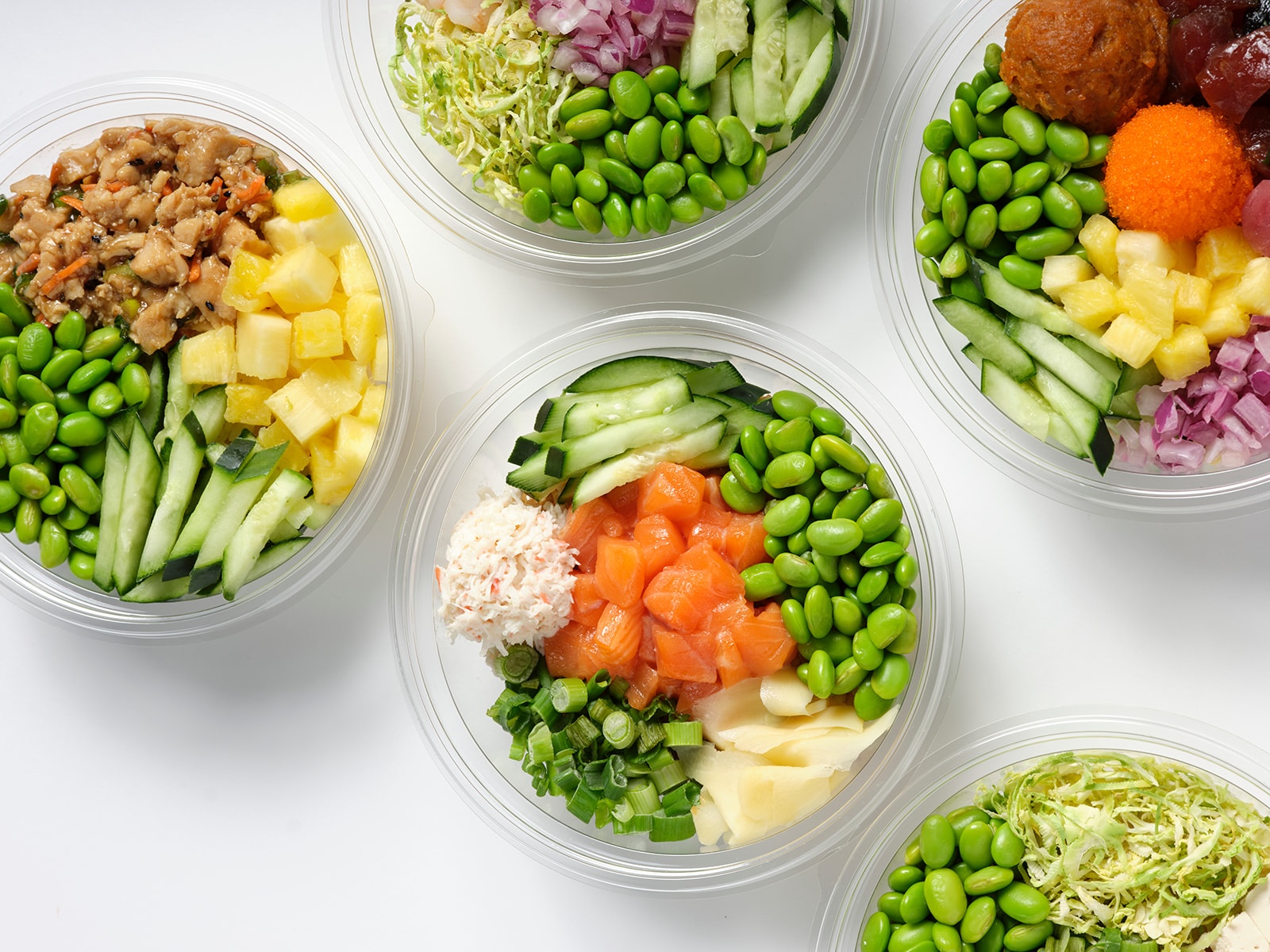
The Arizona-based poke brand serves customizable bowls made with fresh ingredients influenced by Hawaiian and Japanese flavors. For Stottlemyre, the brand’s focus is captured in its tagline: “Reel Food. Real People.”
“People think we misspelled the word reel when it comes to food,” Stottlemyre said. “But we didn’t.”
The word is a nod to where much of Koibito Poke’s food comes from. Everything on Koibito Poke’s food line, he explained, comes from either a farm or an ocean and “it’s authentic because we serve it in its rawest form.” It was the idea of building a business around food he believed was genuinely good for people that drew him to poke.
The company began as an owner-operated business, and Stottlemyre took full ownership in December 2019. Three months later, COVID-19 shut down restaurants across the country.
“Ninety days after buying 100% of the business, my thought was, ‘Good Lord, I just made the biggest mistake of my life from a business standpoint financially,’” he recalled.
Instead of pulling back, Stottlemyre and the team found ways to adapt. A former Major League Baseball pitcher who spent 15 years in the league and won three World Series championships, Stottlemyre drew on the mindset that had shaped his athletic career.
“In athletics, failure is not a possibility. It’s a foregone conclusion that you’re going to fail,” he said. “Anytime we got into a place of failure or setback or struggle, it was find a way to get better.”
Since taking full ownership of the business, Stottlemyre has helped Koibito Poke grow to 10 locations with ambitions to expand far beyond Arizona. Along the way, the company has added delivery, catering, franchising, and a regional developer model designed to support growth across new markets.
As the business evolved, its technology needed to evolve with it. The team needed a technology stack built for where the brand was headed.
The challenge: A tech stack that no longer matched the business
When Stottlemyre acquired full ownership of Koibito Poke, he also inherited its existing tech stack. According to Kamdan Hightower, the company’s vice president of systems and technology, those systems had served the business well for a time. As Koibito prepared to scale, however, the team began to feel constrained by limitations in reporting and functionality.
[/sq-image]
[/sq-image]
“There was that missing link to elevate us to the next level, and that was the tech stack,” Hightower said. “We were feeling a little bit held back in terms of some of our reporting and some of the functionality.”
Having the right technology was increasingly important because Koibito had evolved from operating its own stores to selling individual franchises. The goal was to take what the company had built in Arizona and create a repeatable model that could support entrepreneurs elsewhere.
The company had already invested in systems for store operations, training, franchise management, construction, branding, and marketing. What it still needed was a technology platform that could bring the same level of sophistication to payments, data, and customer engagement.
Koibito was also thinking about how emerging technology could support the business. The team wanted to explore AI more fully, but Hightower felt some of the legacy systems they had used were not evolving quickly enough in that direction.
For Stottlemyre, the technology stack became the “last brick” Koibito needed to put in place.
The solution: A connected platform for franchise growth
The Koibito team wanted a system that could support a growing franchise business, connect with the tools it was already investing in, and continue evolving as technology changed.
The broader Square ecosystem stood out for its flexibility and ability to work alongside other platforms. The pace of innovation at Square also mattered to the team. As Koibito explored how AI and other emerging technologies could fit into the business, they wanted partners that were willing to evolve alongside them. That included both Square and Thanx, the restaurant guest engagement platform Koibito uses for loyalty, online ordering, and its mobile app.
[/sq-image]
[/sq-image]
“One of the really impressive things about Square was how fast they’re willing to evolve” Hightower said. “We want to roll with the tide of AI, utilize the platforms, utilize the tools, and that’s exactly what Square and Thanx brought.”
The integration was important because the company wanted payments and restaurant operations to connect with a customer engagement platform that could help it build loyalty and understand how guests interacted with the brand over time. The connection between the two platforms was a key part of what made the overall technology stack attractive.
“The Square partnership has fit right alongside that model for us in terms of being able to evolve, being able to work with our franchises, being able to take advantage of the new tech,” Hightower said. “They hit all the marks on that.”
Data was another important part of the decision. “One of the huge selling points too in today’s world is data,” Hightower said. “Square is the leader in data. They have so many data points. They allow merchants to actually utilize those data points, which is so powerful.”
For Stottlemyre, Square and Thanx completed the system Koibito had been building around its franchise model.
“The last piece to becoming a world-class company, a business in a box, was our tech stack,” he said. “We believe that Square and Thanx have absolutely done that because we feel like they’re best in class and they’re certainly best in class for what we were looking for.”
The impact: Better visibility into the customer journey and a stronger foundation to scale
With the new technology stack in place, Koibito can focus more closely on what happens after a customer walks through the door.
One of the main markers the team watches is whether a customer joins the loyalty program, where Koibito can follow the journey from a first visit to a second and third, which Hightower considers important.
“There’s a well-known statistic in the restaurant world: the conversion rates on the first and second visit are lower, but once you get someone to that third visit, the likelihood of them becoming a regular jumps way up,” Hightower explained.
The team can also use automated marketing to reconnect with customers who have not visited recently. “If someone hasn’t been in in the last 30 days, [we send] some sort of marketing message to get them back in the store.”
The visibility into customer behavior gives Koibito another way to think about loyalty. Rather than relying only on discounts to drive repeat business, the company wants to understand how often customers return and what it takes to become part of their routine.
“How can we create a loyalty program where we’re not just having to give away food and money to get people in the door, but actually building a loyal brand where people want to come in?” Hightower said. “Because at the end of the day this is a lifestyle brand. It’s a health brand. It’s a way of life.”
As Koibito prepares to grow its franchise network, the company now has access to systems and tools more commonly associated with much larger restaurant brands.
“It’s really prepared us to scale long term,” Hightower said.


