




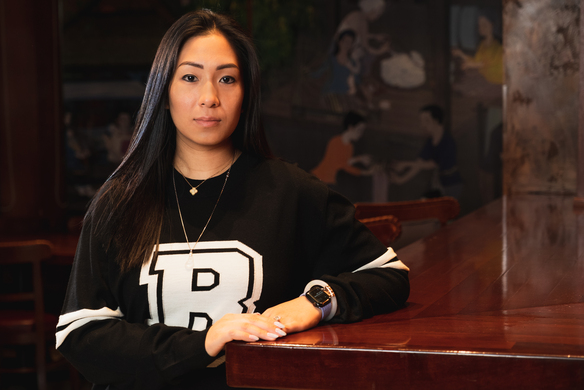


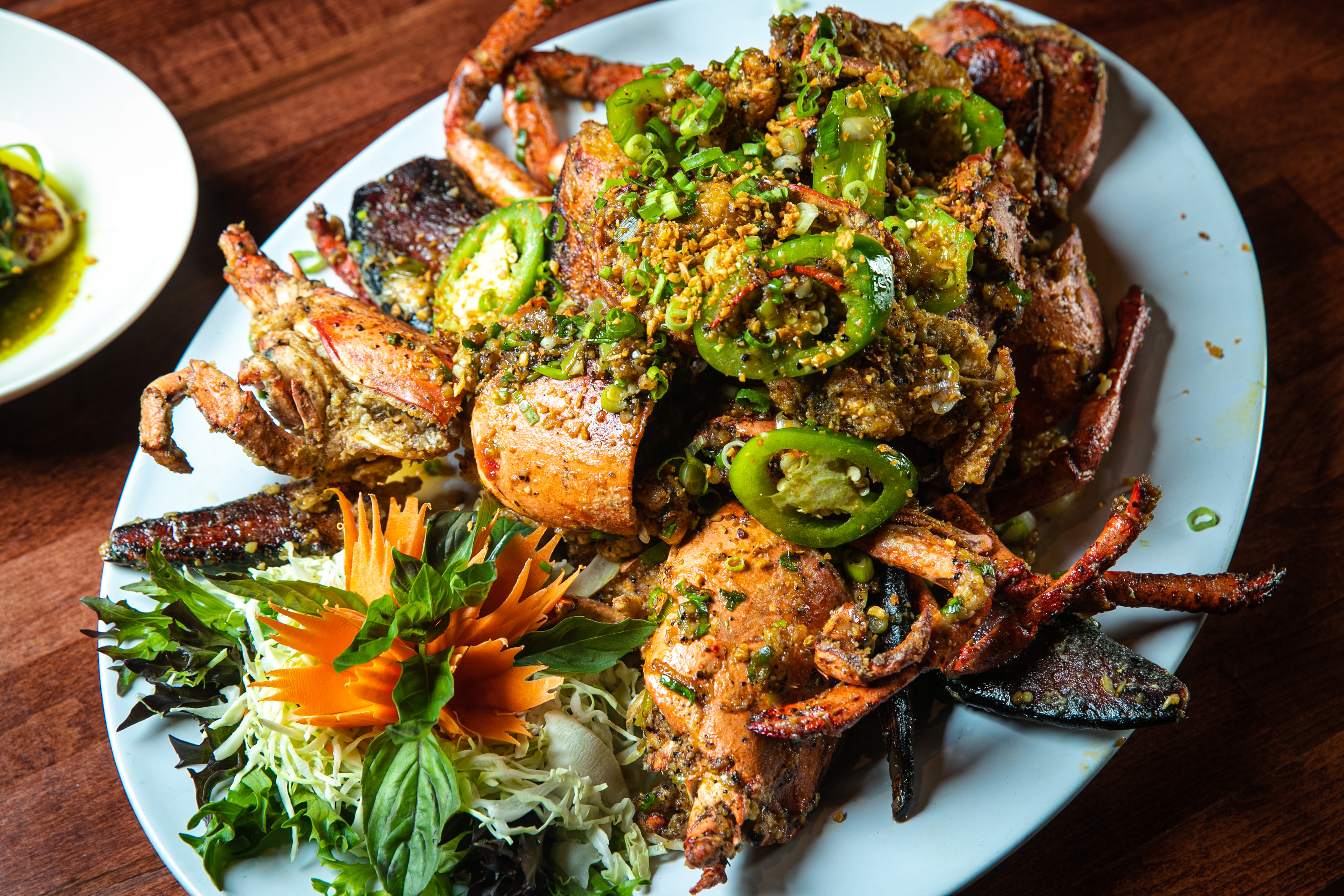
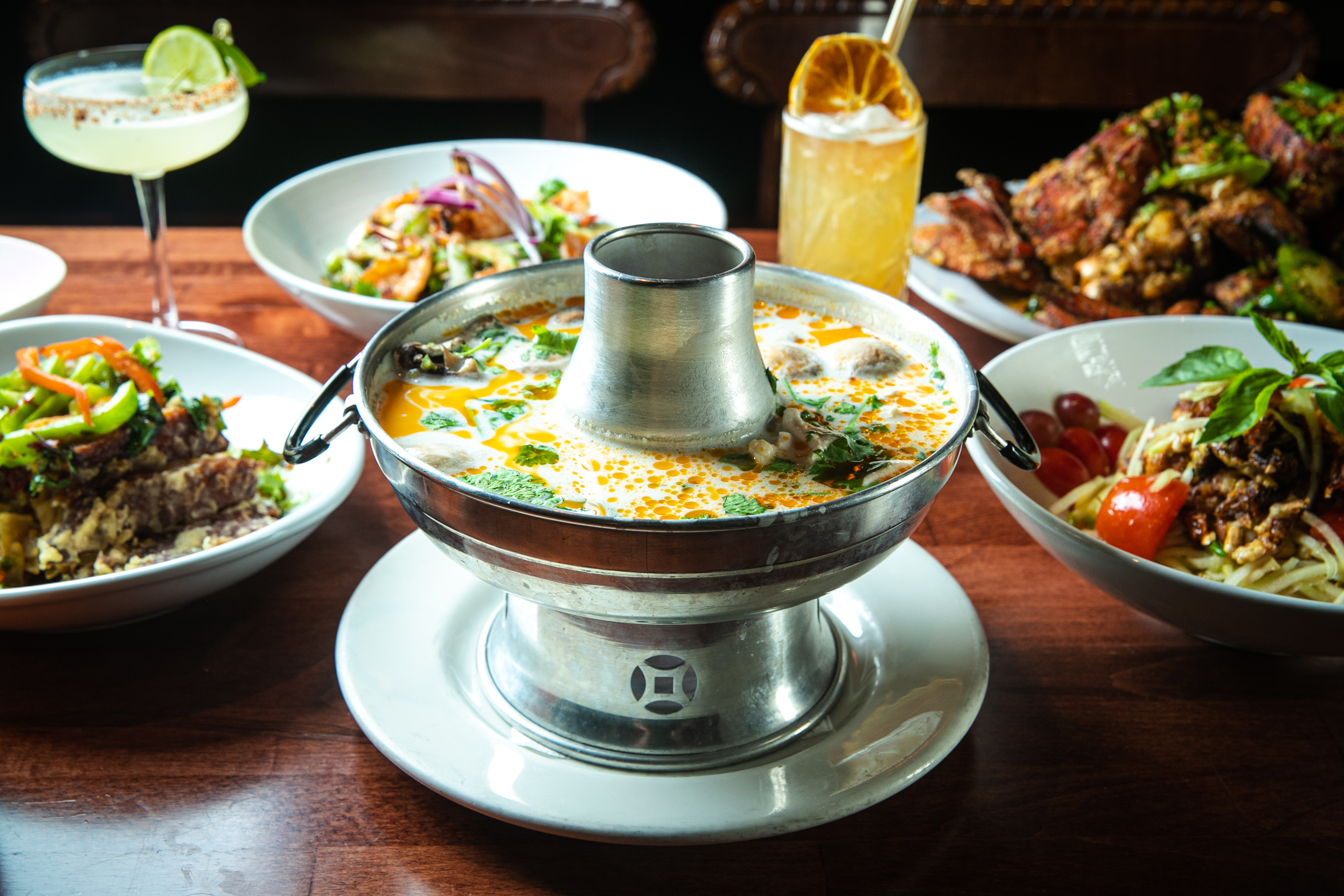
When it comes to naming the best Thai restaurant in America, critics from Anthony Bourdain to Jonathan Gold agree that the answer is Lotus of Siam. The Las Vegas staple, founded in 1999 by James Beard award-winning chef Saipin Chutima and her husband Bill, serves recipes that have been passed down for over 100 years. The iconic restaurant is known for Thai food that relies more on hearty herbs and spices as opposed to the sweet and tangy flavor profile commonly found in other restaurants.
Despite its critical acclaim and one-of-a-kind flair, Penny Chutima, chef Saipin’s daughter, was originally reluctant to take over the restaurant for her parents. She was studying corporate law and close to finishing her degree when the roof collapsed on the restaurant in 2017. “I was really vocal about making sure the landlords didn’t get away with that, because it wasn’t legal,” Penny explained.
As she worked through landlord-tenant law in class, the roof collapse gave her an opportunity to apply her lessons in real-life. “My studies actually ended up being put to pretty good use,” she added. Since that moment, Chutima has been instrumental in operating Lotus of Siam, leading the business to open an additional location and even a new point-of-sale.

The challenge: Complex, fragmented tools that complicated operations
The business previously relied on Toast to handle its operations, but she eventually grew frustrated with the way the point-of-sale handled chargebacks. “If there’s an issue with a customer’s card, you have to work with one of their banks to reach a solution,” she explained. On top of that, Chutima and her team were also unsatisfied with the level of customer support she’d been receiving. “I texted a rep one time for a printer, and I never heard back from him.”
Adding another layer of complexity was the reporting feature and the overall usability of the product. Staff would consistently have questions about how certain features worked, and the reports were never straightforward. “Our sales reports would show us what was being reported, but what was being deposited was completely different.”
The business also struggled to operate during the rolling blackouts that frequent Las Vegas. Toast had a crash kit for when the internet went down, but it often complicated the checkout process, creating more ambiguity than clarity.
In July 2025, the team knew it was time for a change.
The solution: An intuitive program that creates transparency and clarity
The business originally adopted Square as a crash kit during rolling blackouts, but soon decided to adopt the full point-of-sale for seamless operations. “With Square, you can just use your phone and have a customer pay right then and there. A blackout no longer has to impact the rest of the business,” she said.
Chutima and her team also noticed an immediate improvement when it came to managing funds. With clearer reporting, the team has a clearer view of how their business is performing and a singular view on what’s being reported and what’s being deposited. “It actually helps us manage our funds a lot better, and we’re not finding missing things after the fact,” she said. “The metrics Square provides are way more beneficial for businesses because it’s very transparent.”
Even the smaller things, like handling chargebacks, are a smoother process. With Square as the merchant of record, Chutima and her team no longer have to worry about banks calling them to handle credit card issues. “Square handles everything.”

The switch has also made things easier for her staff. “Square is a very [intuitive] program, whereas with Toast it wasn’t as easy for people to just come in and figure it out.” As a result, she does not worry about her restaurant managers calling her at random hours of the night asking her how to complete certain tasks, because they’re able to easily navigate the interface. If there are questions, she notes that the Square AI feature at the bottom of the dashboard is able to provide direction. “It’s actually pretty awesome,” she said.
The impact: Five-figure savings and more opportunities
Beyond easier staff management, clearer reporting, and better payment processing, Lotus of Siam is able to save roughly five figures as a result of the switch. More money saved and more efficiency creates more opportunity for the team to focus on re-opening its flagship Sahara location, which will also be using Square.
“Square might’ve started for small, single-location restaurants, but I can see that the platform is growing, adopting, and changing rapidly,” Chutima explained. “It’s trying to be better than its competitors, and that’s what mattered.”


