



Table of contents
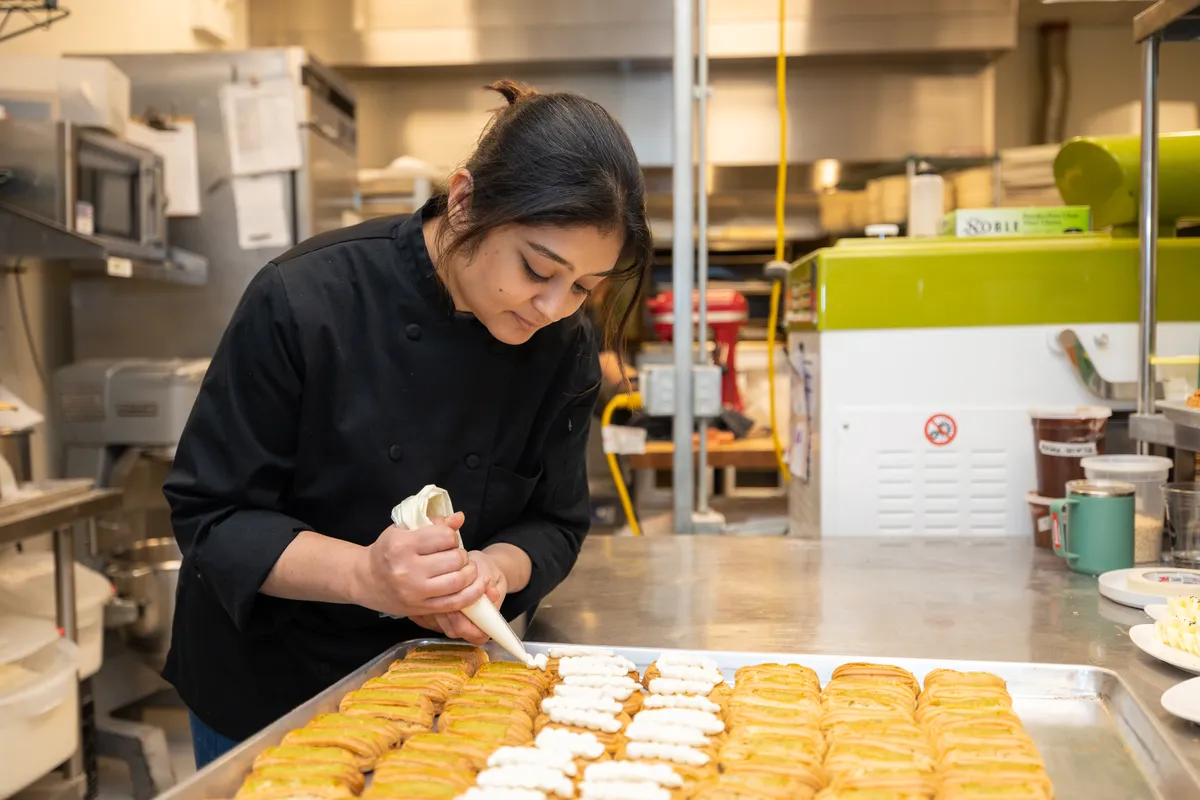
Chef Arshiya Farheen fell in love with restaurant work in Paris, where she trained then worked in prestigious French kitchens inside hotel Le Meurice and patisserie Arnaud Delmontel. She loved the rigor of the kitchens, the precision, the discipline, the pursuit of excellence.
“But,” she says, “I was often one of very few women in the room. And while no one explicitly told me I didn’t belong, there were subtle messages about endurance, about commitment, about who was ‘cut out’ for this life.”

When Farheen returned to Chicago just over a decade ago, she brought the best of her time in France with her — a love for pastry, a commitment to discipline and high standards, and a passion for creating beautiful food. But she added something personal.
“When I came back to Chicago and started meeting young women who wanted to work in kitchens, I kept hearing the same stories,” she says. “They were talented and driven, but they were navigating pregnancies, caring for parents, raising children … and being quietly pushed aside for it. Or they were paid less. It stayed with me.”
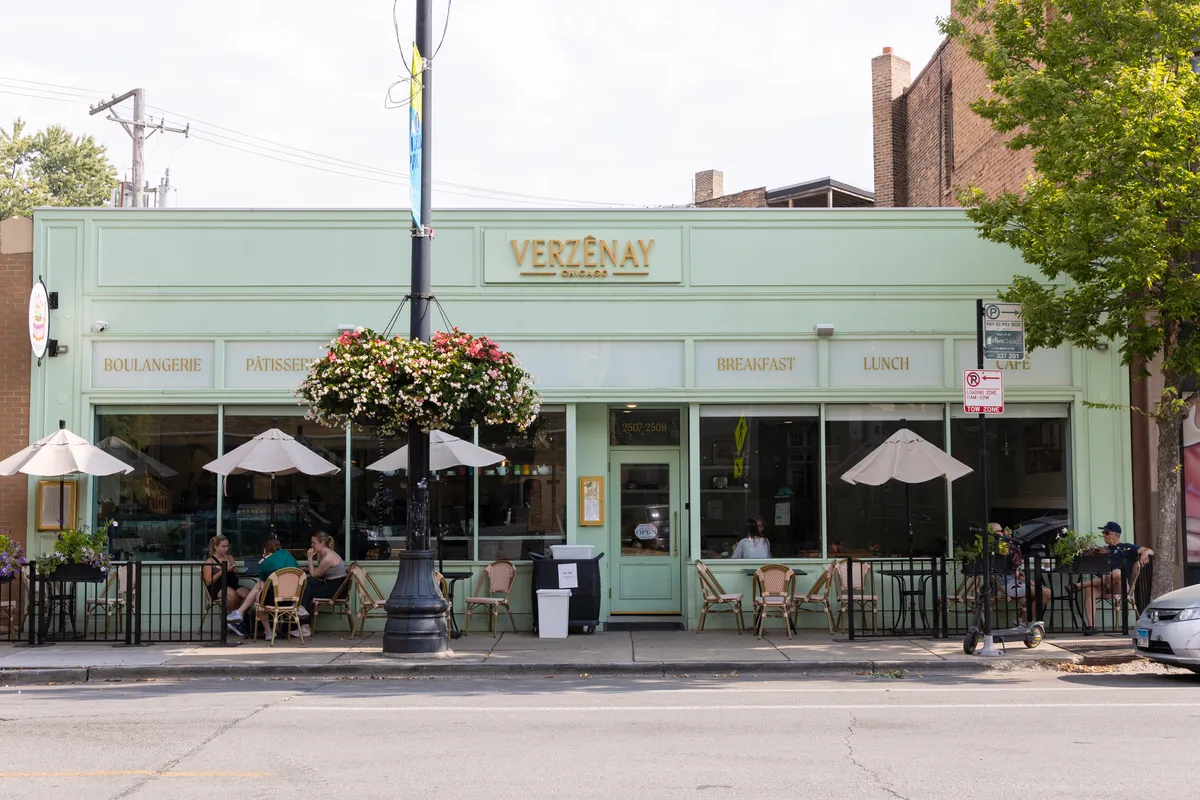
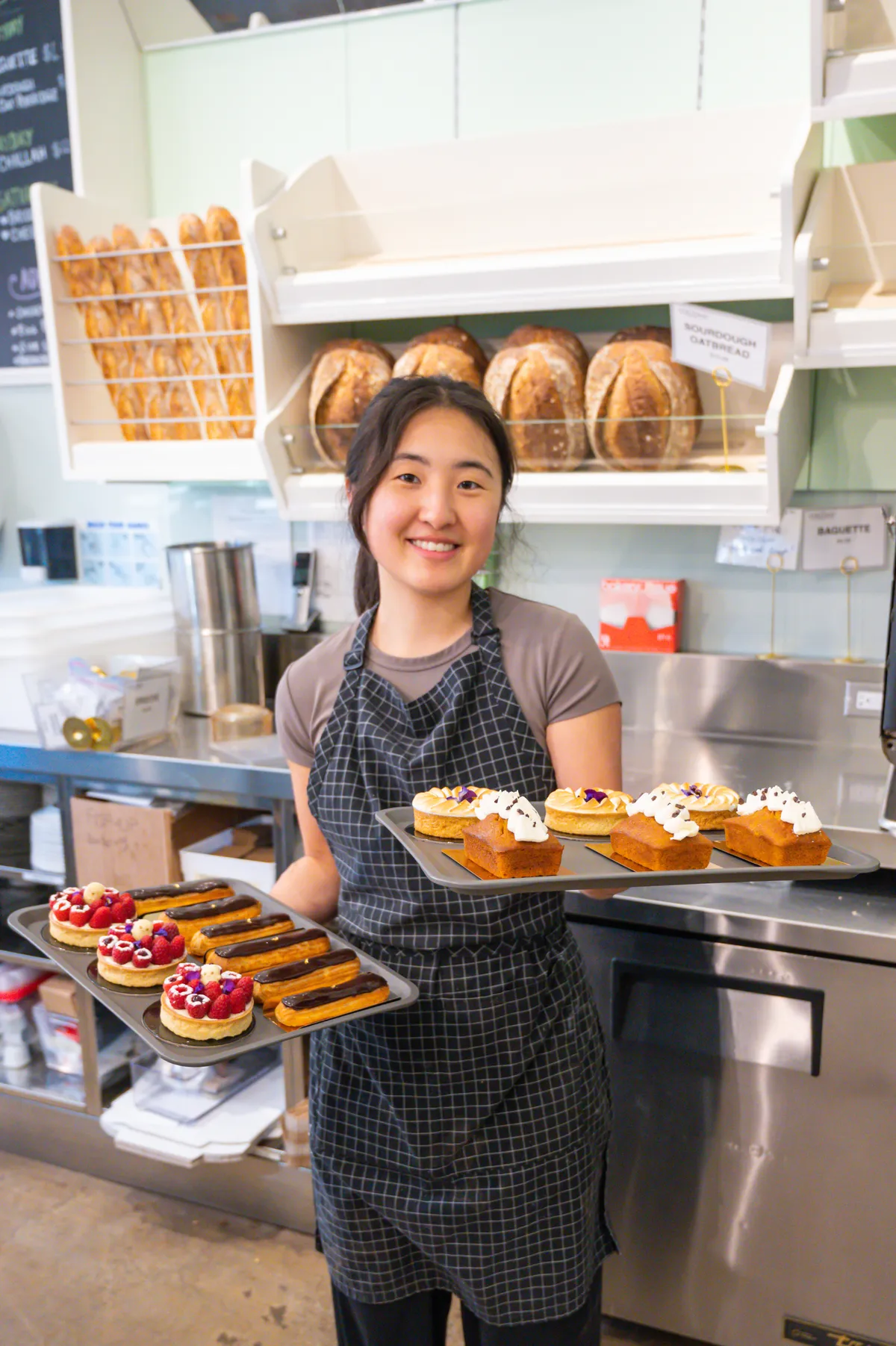
Those stories shaped what ultimately became Verzênay, a bakery in Chicago’s Lincoln Park neighborhood. Verzênay serves pastries, cakes, and other gorgeously constructed treats. The team also hosts special events, like a recent three-course Valentine’s Day lunch.
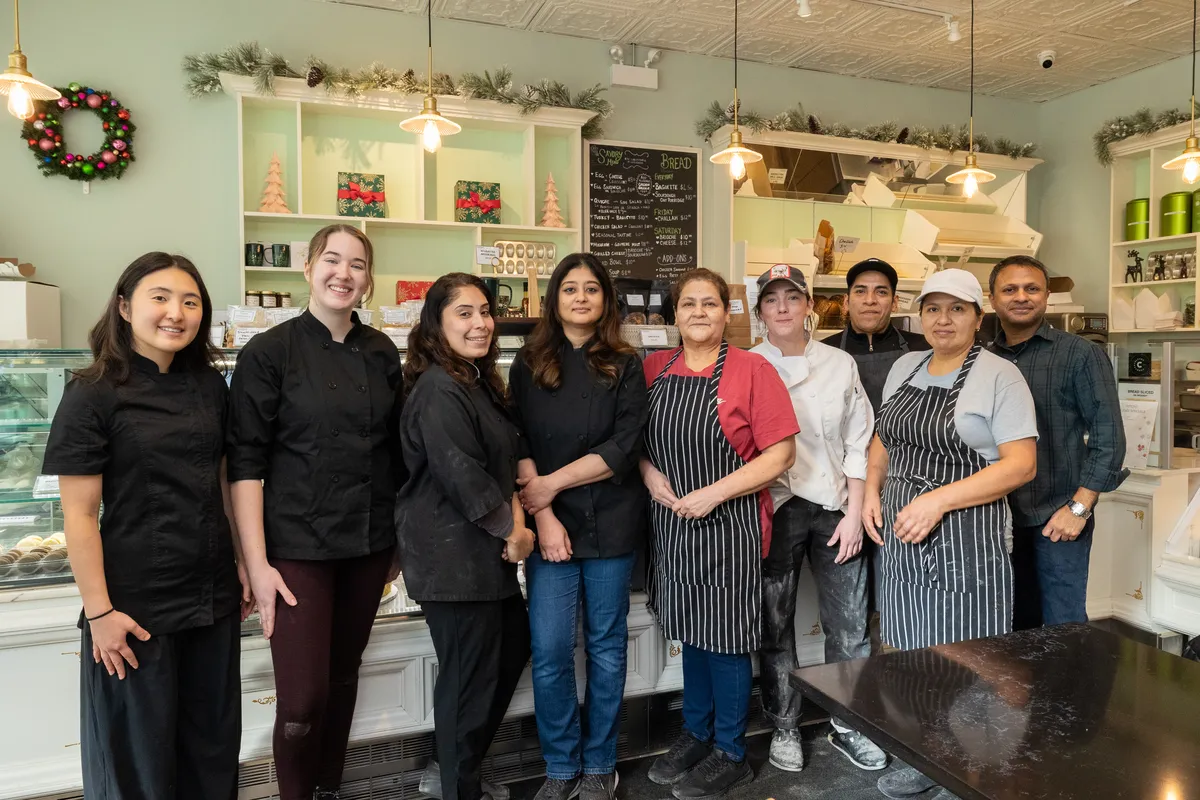
Most of the people who work inside its kitchen are women. “I didn’t sit down and say, ‘I’m building a female kitchen,’” she says. Instead, she built the kind of kitchen she wanted to work inside. “Over time, that intention shaped the team naturally.”
My interview with Farheen felt different — and not just because we squeezed it in over an email exchange during Verzênay’s Valentine’s Day rush. (Though we did!)
Still, Farheen wrote answers to my questions in a way that seemed so obvious, so self-assured, so, “Why wouldn’t everyone do it this way?” I appreciate a point of view. I especially appreciate a point of view from a woman, a mother, a business owner who’s succeeded on her own terms. Our exchange reminded me of the importance of sticking to values that matter and rethinking success when building a very human hospitality business.

How building a strong team uplifted the entire business
Farheen opened Verzênay in 2021 alongside her husband, Aqeel Wahiduddin. Now, several years in, Farheen sees clear benefits from her intentional hiring decisions: low turnover, high-quality customer service, and consistent product quality. Or, in Farheen’s words, “deep loyalty, care, and investment.”
“When someone feels safe and respected, they don’t just clock in and clock out,” she says. “They care about the details. They protect the standards, they protect each other.”
It’s also personal. As a woman, a business owner, and a parent, Farheen is proud of her ability to balance ambition with responsibility — that is, chase her own goals while caring for her children — and wanted to create a space where other women don’t have to, in her words, “apologize for being whole human beings.”
(As an entrepreneurial, independent journalist who is also a parent, I feel this tug-of-war acutely!)
“Of course, it requires flexibility,” she adds. “Life happens where childcare falls through, a parent gets sick, something unexpected shifts. I’ve had to learn to build systems that can bend without breaking. But what’s beautiful is that support flows both ways. In the moments when I’ve needed my team, they’ve stepped up without hesitation. There’s a quiet strength in that kind of culture that’s not loud, but it’s incredibly powerful.”
A nice thing about quiet, though, is that it makes it much easier to listen.
Strengthening operations with a continuously fresh outlook
Farheen welcomes culinary students into Verzênay’s kitchen, too. This generation of students think differently about work-life balance, sustainability, and technology, Farheen says. They question tradition, not out of disrespect, but out of curiosity. Their perspective has pushed Farheen to modernize certain operational processes and even rethink how she communicates the business’s values.
Students “keep the business from becoming rigid,” she says. They also keep her on her toes.
“Students ask ‘why?’ in a way that experienced professionals sometimes stop doing. ‘Why this technique?’ ‘Why this sourcing choice?’ ‘Why this structure?’ Having to answer that keeps us sharp,” she says. These are the questions that keep food and beverage businesses evolving, from how food reaches the table or how customers interact with staff. And each question, whether posed by a culinary student intern or an inquisitive customer, are an opportunity to introduce change.

Setting up for long-term, grounded growth
Across the country, restaurant operators are rethinking team culture, optimizing for flexibility and belonging rather than efficiency alone. It makes a difference! In a recently released 2026 Independent Restaurant Industry Report, the James Beard Foundation says that over half of chefs report insufficient staffing at their restaurants. The report, positioned as a future-looking solutions guide for independent restaurants, suggests that flexible scheduling — split shifts, self-service shift swapping, clock-in grace periods — can support work-life balance and reduce burnout.
I asked Farheen how all of her decisions about Verzênay have influenced its trajectory. We hadn’t discussed much about her plans for growth or expansion, though in a separate interview, her husband told me Verzenay was expanding into catering and also nationwide shipping, selling cookies, jams, jellies, preserves, and gorgeous packaged bonbons to customers outside of Chicago.
“Choosing the harder path — which is paying fairly, sourcing intentionally, building flexibility into schedules — isn’t always the cheapest or fastest strategy but it builds trust with staff, farmers, and customers,” she says.
Her clarity here is refreshing, especially in an era of extreme optimization that feels more robotic than human.
“Our growth hasn’t been explosive for the sake of expansion. It’s been steady, rooted. And I believe that’s because the foundation is strong. When you build with intention, growth becomes sustainable not just financially, but culturally. For me, that’s success.”