




Table of contents
As we were building Managerbot, there was one question I kept coming back to. What does a great business manager actually do? They take initiative. This means not waiting to be asked, walking in with a list, and flagging the thing that’s on fire before you even realize it’s there. They’re aware of the important metrics, staff decisions that cost – or make – money, and whether or not it’s the right time to open up another location.
With that in mind, that’s the standard that we set for ourselves. With Managerbot, Square wants to show up before sellers even ask the questions.
The problem with dashboards
Square has been collecting tons of data on behalf of our sellers for years, including inventory, sales trends, labor costs, and customer return rates. The problem has never been that the data doesn’t exist. Rather, the problem was that finding the data required sellers to already know exactly what they were looking for.

During our early research phase, we spoke with sellers who described a recurring frustration of knowing the data is there but not always knowing how to get to it. They found themselves digging through their reports, manually running reconciliations, and toggling back and forth between tabs. It was a headache to make major decisions based on their gut feelings because the full picture was too broken up and hard to digest.
Even with static dashboards, the burden still fell on the operator. They had to know exactly which report to pull, which time frame to select, and which variable to isolate and look at. For small business owners – people who are juggling the kitchen, the staff, the floor, and the books – that can take up a lot of time and energy. Sellers told us they wanted a simple, quick snapshot of their performance, without having to run it themselves.
That exact insight was the beginning of moving away from dashboards entirely. Now, instead of just creating a smarter dashboard, we have Managerbot.
Changing everything with proactivity
Sellers don’t always have a set workflow, and that quickly became clear during our research process. Every day is different, and sellers are accustomed to responding reactively, whether they’re working with a customer or putting out a fire. They lack prioritization, not information.
That’s why we felt inspired to be proactive partners. When sellers got a look at early prototypes of the chat-forward interface, which included the classic “ask me anything” model, they made it clear that they actually don’t want to have to ask. Instead, they want to be led. This means knowing what their attention needs to be on that day and what’s trending in the wrong direction.
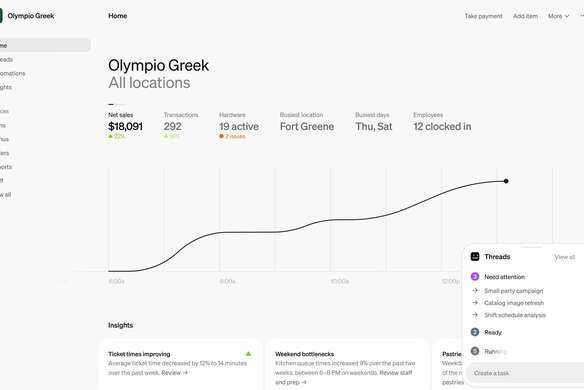
With that in mind, we didn’t completely eliminate the chat. Instead, we repositioned it. The chat function still follows up with sellers and allows them to take a deeper look at their insights, but it’s no longer the main event. The main event is now the interface that surfaces relevant information before sellers even think to ask.
That philosophy was put to the test this winter when the northeast was hit with a series of storms, and sellers were struggling with full-day losses. Managerbot is designed to support this kind of proactive intelligence. It generates questions like: Should you run a promotion? Is it worth it to stay open for an extra hour when the weather improves? Is it a good idea to close early to save on labor costs? It takes out some of the guesswork for questions that would otherwise require a lot of thought and manual analysis during a rough week.
How Managerbot learns what to surface
Sellers don’t always know what they’re missing, and ultimately, that was the hardest design problem we faced. It’s difficult to ask someone for insights they’ve never seen before. With that in mind, we went somewhere else for the answer.

We started by looking at years of seller behavior across Square. This included the custom reports people were generating for their businesses, which data they looked at most often, and what they wanted that wasn’t offered yet. We also asked ourselves about the things every business needs to know, whether they realize it or not, and that became a blueprint.
Managerbot is designed to function like the high-achieving business manager who shows up every morning with a plan. We know that sellers don’t know what they don’t know, as simple as that sounds, so instead of waiting for them to ask the right questions, we show up with suggestions and potential solutions.
For example, labor-to-revenue comes up a lot. A seller might think they’re losing money by keeping their staff on for an extra hour at the end of the day, but Managerbot runs the actual numbers and shows them that the opposite is true. Sometimes, the revenue that comes from staying open that extra hour outweighs the cost of the labor, and information that initially feels like a gut-based decision suddenly becomes data-backed.
Managerbot doesn’t just flag recommendations — it can execute them, with seller approval. That model is the reason sellers feel confident delegating more as they go. Now, we’re focused on building out ways to check the work and dig through the charts and data tables. Audited automation is automation that people will actually use.
Shifting from putting out fires to growing
We asked sellers what they would do if they were given three to five hours back every week, and they all had a similar answer. They want to grow, whether that means opening a second location or launching a new line of products. And the marketing they never get around to is a priority, too.
That’s what we’re trying to build toward. Most sellers started their businesses because they genuinely love the work, and they deeply care about their relationships with their customers. The operational overhead is just part of the job, and Managerbot is being designed to absorb as much of that load as possible.
In the near term, that means more automation across more channels and locations, which comes with richer data that shows how a seller is performing relative to similar businesses in their category or even in their zip code. In the longer term, it’s about insights that help sellers understand what to do next and actually do it.
The product is changing quickly, but that’s part of what makes it so exciting. The underlying AI is evolving, but our goals remain the same. We’re creating a proactive and intelligent business manager for every Square seller, and it’s getting stronger and more capable every week.