




Table of contents
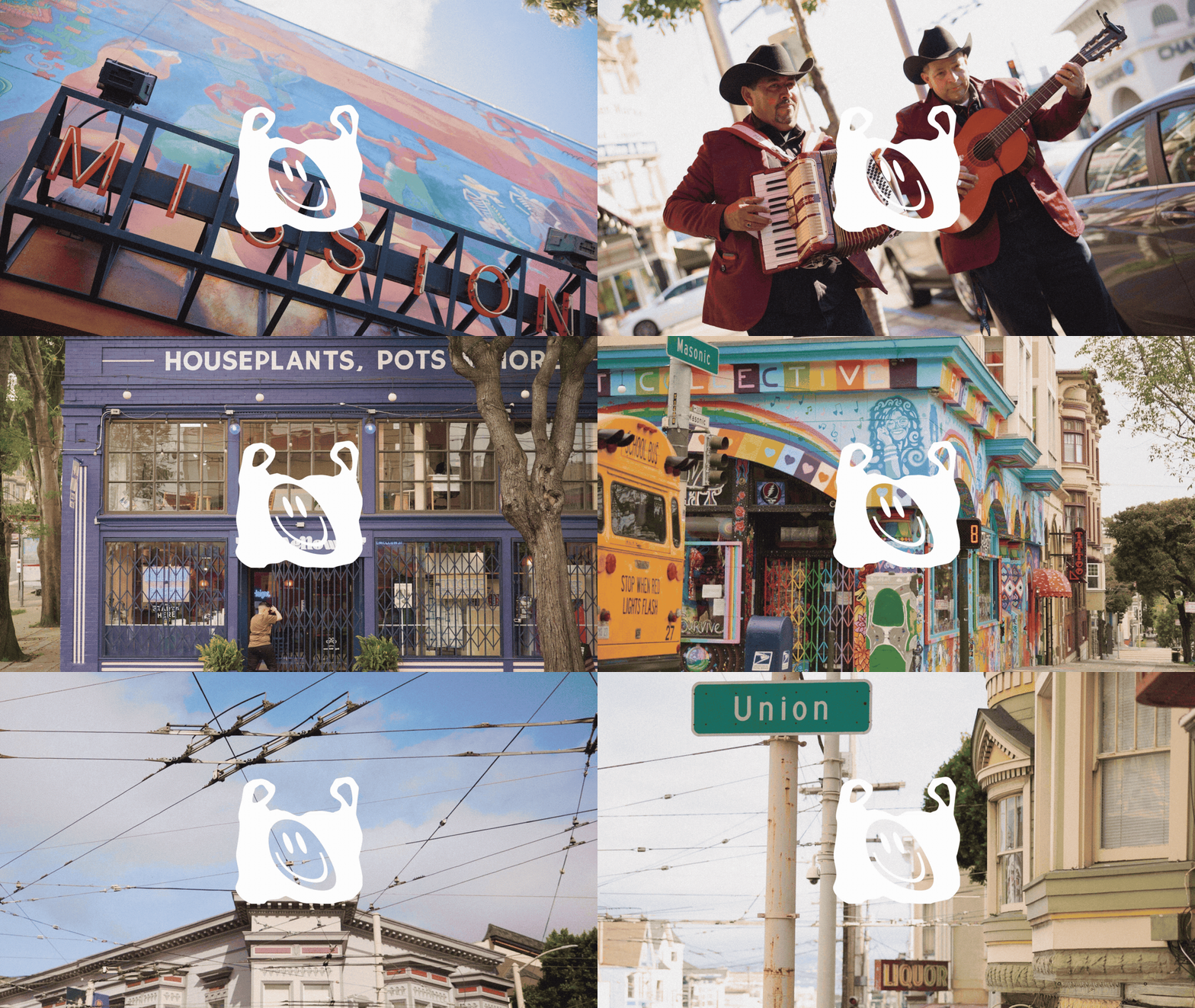
Before San Francisco native Ramzi Budayr started running Dolores Deluxe in the Mission, he worked in restaurants in New York City and Los Angeles. There’s a key difference. He explained, “Of all my lessons that I tried to apply here [in San Francisco], I would say half of them were not even applicable.”
One of the first things you learn in San Francisco is how the city’s unique layout impacts everything. “Neighborhoods here are just a one block radius because of the topography,” Budayr said. He added that despite having friends who live a few blocks away from his corner store, he rarely sees them because a hill makes the location actually not all that convenient.
We got curious. What more can we learn about San Francisco’s spending habits? And how can that information help local business owners make smarter decisions? According to Budayr, San Franciscans care deeply about shopping local, which he dives into in the Forever Neighbor podcast series. “In the Mission, and in San Francisco generally, I think people are really good about walking the talk of supporting locals,” he said. “People go out of their way. They’re willing to pay a couple extra dollars for ‘X’ or ‘Y’ products here, rather than go to a big box chain or order it online.”
So we dug into the numbers. From a rise in whole milk on coffee orders, to a super burrito surge happening on Fridays, here are a few surprising insights from Square data and how you can use them to make your business decisions.
Menu modifiers in demand: Whole milk, vegan options, and mocktails
Customers often modify their food and beverage orders, whether by adding or removing an ingredient in a dish. Square data revealed interesting upticks in menu modifications and shifts across beverage orders. Data pulled from coffee and tea shops and bakery and pastry shops showed latte orders went up by 21% between January and May.
The rise in latte consumption tracks with San Francisco’s rise as a top coffee city. San Francisco was recently ranked among the best coffee cities in America, surpassing even known coffee hubs like Seattle. Why? Today, we have excellent local options to choose from. According to Ritual Coffee Roaster founder Eileen Rinaldi, when she opened Ritual 20 years ago in the Mission, she was bringing something brand new to the neighborhood by roasting in the style she was used to in Seattle. Reflecting back on their opening day Rinaldi shared, “I just remember every time I would give somebody a drink that day, I was like, ‘thank you so much for waiting.’ And the response so often was like, ‘thank you for creating something worth waiting for,'” she told Budayr on an episode of Forever Neighbor.
San Francisco customers have shown they’re willing to pay for well-crafted, specialty coffee beverages. But they’re increasingly interested in other caffeinated options, like matcha, which accounted for 14% of all latte orders in January, and rose to 18% of all orders in May.
Why the surge? Matcha has unique wellness benefits that are attractive to health-conscious consumers. Much like single-origin coffee made its way to San Francisco, matcha is also increasingly becoming more available to customers in the Bay Area through new cafes and tea houses. Lattes in general are an affordable luxury for San Francisco customers, and while health trends come and go, one thing is certain: customers often follow.
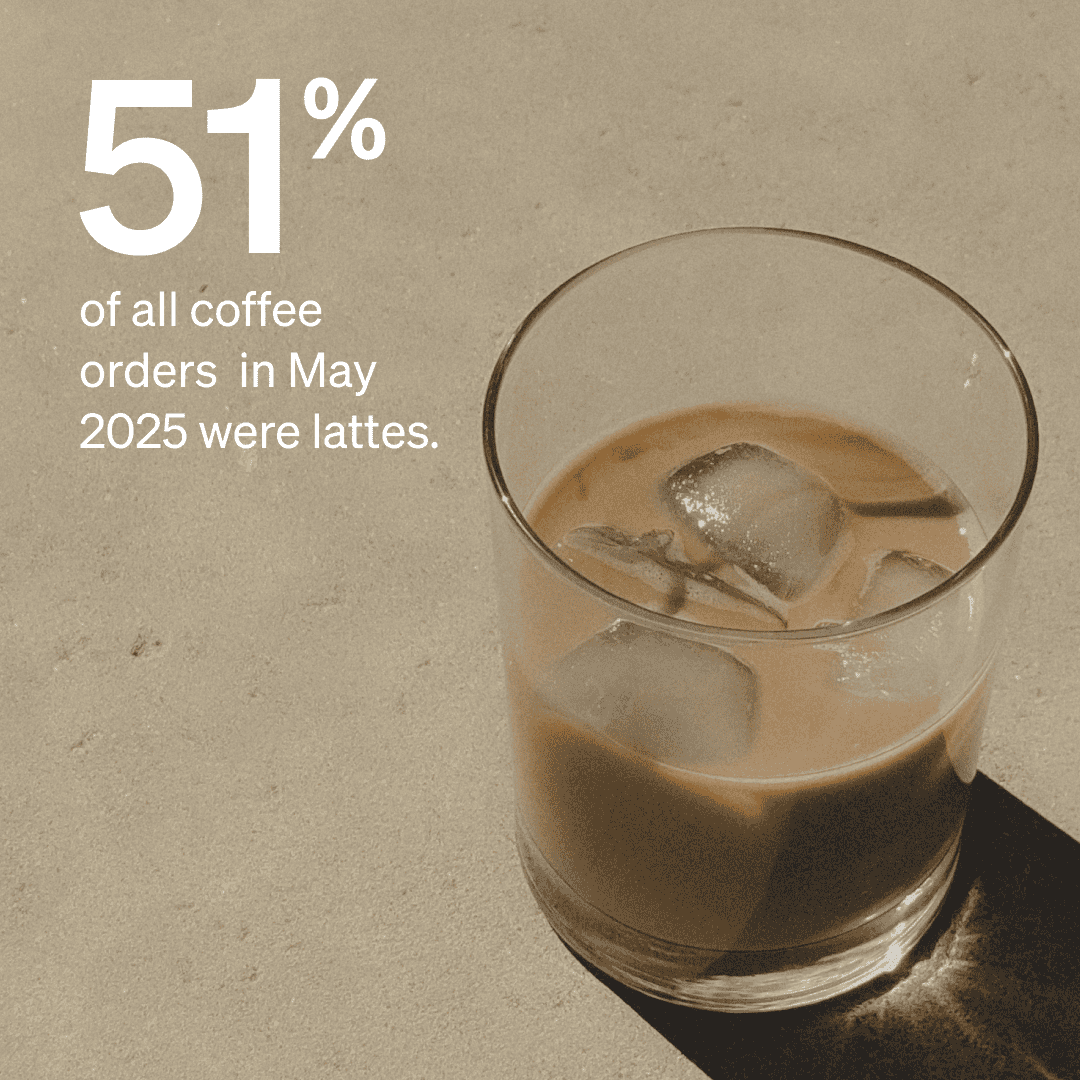
Over half (51%)
of coffee orders placed in May 2025 were lattes. Followed by:
- Cappuccinos (11%)
- Mochas (7%)
- Americanos. (7%)
Following the swing of health trends, ten years ago, milk was out and dairy alternatives became all the rage. Alternative milks were known for being more sustainable and anti-inflammatory. Now, customers are focused on protein and preferences may be changing again. While oat milk still remains dominant in lattes (41.75% share in May 2025), the whole milk share grew by 1 percentage point between January and May, and oat milk share dropped by a quarter of a point. The takeaway? Reconsider just offering non-dairy creamers. There’s a loyal, possibly re-surging, base of customers that prefer traditional milk. And by offering both, you can best serve your regulars and your trend-conscious drinkers.
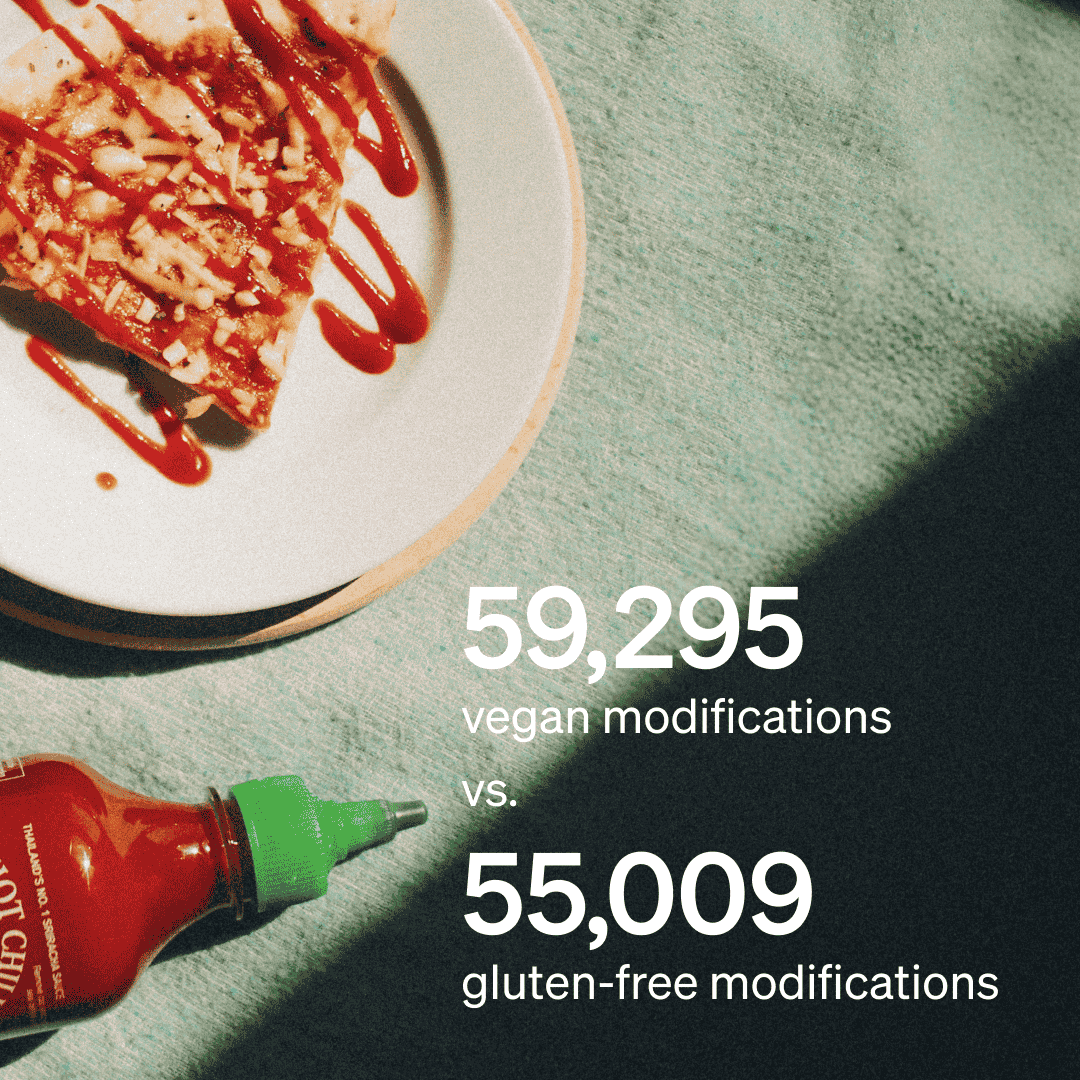
Square data revealed that vegan modifiers (59,295) slightly outnumber gluten-free (55,009), but vegan options are growing faster month-over-month in the same stores. Offering vegan options — especially vegan cheeses and meats — isn’t just nice to have anymore. It’s becoming a must to meet evolving consumer expectations, even as whole milk makes a comeback. When it comes to menu trends overall, it’s not a “this vs. that” scenario. Instead it’s about having more high-quality options.
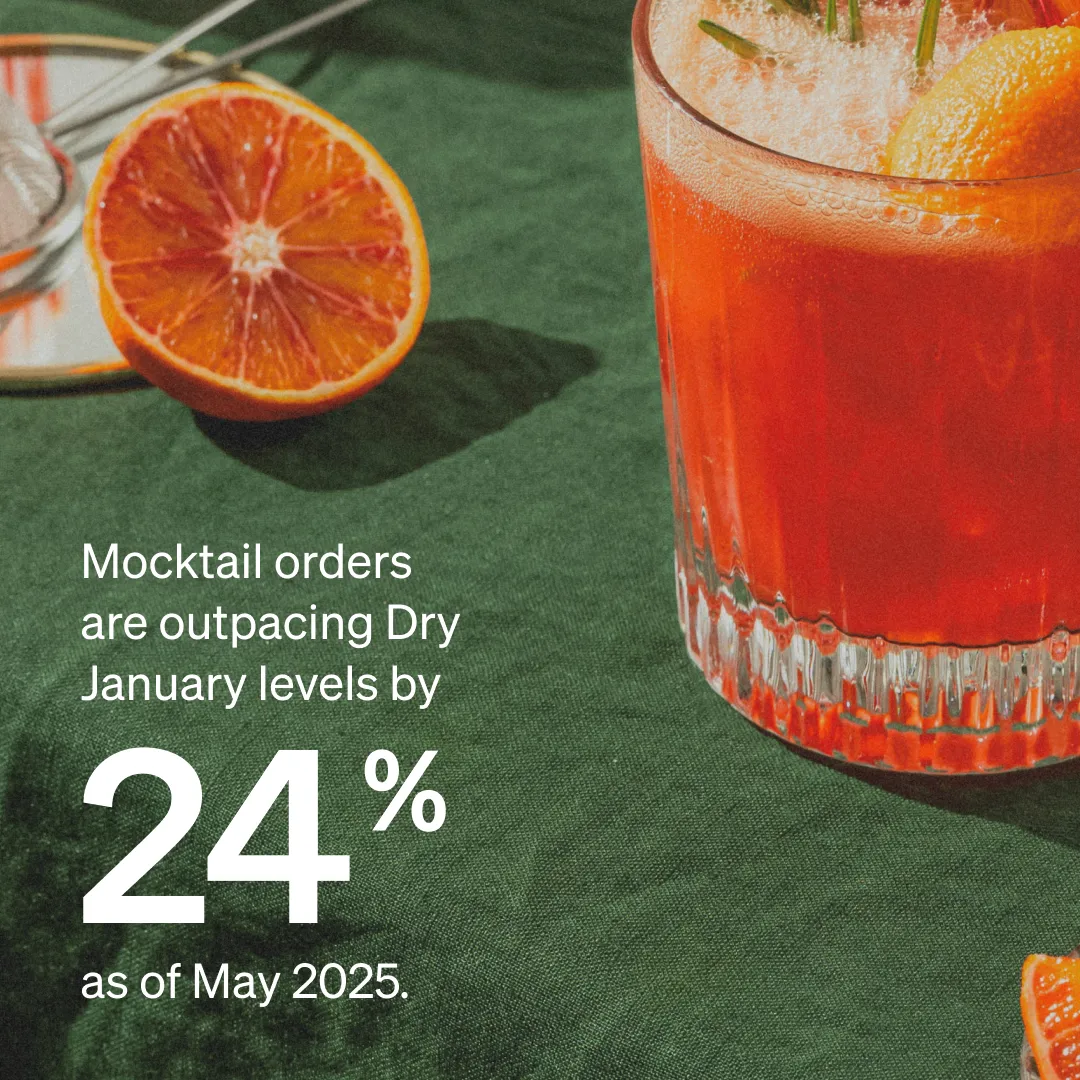
According to Best Friends owner Katie Plack, who operates the Bay Area wine shop and works on the Square experiential marketing team, options for non-and low-alcoholic spritzes and beer used to be incredibly limited. Now, that’s no longer the case. This may be why mocktail orders are also quietly growing in San Francisco. While cocktails still dominate the menu, mocktails have shown consistent upward momentum. And in May 2025, mocktail orders outpaced their dry January levels by 24%.
If you run a bar or restaurant, think about investing in thoughtful, premium non-alcoholic options not just as a box-check, but as a revenue driver. You can bundle mocktails with wellness-forward menu items, or feature them in prix-fixe pairings as you would with alcoholic beverages. Even offering lower ABV alternatives, which Plack said have been really popular, can be a good move.
Weekend spending habits: Super burritos rule on Fridays
Make it super-sized
The Mission burrito is a San Francisco classic. Often, you can order it super-style, which means in addition to it being massive, it comes packed with pico de gallo, guacamole, cheese, or other sauces. As it turns out, San Franciscans love to order them on the weekends. With over 135,000 super burritos sold since January, Friday has emerged as the clear sales peak, while Sundays experience a significant drop-off in sales.
Average burrito sales by day of the week according to Square data:
- Monday: 344
- Tuesday: 427
- Wednesday: 348
- Thursday: 352
- Friday: 431
- Saturday: 321
- Sunday: 260
What does this suggest? To maximize customer cravings, Fridays could be a goldmine for lunch or late-night promos or office catering. At the same time, more concentrated marketing on Sundays could help boost low sales counts. Use the data to track against your own business’s trends. For Mission-famous La Taqueria, for instance, it’s most advantageous to stay closed during slow peaks on Mondays and Tuesdays.
Weekend San Francisco foot traffic ebbs and flows
While San Franciscans are often ending a long week with a super burrito, there’s more data to unpack over the weekend. Mid-day on Saturday is the most popular time for food and beverage businesses and retailers alike. While beauty businesses tend to hit peak traffic hours on Friday afternoons.
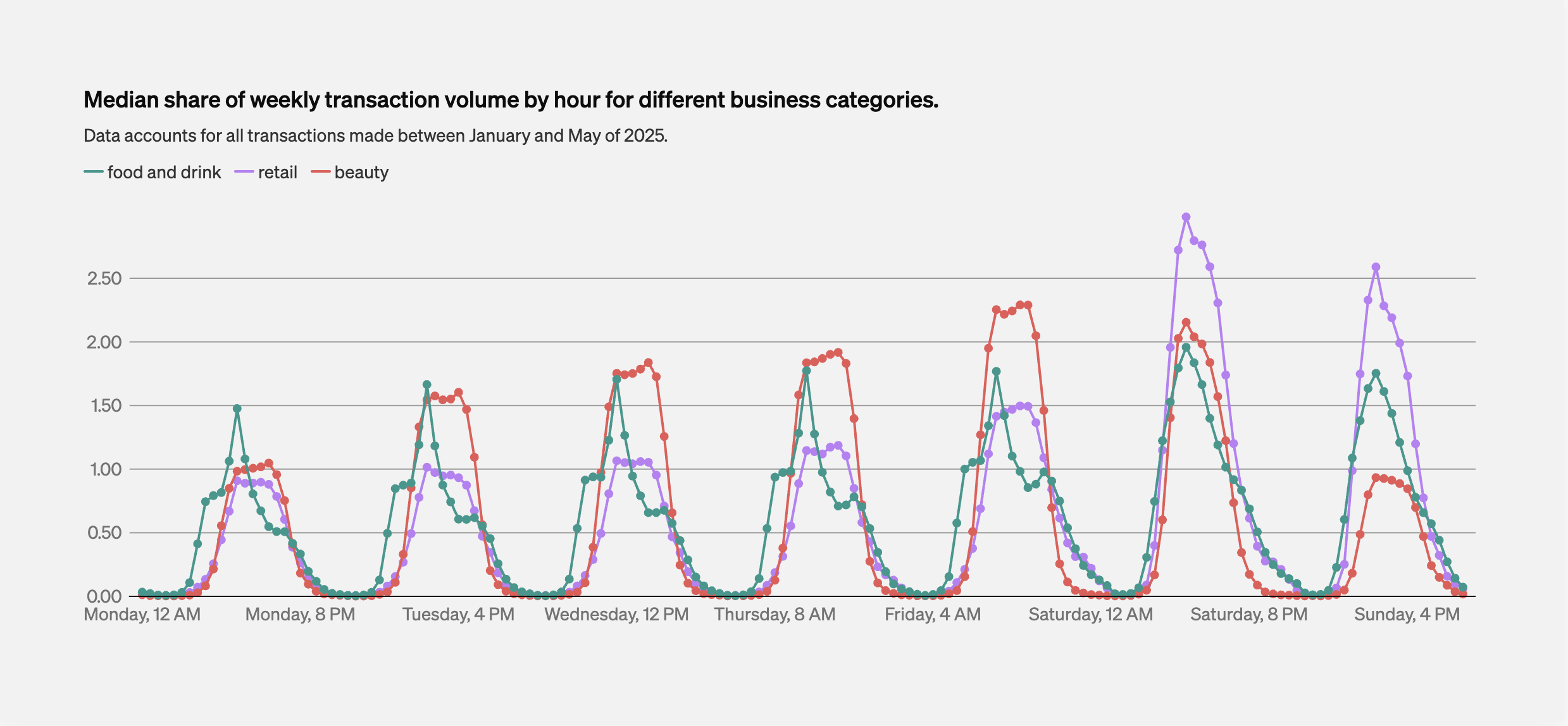
Compared to weekdays — coffee shops in particular see later traffic spikes on weekends. It may be why we’re seeing more coffee shops participate in weekend pop-ups at restaurants and bars or collaborate with bakeries. The takeaway: While you don’t need to open at 6 a.m. on Saturday — you might want to double your staff at 10 a.m..
Outside Lands festival goers want on-the-go options
Outside Lands is one of the biggest and most popular events in San Francisco. The music festival draws thousands of visitors to Golden Gate Park each August. During last year’s Outside Lands music festival, caterers saw a 7200% spike in transaction volume compared to average transaction volume between June through October. Food trucks and bakeries also saw massive growth. So, if you’re located near Golden Gate Park, or can operate a pop-up, cart, or truck, timing your presence to major events like this could yield a massive revenue opportunity. Caterers especially should watch the event calendar.
It pays to be a mobile business. Some of the most loyal customer bases are with food trucks, not just sit-down dining spots. Loyalty isn’t limited to full-service restaurants. Even small-format, fast-casual operators can build strong recurring relationships with customers—especially if they offer consistency and quality.
Bay Area Lo-Fi Oyster Co. founders, for instance, often get asked if they’ll ever settle down in a physical space. Their answer? “I just love the variety of what we’re able to do out of multiple spaces and be able to activate different neighborhoods and different audiences and different communities in different cities, really. Keeping that revolving door of a variety of locations has always kind of kept things fresh for us,” said co-founder Justin Esposito.

Data turns curiosity into clarity
City-wide spending trends can tell business owners a lot. But it’s equally important to understand what your own data is saying. Square Dashboard analytics helps you investigate your personal business’s data. The more you do, the more nimbly your business can evolve with your customers. For business owners like Budayr, for instance, more information from the Square Dashboard helps lead to more understanding about San Francisco spending habits, which can be a relief.
“Everybody talks about the data, but it’s so useful,” said Budayr. “It’s, for better or worse, a way that myself and a lot of small business owners unwind. By sitting down on the couch at the end of the day and looking at the numbers and being like, ‘Oh, it’s interesting that we sold more of this or more of that,’ or, ‘Oh, this category seems to be expanding.’”
According to Budayr, data gives business owners like himself the ability to have a more guided conversation around how the business can evolve. It doesn’t have to be outright planned or overly strategic. It gives you the opportunity to have more of a continued pulse-check. He said, “You don’t have to land the plane to keep optimizing the flight.”


