

Table of contents
According to a report from marketresearch.com, the Australian food truck industry is set to grow by more than 9.21% by 2030.
Why? Consumer appetite for unique, high-quality food at affordable prices is growing, and food trucks are uniquely suited to deliver, often without the need to book ahead or wait in line. If it’s been your dream to start a lower-overhead food service business, here’s everything you need to know about how to start a food truck.
A checklist for starting a food truck
- Explore your local food truck scene
- Identify and create a unique food truck concept
- Write a food truck business plan
- Work out how much it costs to start a food truck
- Obtain the licenses and permits needed
- Follow food safety and health regulations
- Purchase food truck equipment
- Manage your food truck operations
- Create a marketing plan
- Soft-launch your food truck business
1. Explore your local food truck scene
If you’re looking at how to start a food truck business, begin by researching your local food truck scene to identify market gaps and discover customer preferences. Market research will help you craft a unique and profitable concept. You can get started with these steps:
- Visit local food truck events and festivals to observe trending cuisines, underserved food types, pricing, and crowd engagement.
- Follow local food trucks on social media to track their locations, menu changes and customer interactions.
- Use review platforms (Yelp, Google Reviews, etc.) to analyse what customers like or dislike about existing food trucks.
- Network with local food truck owners or join industry groups (such as the Australian Mobile Food Vendors Group or Australian Food Trucks Association) to gain insights into operational challenges and success tips.
- Research city regulations, permits and zoning laws to ensure your concept complies with all local requirements.
- Identify underserved locations or busy streets by mapping out existing offerings and finding gaps you could fill.
- Conduct a SWOT analysis to fully understand where the best opportunities exist for your food truck business.
2. Identify and create a food truck concept
Most successful food trucks choose concepts that are either very niche, like a unique take on a common cuisine, or something completely new. Keep in mind that the whole food truck revolution began with Roy Choi’s Kogi, which invented a new food: Korean tacos.
Creating a unique food truck concept requires a blend of market research, niche selection and personal alignment with your skills and passions.
Research the market by experiencing local food trucks, analysing competitor reviews, and monitoring social media trends to identify potential industry gaps and popular demands. Learn from their wins and failures, marketing tactics, location and pricing.
Analysing your target market is key to shaping a food truck concept that resonates with customers. According to Brighter, 33% of Australians eat from a food truck during a casual night out and 26% purchase from one whilst grabbing their work lunch. These are vital facts to know when planning what kind of cuisine you will offer. You can align with customer preferences by testing concepts through pop-ups or surveys to ensure demand.
Choose a niche that excites you and has market potential. Here are some ideas:
- American-style BBQ (e.g. Texas-style brisket, Carolina pulled pork)
- Taco variations (e.g. Korean BBQ tacos, vegan jackfruit tacos)
- Plant-based comfort food (e.g., vegan mac and cheese, jackfruit burgers)
- Global street food (e.g. Filipino sisig, Lebanese shawarma, Japanese takoyaki)
- Breakfast-on-the-go (e.g. breakfast burritos, gourmet waffles)
- Loaded fries or nachos (e.g. birria nachos, truffle parmesan fries)
- Specialty toasted sandwiches (e.g. kimchi and cheese, caprese melt)
- Fusion flavours (e.g. sushi burritos)
It’s best to leverage your strengths and what you love doing. If you’re skilled at smoking meats, focus on BBQ; if you love baking, consider artisanal pastries or dessert hybrids. By combining research, passion and creativity, your food truck can carve out a distinct space in a competitive market.
3. Write a food truck business plan
Once you’ve done your research and decided on your final concept, you’re ready to write a food truck business plan. Your business plan is the ultimate guide for your food truck. Writing down your key goals and objectives, as well as the strategies to get there, helps you stay focused when launching your new business (and for years after). Here’s what to include:
Mission
Known as an executive summary, this portion of your business plan essentially outlines how you will start your food truck, briefly describing your vision and unique value proposition, which might be something like ‘serving authentic Thai street food using locally-sourced ingredients.’
Financial planning
Your financial plan will include startup costs, like equipment, permits, licenses, truck purchase or lease, branding and initial inventory, as well as your operating costs like fuel, maintenance, ingredients, labour, insurance and marketing.
You’ll also want to share your pricing strategy, which will detail your plan for competitive yet profitable pricing based on food costs and local demand. And you’ll need to make some revenue projections that describe your estimated daily or weekly sales, break-even analysis and profit margins.
Marketing strategy
Your business plan should also include your plan for marketing your food truck. Some potential strategies include:
- Social media: Instagram, TikTok and Facebook for promotions, behind-the-scenes content and location updates.
- Participation in events and festivals: Local food truck rallies, farmers’ markets and private events.
- Local SEO and online presence: Google My Business, Yelp and food truck apps for visibility.
- Partnerships: Collaborations with breweries, offices and influencers for pop-ups.
Target audience
Your food truck business plan should define your primary customer segments, whether that’s young professionals and families or students and late-night crowds. Also, be sure to identify peak times and locations for your business, like the city lunch rush or beach car parks during summer.
Market research
Describe your process for market research, showing that you’ve performed due diligence through things like surveys, competitor analysis and local food trends. Demonstrate you’ve selected a high-traffic location based on data like footfall, competition and local regulations.
Competitive analysis
Be sure your business plan also identifies direct competitors which might include other food trucks, nearby restaurants or fast-food chains. Highlight what differentiates you from these competitors. Is it a unique menu, faster service, premium ingredients or something else?
Business goals
Don’t forget to identify your business goals, including near-term and long-term. Short-term goals might be to achieve profitability within 6 to12 months and build a loyal customer base. While long-term goals might describe how you hope to expand to multiple trucks, offer catering or open a brick-and-mortar location.
Purpose
Finally, your food truck business plan should clearly state its purpose, whether that’s to help you secure a business loan, attract investors or provide you with a roadmap for growth and adaptability in a competitive market.
4. Determine food truck startup costs
Now comes the big question: How much does it cost to start a food truck? For a food truck business, startup costs will vary by location, cuisine and other localised factors. At minimum, your food truck startup costs will include a truck, cooking equipment and custom truck wrapping. Here are the key things to consider when determining how much you need to start a food truck:
- Startup costs: Estimate expenses for the truck itself, which can cost anywhere from $15,000 second-hand to $100,000 brand new, plus any kitchen requirements, updates or alterations. You’ll also want to consider fit-out, storage, equipment and initial branding costs.
- Ongoing expenses: Account for regular, recurring costs like inventory, food supplies, monthly or annual permits, staff, fuel, utilities, waste removal and marketing.
- Budget planning: Set a realistic budget for launch and at least 6 to 12 months of operations, anticipating that it will take time before you turn a profit.
- Funding sources: Make a plan for funding your food truck business. You can’t start a food truck without money. So you’ll likely need to access funds through loans, savings, investors, grants or crowdfunding.
- Financial forecasts: Prepare revenue and profit projections to support funding requests you’ll need to make, as well as to help you plan for the future of your food truck business.
5. Obtain licenses and permits to start a food truck
To legally operate your food truck, you need to obtain the necessary permits and comply with the regulations at the city, state and federal levels. The licenses and permits you’ll need to start a food truck are:
- Secure all necessary local operating permits, including zoning and parking permits. Be sure you understand business laws in your area to prevent any legal delays.
- Obtain health permits and food handler cards to ensure you are meeting local and state food and restaurant safety guidelines.
- A driver’s licence will be required, and it’s worth considering public liability, business interruption, contents, commercial motor, workers compensation (if you have employees) and third party personal injury insurances (often done via your vehicle registration).
- Many councils will have operation guidelines and require you to obtain a mobile food vending permit as set out by the Local Government Act, Roads By-Law or Roads Act.
- Some larger councils, such as City of Sydney, require you to submit your food truck concept design for approval.
- Additionally, you need general business permits and/or licensing that allow you to legally conduct business. This might include registering your business for an ABN and applying for any patents.
6. Follow food safety and health regulations
All food sold in Australia must follow the Food Standards Code, and it’s your responsibility to be across them. Here are some at-a-glance tips:
- Store food safely: Keep cold food below 5°C for no longer than 5 days (unless containing raw eggs) and separate raw from cooked.
- Maintain hygiene: Wash hands often, wear clean gear and sanitise all surfaces.
- Cool and reheat properly: Cool quickly (to 5°C within 4 hrs) and reheat to 60°C (within 2 hours).
Check your state rules: Regulations differ by state, so be sure to check out the correct website for details.
7. Purchase food truck equipment
Buying a truck and cooking essentials account for a major portion of your food truck startup costs. Here are some tips for what you’ll need and how to reduce the cost to start a food truck:
- Consider renting a vehicle to reduce your upfront expenses and test the viability of your business. Another option is to purchase a trailer. While it’s less mobile, it’s a less costly way to start a food truck business.
- Buying a vehicle offers more control and long-term value, but it’s not the best option for everyone, especially if you’re trying a startup on a budget.
- Plan for the purchase of key food truck equipment like a fridge, grill, fryer, sinks, generator, food truck point-of-sale (POS) system, and ventilation. Look for gently used options on kitchen equipment to save money.
- Invest in branding, putting a custom wrap and/or signage on your food truck.

8. Managing your food truck operations
To ensure successful and seamless transactions for customers and operations for you, consider the following areas and how you will manage them:
Taking payments
Ensure your customers can pay you however they want, so you never miss a sale with a payment system that accepts credit cards and mobile payments.
Look for a payment processor that is simple to set up, with easy-to-understand pricing. Pay attention to the wait time of getting deposits in your account. The faster you receive deposits, the healthier your cash flow.
Because you’re taking payments at your food truck, you need to adhere to the Payment Card Industry Data Security Standard and ensure that your payments system is compliant.
Point of sale (POS) for food trucks
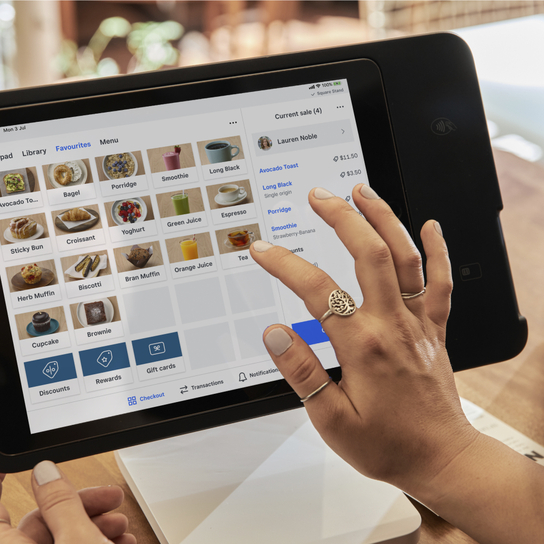
When you choose a point of sale (POS) for your food truck, keep in mind that complicated processes can be stressful to use during a rush, which is why you need a system that can be set up quickly and is easy to operate. Features like split tabs, different receipt options make it all the more convenient for your customers, especially when they are in a hurry. Look for a POS built specifically for food trucks.
Managing food truck inventory
Nothing feels worse than running out of an ingredient in the middle of a shift. That’s why it’s important to know how much food you have, how much you need to bring with you when you head out and when to order more.
Square POS includes free inventory management software so you can manage stock in real time and receive custom alerts for when a specific ingredient is running low.
Employee management at your food truck business
If you’re keen to hire staff to help keep things running smoothly, consider whether you have enough physical space and budget. When you’re looking at the budget for staff, keep in mind the Australian minimum wage.
Look for employee management software that integrates with your POS system – one that has the option where employees can clock in and out of the POS system, helping you optimise scheduling and keep track of overtime hours. You can also see a sales breakdown by employee to track the best salespeople on your team.
9. Create a marketing plan
You want to ensure a crowd wherever and whenever you park your truck. Start with a truck design that captures attention on the street and speaks to your concept. Then, create a marketing plan and budget. Here are some ideas to get you started:
Build user-generated content (UGC) into your menu
One of your best marketing tools is already at the heart of your business: your food. Having a visual feast of items on your menu helps your business generate buzz online. The goal is for people to share photos of your food on social media and go viral and drive business to your truck.
Make social media a priority
Social media is also a good way to keep your followers informed of your location and to stay in touch. A Facebook page or Instagram account, for example, can showcase your menu offerings (as well as any specials you’d like to share with customers).
Build a website
You also want to create a website that mirrors the vibe of your business. You can build it yourself with an online tool or outsource the website for a more professional feel. Be sure to include your social media handles so people can find out which days you’re at which locations and events.
Also consider a plan for online orders: 78% of restaurant leaders report that online checkout is a main revenue driver for their business, according to Square 2025 Future of Restaurants data. Additionally, consumers said they would likely engage with an informative website (72%) or a mobile app (58%).
Set up review pages
Since 98% of Australians read online reviews before buying, creating a solid online reputation via platforms like Yelp and Google Reviews is a key factor in your marketing. To ensure customers can leave you a Google review (and that you’re able to respond) create a free Google Business Profile and Yelp profile.
Your Yelp page and Google Business Profile should include your website, photos, hours, typical locations and price range. When you serve customers, encourage them to leave you a review to improve visibility and attract new customers.
Invest time in PR
Another way to generate buzz is by reaching out to food influencers, bloggers and local area content creators. Find bloggers and content creators who have a really engaged audience that matches your target demographic and invite them to visit your truck. A free meal is a great enticement, and if they post, you can consider it inexpensive promotion.
Don’t forget about promotions
Offering vouchers or discounts for your grand opening or featuring special days like “Taco Tuesdays” can also help drive business.
Loyalty programs are another powerful tool that benefits both customers and business owners. They offer customers exclusive deals and discounts on their favourite items, so working toward a unique reward or perk may be just the incentive a customer needs to pick your food truck over any others parked nearby. Plus, Square data shows that 83% of restaurant leaders with a loyalty program said it’s successful in driving increased order size and repeat visits.
10. Soft launch your food truck business
Want to test your food truck concept with minimal risk? A strategic soft launch is the way to go. It can help you iron out any kinks, attract early fans and fine-tune your menu before going all-in on your food truck investment. Here are some ideas to get you going.
How to soft launch your food truck
- Start with a stand or stall at a local event, farmers’ market, or private gathering
- Offer a reduced menu to test operations
- Invite friends and family
- Connect with local influencers for a preview day
Gather feedback from your soft launch
You’ll specifically want to ask about customers’ perceptions of the following:
- Food quality
- Uniqueness of your offering
- Value for the price
- Wait times
- Customer service
Optimise your menu and operations
Once you’ve conducted your soft-launch and gathered feedback from customers, influencers, family and friends, it’s time to put their suggestions into action by:
- Adjusting portions, pricing, or prep time based on performance
- Streamlining workflows to improve speed and consistency
- Using early data to refine your marketing plan
How to start a food truck business FAQs
How much do food trucks make?
There’s no easy answer to this question. In Australia, it really depends on where you are located, how often your truck is open, how many people you can reach and your overheads.
To measure your profitability as a food truck, you need to conduct a break-even analysis and consistently analyse your cash flow. Pay close attention to labour, food, permits and any other ongoing operating costs.
A financial analysis is another useful tool to assess the long-term viability, stability, and profitability of your business.
With careful planning, a dash of creativity and a passion for great food, your food truck business can successfully carve out its own niche in the competitive world of mobile cuisine.
How do you identify and create a food truck concept?
Start by analysing local food trends and gaps in the market, then blend your culinary passion with a unique twist, whether that’s fusion flavours or a specialty dish, to craft a concept that stands out in your local marketplace.
How much does it cost to start a food truck?
A brand-new, well-equipped food truck could cost anywhere from $80,000 to $180,000 including the truck, permits, equipment, and initial inventory. However, costs vary based on size, location and menu complexity. To keep costs low, a second-hand food truck is a more affordable option, with prices starting from $35,000.
How do I acquire a food truck?
Your options to acquire a food truck are to either buy a new or used food truck or rent one. Acquiring your food truck will probably be your largest startup cost.
- Buying a new food truck: A food truck manufacturer can provide a customised food truck designed specifically for your layout, menu and branding needs. These manufacturers are familiar with common codes required for a food truck to operate legally and will also have examples of existing successful food trucks. This option is the most expensive and can take several months but your equipment will be brand new and designed for your specific needs.
- Buying a used food truck: Used food trucks can be found on marketplace listings. They come partially or fully outfitted but may require repairs or other updates to meet your local health codes. These will be more affordable than a brand-new truck but make sure to have your potential purchase professionally inspected before making a final decision.
- Renting a food truck: Renting can be the most affordable and quickest option. If startup funds are tight, renting a food truck before you buy can be a useful way to test your concept. However, you won’t own the truck, so customisation and branding options can be more limited than renting or buying.
What licenses or permits do I need to start a food truck?
To start a food truck in Australia, you’ll need a combination of business, council and health permits. This typically includes registering for an ABN, obtaining a mobile food vending permit from your local council, securing food handling and safety certifications and ensuring your vehicle meets food and safety standards. You’ll also need a valid driver’s licence and insurance coverage such as public liability, business and vehicle insurance.
Note that permits vary based on which state you will operate in, so visit your local council website to find out which food truck permits you need.
Do food trucks pay for locations?
Yes, food trucks typically pay for their locations through permits, parking fees or rental agreements at private lots, events or food truck festivals. Some cities also require daily or annual fees to operate in public spaces.
Can I rent a food truck?
Yes, you can rent a food truck through commercial kitchen leasing companies, food truck franchises or private owners. Renting is often a lower-cost alternative to buying outright.
Are food trucks profitable in Australia?
Food trucks can be profitable in Australia. Profit margins are influenced by customer demand, menu pricing, overheads such as permits, fuel and staff costs, as well as trading hours and event locations. Operators who research their market, price menu items strategically, come up with a sought-after concept and manage costs carefully are more likely to achieve consistent returns.
How long does it take to start a food truck business?
Although your timeline can vary depending on any of the factors in the article above, starting a food truck business in Australia typically takes several months from planning to launch. Careful preparation, including budgeting, branding and compliance checks, can help streamline the process and prevent delays.