




Table of contents
All businesses need a way to get paid, and offering the option to pay by card or mobile wallet has become essential as the use of cash continues to decline. A recurring study of payment behaviour by the Reserve Bank of Australia revealed that the proportion of participants not using cash over the course of one week grew from 1 in 5 in 2016 to just over half in 2022. So if you’re doing business in person – pouring lattes, cutting hair or selling jewellery at markets – it helps to know how to use EFTPOS machines in Australia so your customers can pay quickly and securely.
This step-by-step guide takes you through how to set up EFTPOS machines and connect them to your business tools. You’ll also learn how to use EFTPOS terminals in day-to-day service, discover the key features that help you manage payments, and see how all-in-one EFTPOS devices like Square Terminal make getting started even easier.

How to set up an EFTPOS machine
Setting up your EFTPOS machine to take payments usually involves assembling the hardware, connecting to the internet, signing in to your payment software and confirming that transactions can be processed. The process varies by device, but here’s how to set up EFTPOS machines in general.
- Check and install the hardware: When your EFTPOS machine arrives, check that all essential components are included – the machine itself and any power cable or charging dock. Plug it in and switch it on. If your device is rechargeable, allow it to charge fully before use – battery health is important for portable use.
- Connect to the internet: EFTPOS terminals need a stable connection to the payment network to process transactions. You can usually connect via Wi-Fi, Ethernet or a mobile data hotspot. Choose whichever is most reliable for your location. Wired connections tend to be the most stable for countertop setups, while Wi-Fi or mobile data offers flexibility for larger floor areas, mobile service or markets. If you plan on using your device as a handheld terminal, ensure your Wi-Fi signal covers the areas you’ll use it.
- Sign in to the software: Once connected to the internet, you’ll be prompted to sign into your payment provider’s software or create an account if you haven’t already. This links the EFTPOS machine to your business profile and ensures your transactions are recorded correctly.
- Update software and test a payment: Check for any software updates and let your EFTPOS machine install them. These updates keep your system secure and compliant, and they often include small performance improvements. Once that’s done, run a quick test sale to ensure the machine is connected and funds are reaching your account.
Square Terminal is an example of an EFTPOS terminal that can be set up with ease. Adam Semple, who co-owns Fluffy Torpedo in Melbourne, appreciates its speed and reliability in taking orders at his busy ice cream shop. “What keeps us with Square is a combination of the seamlessness of the whole package,” he says. “It never messes up, and it’s minimal enough in its user interface.”
Hardware setup and accessories for Square Terminal
Square Terminal comes already charged and ready to use, so once you’ve received and unboxed it, you’re ready to start setting it up.
Here’s what you’ll need to do:
- Choose a location: While the Terminal is portable, you can mount it to your counter if you prefer. A countertop mount helps keep it secure in high-traffic areas. The battery is designed to last all day, so you don’t need to worry about locating it near a power outlet; just plug it in when the battery’s low.
- Switch it on: Hold down the power button on your Square Terminal for a few seconds to switch it on. You’ll be prompted on-screen to connect to the internet.
- Connect via Wi-Fi or a mobile hotspot: Select your preferred network and enter the password.
- Connect via Ethernet: For this option, you’ll need a separate Ethernet cable and the Hub for Square Terminal. The Hub plugs into Square Terminal and provides extra connections for Ethernet, power and USB accessories, all through a single adaptor. Note, you won’t be able to connect via a captive portal, which is a network that requires you to accept T&Cs to access the internet (such as those in a shopping centre or airport).
- Connect your accessories: To add compatible accessories – such as a larger printer, barcode scanner, scale or cash drawer – you can connect them via the Hub, which lets you plug in up to three USB accessories. Some accessories also work by being connected to the same Wi-Fi or Ethernet network as your Terminal.
Software setup for Square Terminal
The Square Point of Sale software is built into Square Terminal, so software setup is a breeze.
Here’s what you’ll need to do:
- Select your user settings: Tap More > Settings > Hardware to set the date and time, and adjust brightness or volume levels.
- Update the software: You’ll be automatically prompted to update the POS software. Tap Update Now to start it; it takes about 20 minutes to complete. (You won’t be able to accept card payments during this time, but you can record cash payments and navigate within the software.)
- Select your update preferences: Software updates run automatically every fortnight to keep your Terminal secure and up to date. They’re scheduled to run overnight while the Terminal is plugged in, powered and online, but you can change the update time or defer updates anytime.
- Sign in to your account: Your data, items and preferences will sync automatically when you log in to your Square account. If you’re new to Square, scan the QR code on the Terminal screen with your phone or tablet to get a sign-up link by email.

Payment setup for Square Terminal
Square Terminal has a built-in thermal printer that doesn’t require ink to print customer receipts – you just need receipt paper, and a roll is included. To load it, open the printer door above the screen, place the roll inside with the loose end facing out, then close the door and tear off any excess. Run a quick test print to check alignment by tapping More > Settings > Hardware > Printer > Print test. You also have the option to send receipts by email or SMS if you prefer.
It’s worth performing a test sale with a small transaction to confirm your setup is working correctly.
- Tap Keypad, enter a custom sale amount (e.g. $1.00) and tap Charge.
- Complete the sale by holding a debit card, credit card or phone using a mobile wallet over the Terminal.
- Check that the receipt prints as expected.
- Tap Transactions and confirm the sale appears correctly in your recent transactions list.
To refund the payment:
- Tap Transactions. Select the payment to be refunded, then tap Issue refund.
- Tap Select All Items to refund the entire sale, then tap Next.
- Choose how you’d like to refund the amount and a reason for the refund, then tap Refund.
Take a moment to personalise your setup by tapping More > Support > Setup Guide. This helps you link your bank account for fund transfers, add items to your catalogue and more. From there, you’re ready to start taking payments.
How to use an EFTPOS machine
Depending on your setup, you can process a customer sale by:
- Selecting an item from your catalogue on your checkout screen
- Scanning the item’s barcode (if you use a barcode scanner)
- Keying in the total amount manually
To pay, customers can:
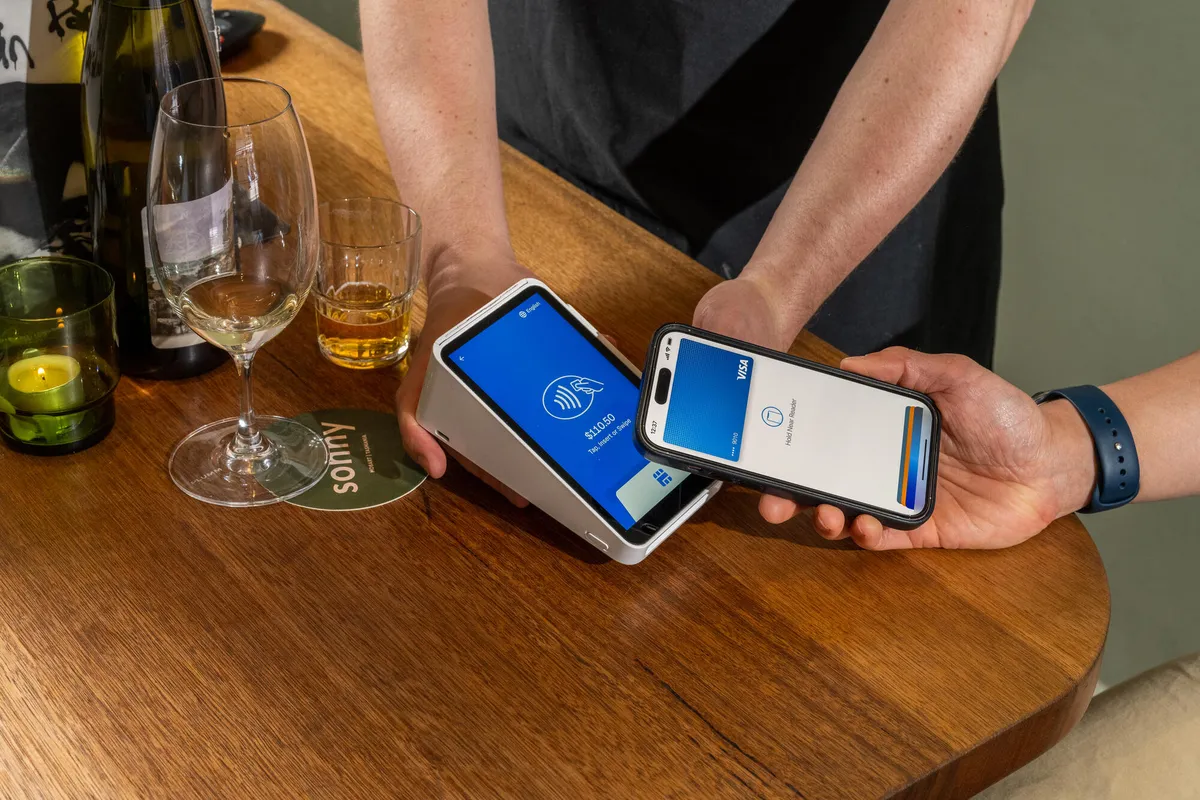
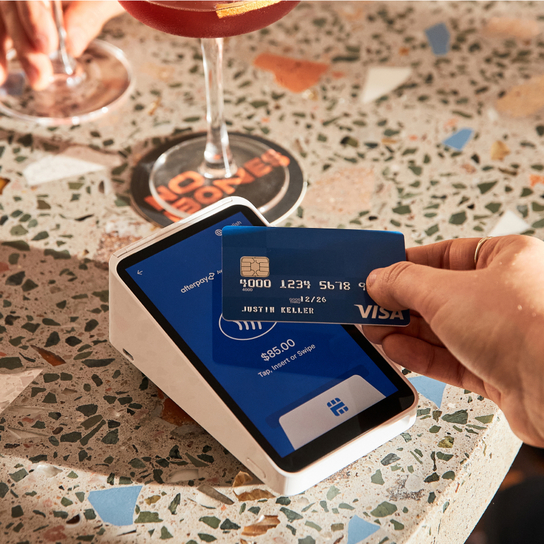
- Tap their debit or credit card
- Tap their phone using a mobile wallet (e.g. Apple Pay or Google Pay)
- Insert their chip card and enter a PIN
- Swipe older-style magnetic stripe cards (with the stripe facing inward)
Once the payment goes through, the EFTPOS machine will typically beep or display a confirmation. You can then print a receipt or send a digital copy by email or SMS, depending on your setup.
You can also process a refund on an EFTPOS machine. Typically, you locate the original transaction or enter the refund amount manually. The machine will prompt the customer to tap their card or phone and enter their PIN, and then return the funds to their account.
To manage payments effectively, most EFTPOS machines or connected POS software let you review recent transactions, track daily totals, reconcile sales automatically, and export reports for your records or accounting software.
Important EFTPOS machine features
Having learned how to use an EFTPOS machine, it’s good to know about its core features to help you process payments smoothly and safely.
- POS integration: EFTPOS machines typically link with basic POS software so that every payment is recorded automatically. This lets you check individual transactions and simplifies reconciliation at any time of day.
- Multiple payment methods: Most machines let customers pay in different ways, whether through debit or credit cards or mobile wallets.
- Mobility: Some EFTPOS machines are designed to be portable, letting you take payments wherever you need, such as tableside in a restaurant, a different counter or floor, or even offsite at markets or customer locations.
- Security: Transactions are encrypted to keep your business’s and customers’ information safe and reduce fraud risk. Regular software updates keep your machine compliant with PCI DSS regulations.
Advanced features of EFTPOS machines
Beyond the basics, some EFTPOS machines offer additional functions that add even more value to your business.
- Refunds: Refunds are handled directly on the Square machine, returning funds easily to the customer’s account. Sales records update instantly, reducing admin and helping ensure daily reporting is accurate.
- Reporting: Some EFTPOS registers, including Square, provide sales summaries and itemised reports that update as transactions happen. This lets you track sales in real time, monitor peak periods and view which products are selling fastest (or slowest), helping you adjust staffing, pricing and stock decisions on the fly.
- Pairing with POS: Square EFTPOS machines integrate with Square POS to keep every part of your business in sync. Sales, stock levels, customer data and staff activity are updated automatically. Performance across different sales channels and locations is tracked in real time, giving you a full view of your entire business in one place.
- Offline mode: This lets you keep accepting payments even if the internet goes down. Transactions are securely stored and processed automatically once the connection is restored, so you can continue selling without interruption.
- Tip prompts: Machines can prompt customers to leave a tip at checkout. It offers customers an extra way to show their appreciation for your business, and can improve staff earnings without extra effort.
- Loyalty features: Integration with loyalty programs allows you to track customer behaviour while rewarding repeat visits and encouraging ongoing engagement. These help you build long-term customer relationships and increase revenue.
FAQs about how to set up and use EFTPOS machines in Australia
How do I initialise an EFTPOS machine?
To initialise an EFTPOS machine, start by turning it on – either by pressing the power button or connecting it to a power source if it runs on battery. The machine then needs an internet connection to process payments, which can usually be done through Wi-Fi, Ethernet or a mobile hotspot. Follow the setup steps for your model to connect it, then check that it’s online and ready to process transactions. Some EFTPOS machines may also run an automatic software update before use.
How do I pair an EFTPOS machine?
Connecting your EFTPOS machine to your POS system allows payments to be processed and automatically recorded across your setup. For most systems, this involves going into the system settings, choosing the option to add an EFTPOS machine, and following the prompts – this might include selecting your device from a list or entering a pairing code. With Square Terminal, it’s even simpler: once powered on and logged into your Square account, it automatically integrates with your Square POS system.
Some EFTPOS machines can connect to a mobile phone or tablet via Bluetooth or a USB adapter. You typically enable Bluetooth or plug the EFTPOS machine into your mobile device, open your POS app, navigate to the settings menu and follow the app’s instructions to pair the EFTPOS machine. Once paired, the machine processes card transactions while your app records the sales and updates reporting.
What are the benefits of an EFTPOS machine?
EFTPOS machines make payments simpler and more reliable for your business. Key benefits include:
- Efficiency: Payments are processed automatically, removing the need to count, reconcile or bank cash.
- Reduced risk: With less (or no) physical cash on-site, there’s a lower chance of theft or errors.
- Speed: Transactions are completed quickly, helping to move customers through busy periods with ease.
- Flexible payments: Accepting card, contactless and mobile wallet payments gives customers multiple and faster ways to pay.


