

Table of contents
If you’re looking for a lean entry point into the food industry, starting a quick-service restaurant (QSR) could be a good option. QSRs are a popular choice for entrepreneurs because they involve simpler operations, lower overheads, and faster turnaround compared to full-service restaurants.
But what counts as a quick-service restaurant? Unlike full-service or hybrid restaurant models that blend traditional dine-in service with takeaway, QSRs are built on speed, affordability and convenience. They usually feature smaller menus, fast prep times and minimal table service making it easy for customers to order and take advantage of dine-in, takeaway and delivery options.
If you’re drawn to the energy of fast-paced service and like the idea of running a focused, streamlined operation, this guide covers how to start a quick service restaurant, from planning your concept to choosing your tech, hiring a team, and launching with confidence. You’ll find helpful tips, real examples, and links to key tools to help you get up and running.

Create a business plan for your quick-service restaurant
Before you look at locations or order equipment, you’ll need a solid business plan. This will be your roadmap for making smart decisions, getting funding and staying focused as you launch and grow. Here’s how to shape your QSR vision.
Define your restaurant concept and menu
What kind of food are you planning on serving and why? The answers to these questions help define your concept, which is the heart of your QSR. Your concept is what makes your brand memorable and shapes everything from your decor to your menu. Maybe you’re passionate about Mediterranean street food, or you want to serve health-forward smoothies and bowls. Some concepts come from cultural roots or gaps in the local market.
Here are a few examples that show how varied QSRs can be:
- The Salad Project – a multilocation concept serving customised salads for dine-in, takeaway and delivery.
- Panadera – a Filipino bakery and coffee shop renowned for its pandesal sandwiches.
- Vegan Shack – a 100% plant-based takeaway and sit-down restaurant with sites in several UK cities.
Once your concept is locked in, your menu should bring it to life. When designing your menu, keep it simple and intentional. Quick service thrives on speed and consistency, and a focused menu is easier to execute at high volumes. Start with some signature items and build around them.
Pro tip:
Use our free menu item cost calculation tool to get an accurate understanding of your costs and margins.Identify your target market and value proposition
Who are you trying to serve? And what makes you different from everyone else? Understanding what makes your potential customers tick can help you shape everything from your prices to your branding. You might be going after office workers who need a fast lunch or health-conscious locals looking for clean meals on the go.
Once you’ve defined your audience, think about your value proposition. What’s your unique edge? Maybe it’s speed, maybe it’s flavour, maybe it’s eco-friendly packaging. Whatever it is, make sure it’s clearly reflected in your messaging, design and customer experience.
Set clear business goals
Set goals early, so you have something concrete to work toward and a way to measure progress. Your goals might include hitting a daily sales target, breaking even by month six or opening a second location by year two.
Use the SMART method: goals should be specific, measurable, achievable, relevant and time-bound. That structure helps you stay focused and adjust quickly if things don’t go as planned.
Estimate startup and operating costs
QSRs may be leaner than full-service models, but startup costs can still add up quickly. Expect to budget for things like:
- Kitchen equipment (grills, fryers, refrigerators)
- Renovations and signage
- Licences and permits
- Point-of-sale (POS) systems and display tech
- Initial inventory and packaging
Then there are your ongoing costs: wages, utilities, food, cleaning supplies and marketing. Keep detailed estimates for both startup and monthly operating expenses, and build in some wiggle room.
Define your pricing strategy
Quick-service restaurant pricing is a balancing act: low enough to stay competitive, high enough to protect your margins. Start by researching the prices of other restaurants in your area and consider offering combos, bundles and upsells to help raise your average order size. But don’t stop there – factor in your costs, your concept and the value you offer.
Pro tip:
Once you’re up and running, use your sales data to drive business decisions – this could include testing and tweaking prices based on what’s selling (and what’s not).Explore financing options
One of the biggest hurdles for new business owners is raising capital. In the UK, traditional bank loans are a popular option, particularly if you can provide a detailed business plan with accurate cash flow forecasts. Government-backed grants also exist to support entrepreneurs who meet specific eligibility criteria.
In addition, many owners explore alternative financing options. For example, crowdfunding allows multiple investors to contribute small amounts of funding that add up to large amounts of capital. Another option is Square Loans, which offers flexible financing tailored to small businesses. With repayments automatically taken as a percentage of your daily card sales, Square Loans can be especially useful for QSRs where revenue may fluctuate from day to day.
Understand legal requirements and licences
Before you can open a quick-service restaurant in the UK, it’s essential to make sure your business is legally compliant. The first step is registering your business with HMRC or Companies House, depending on whether you choose to trade as a sole trader, partnership or limited company. You must also register your food business with your local authority at least 28 days before opening.
Food safety is central to compliance. At least one team member must hold a Level 2 Food Hygiene Certificate, and your premises will be inspected by local environmental health officers. Fire safety measures, risk assessments and proper waste disposal arrangements must also be in place.
Depending on your plans, you may need additional licences. Serving alcohol requires both a premises licence and a personal licence for the designated manager, while background or live music requires a licence from PPL PRS, the UK’s music licensing company. If you intend to place tables and chairs outside, you may also need a pavement licence, and in some cases a change of use permit if your building wasn’t originally intended for food service.
Always check requirements with your local council, as exact regulations can vary by location.
Choose the right location and layout
Your restaurant concept might be perfect, but if it’s tucked away where no one can find it, you’re going to struggle. A quick-service restaurant’s location affects everything, including visibility, accessibility, foot traffic, and the bottom line. Here’s how to choose the right location.
Look for high-traffic areas
Quick-service restaurants thrive on volume. That means you need to be where the people are. Think corners with high footfall, office-heavy neighbourhoods, busy high streets, student-heavy areas, or anywhere with a steady flow of hungry people in a hurry. Good signage matters, too. If people can’t see you from the street or figure out what you’re offering at a glance, you’re missing out on easy wins.
Beyond foot traffic, think about practical stuff: Is rent sustainable long-term? Can delivery drivers get in and out easily? Will suppliers be able to unload without hassle? These are the small details that make or break daily operations.
Optimise your layout for speed and efficiency
Once you’ve found your spot, it’s time to plan the flow inside. A smart layout can cut wait times, reduce staff stress and create a better customer experience.
Start by thinking in zones: where food gets prepped, where it’s cooked, where it’s packed and where it gets picked up. Each station should feed into the next with as few steps (and slowdowns) as possible.
Next, learn how to create a restaurant floor plan that supports fast service without compromising quality. An open kitchen layout can improve communication and transparency, letting customers see the action behind the scenes. For dine-in or takeaway setups, make sure your payment stations and pickup shelves are easy to spot and access.

Acquire equipment and supplies
Once your space is ready, it’s time to outfit it for daily operations. A QSR setup doesn’t need all the bells and whistles of a fine-dining restaurant, but you do need reliable, commercial-grade equipment that can keep up with peak demand and help you move fast.
Essential equipment checklist
Let’s start in the kitchen. You’ll need the following essentials:
- Prep tables to organise ingredients and streamline assembly
- Commercial fryers, grills or ovens (depending on your menu)
- Refrigerators and freezers to keep ingredients fresh and food-safe
- Warming stations to keep food hot during busy rushes
For the front of house, you’ll need equipment that supports speed and accuracy:
- Digital order screens or printers that connect directly to the kitchen
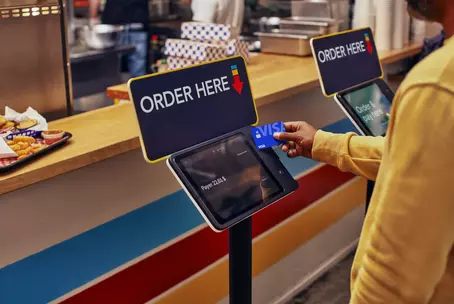
- Self-service kiosks or ordering terminals to speed things up
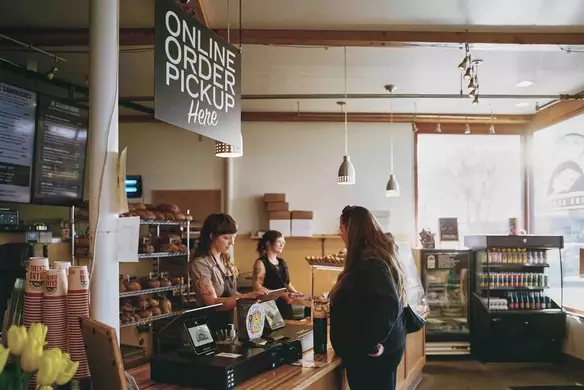
- Clearly labelled pickup shelves to organise to-go and delivery orders
- Payment devices that support tap, chip and mobile wallets for fast checkout
Before you start shopping, create a full equipment checklist. This will help you stay organised and ensure that your tools work well with your POS system and other tech.
Rent vs. buy decisions
Here’s a big question: Should you buy your equipment or rent it?
Buying gives you full control and can save you money in the long run. You’re not locked into contracts, and you can customise the setup as your kitchen evolves. But the upfront cost is substantial, especially if you’re building from scratch.
Leasing or renting, on the other hand, keeps startup costs lower and fees may include maintenance or upgrades. It’s a solid option if you’re conserving cash or testing out your concept. Just keep in mind that terms vary, and long-term costs often outweigh the equivalent purchase price.
So, there’s no one-size-fits-all answer. It comes down to your budget, your long-term plan and how much flexibility you need. Whichever route you choose, focus on equipment that supports fast service, food safety and a smooth experience for staff and customers alike.
Hire and train your staff
Your team is the face of your QSR. Having the best menu or tech won’t matter if your staff can’t deliver fast, friendly and consistent service. Hiring well and training smart is what keeps orders flowing and customers coming back.
Hire for speed and reliability
In a QSR business, reliability and speed matter just as much as experience. You’re looking for people who show up on time, stay calm during busy periods and can follow procedures without compromising on service quality.
Most quick-service restaurant teams include cooks, cashiers, food runners and cleaning staff. But beyond job titles, attitude is everything. Prioritise people who are positive, coachable and team-orientated. Hiring the right manager is also vital. This person sets the tone, keeps everyone on task and steps in fast when something goes off track.
Pro tip:
Consult our guide to staffing and retention to help build and maintain a successful team.Train for consistency and efficiency
Fast food doesn’t mean sloppy food. A strong training programme will make sure every order meets your standards, no matter who’s on shift.
Start by training people for their specific roles, but don’t stop there. Cross-training employees to handle more than one task (like having your cashier able to jump in to pack orders during a lunch rush) keeps things running smoothly when it gets busy. It also helps with scheduling flexibility and boosts team morale.
Use workforce management tools
Managing your team with spreadsheets and sticky notes might work at first, but it won’t scale well. As your business grows, you’ll need tools to help you manage schedules, track hours and communicate with staff in real time.
Tools like Square Shifts make it easy to schedule, track time and prep payroll. The more you can automate admin work, the more time you’ll have to focus on training, coaching and building a positive culture behind the counter.
Implement the right technology for your quick-service restaurant
The right tech setup can be the difference between chaos and smooth service. Whether it’s taking orders, managing inventory or handling delivery, tech should enable you and your staff to move fast and minimise mistakes without sacrificing the customer experience.
Choose an all-in-one POS system
Your POS system is the control centre of your restaurant. It’s where orders come in, payments go out and performance gets tracked. Instead of juggling multiple tools, look for an all-in-one platform like Square for Restaurants, which covers everything from front-of-house ordering to back-of-house kitchen workflows.
A smart POS system should help you:
- Accept payments quickly (tap, chip, mobile)
- Track sales and trends in real time
- Manage team performance and permissions
- Sync directly with kitchen display systems to streamline order prep
By connecting your front and back of house, kitchen display systems help your team prioritise tasks and prep efficiently, especially during rush hours.
Offer ordering options that reduce wait times
Most quick-service customers don’t want to wait in line. After all, speed is one of the biggest draws of the QSR model. Offering alternative ways to order can keep things moving and improve the overall experience. Self-service kiosks, for example, let customers place their own orders, freeing up staff and reducing mistakes.
You can also use QR code menus that let people scan, order and pay right from their phones. These tools don’t just reduce wait times; they also increase order size, since customers tend to add more when there’s no pressure to rush.
Integrate with delivery apps
Meeting the growing demand for meals that fit into busy lifestyles, deliveries and takeaways accounted for 18.3 pence of every pound spent at participating quick-service restaurants in June 2025. But entering orders from third-party apps manually can create confusion and mistakes. Instead, integrate delivery and pickup apps with your POS system so orders go straight to the kitchen without any re-entry, keeping things fast and accurate.
With a setup like this, your team can focus on fulfilment while your systems handle the rest. It’s a smoother experience for your staff and a better one for your customers, too, wherever they’re ordering from.
Market your quick-service restaurant
You’ve nailed your concept, picked the right tools and hired your team. Now, it’s time to get people through the door. A smart marketing plan doesn’t have to be complicated or expensive. Focus on building local buzz, showing up online and keeping customers coming back.
Start with local marketing
Start close to home. Print some flyers, hang posters in nearby coffee shops or gyms and hand out branded freebies during peak foot traffic times. Even better, team up with neighbouring businesses to cross-promote.
Hosting a soft opening is another great move. Invite friends, family and local influencers for a trial run before your official launch. You’ll get valuable feedback on the customer experience and create word-of-mouth buzz in the process.
Build your online presence
Even if most of your customers are walk-ins, your online presence plays a major role in helping them discover you. Start by setting up a Google Business Profile. This ensures people can find your hours, location and reviews with a quick search.
Next, create social media profiles on platforms like Instagram and TikTok. Share behind-the-scenes food prep, new menu items and staff stories. The goal is to bring your concept to life and stay top of mind in your community.
Launch with promotions and loyalty programmes
A strong opening week can build lasting momentum. Offer discounts, free upgrades or combo deals to draw people in. Once they’re through the door, give them a reason to come back.
Loyalty programmes are simple but powerful. Something like “buy five, get one free” gives customers a reason to return and spend more. Tools like Square Loyalty and Square Marketing let you set up automated email and text campaigns, promote special offers and even request Google reviews. These simple systems make it easy to build lasting connections and keep your spot busy well beyond launch.

Quick service restaurant FAQs
What is a quick-service restaurant?
A quick-service restaurant is a type of eatery that features fast, convenient food service with minimal wait times. Customers typically order at a counter, kiosk or online. Read our article What are Quick-Service Restaurants? to learn more.
How much does it cost to start a quick-service restaurant?
If you’re exploring how to start a quick-service restaurant, expect costs to vary depending on concept, location, size and equipment needs, but generally you need to consider expenses such as commercial kitchen equipment, renovations, permits, initial inventory and technology like POS systems.
Can I add delivery to my quick-service restaurant?
Yes, adding delivery is a great way to expand your quick-service restaurant’s reach and boost sales. The best practice is to integrate delivery directly into your POS system, so online orders flow straight to your kitchen without needing to be re-entered. This cuts down on mistakes and keeps service fast, even when juggling dine-in, takeaway and delivery.