

Table of contents
Contactless payments are an everyday part of UK retail, hospitality, and service businesses as consumer spending behaviour shifts further away from physical cash. Here’s everything you need to know about contactless payments and how to accept them.
What is a contactless payment?
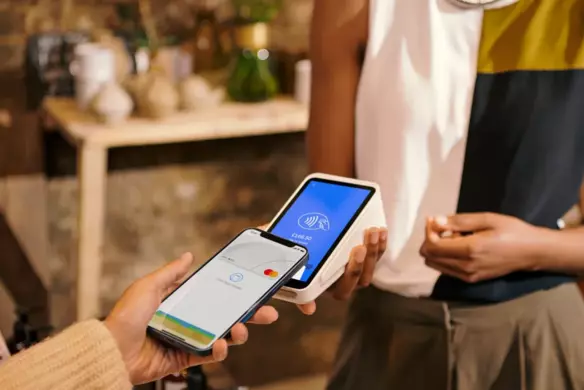
Contactless payments (also known as touchless payments) are a tap-to-pay method that allows users to pay with a card, smartphone or smartwatch by holding it near a reader. Much like EMV (Europay, Mastercard and Visa) payments, they are more secure than payments made via magnetic-stripe cards.
That’s because the account information stored on a magstripe card is static (it’s right there on the stripe). So, if fraudsters get hold of your card, it’s relatively easy for them to lift and clone that information and go on a shopping spree. With contactless payment, you don’t have to worry about that – contactless cards and devices use encrypted, one-time codes for each transaction, making it virtually impossible for anyone to duplicate or reuse your payment information.

How do contactless payments work?
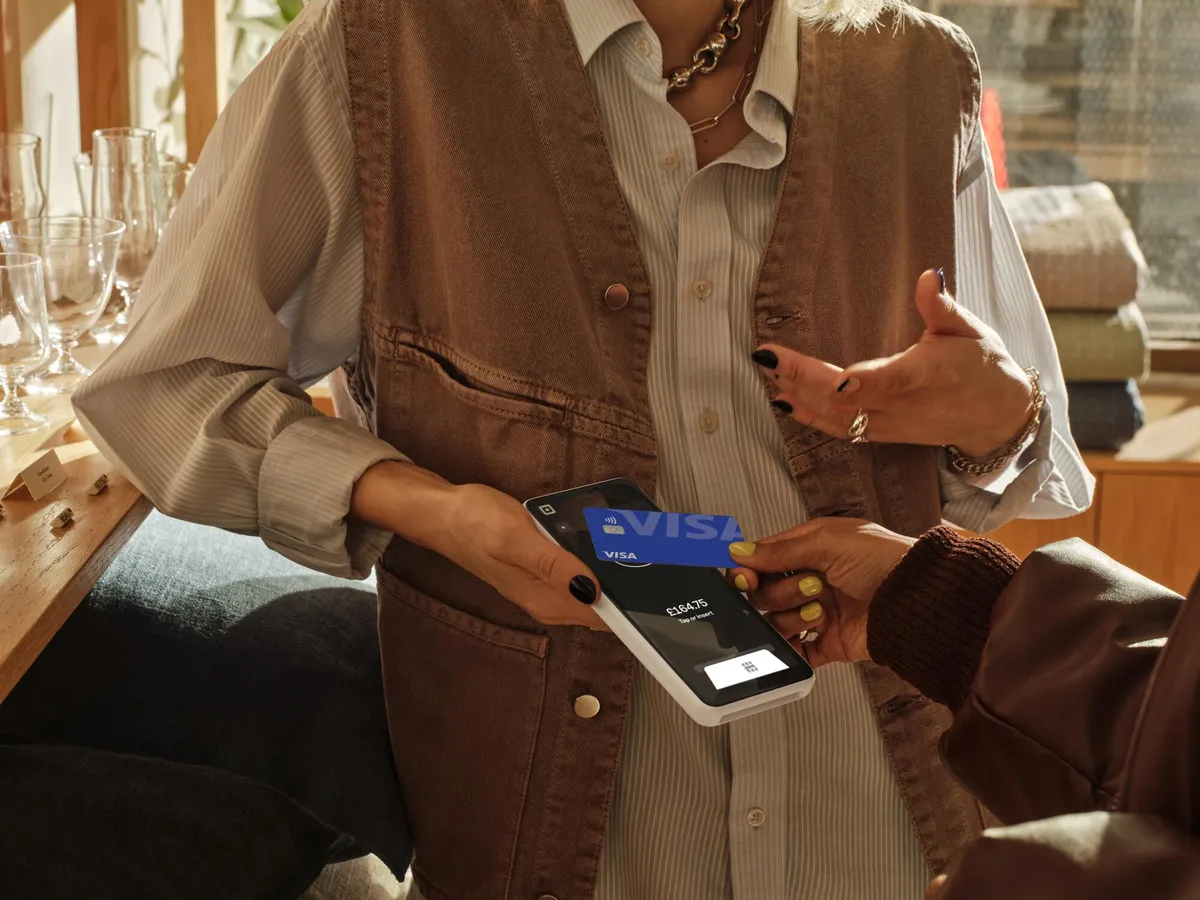
A contactless payment, as the name suggests, doesn’t require any physical contact between the buyer’s smartphone or credit card and the POS terminal. It makes use of technology called NFC, or Near Field Communication.
NFC is the technology that makes contactless payments possible via a type of radio frequency identification (called RFID). Using a short-range wireless connection, NFC allows two devices – like a payment terminal and a smartphone, card, or smartwatch – to exchange data instantly and securely when they’re held close together, usually just a few centimetres.
Here’s how the process works:
- The customer decides to pay using a contactless card, phone, or wearable device at the checkout.
- The merchant enters the transaction amount into the point-of-sale (POS) system, which displays the amount on the reader.
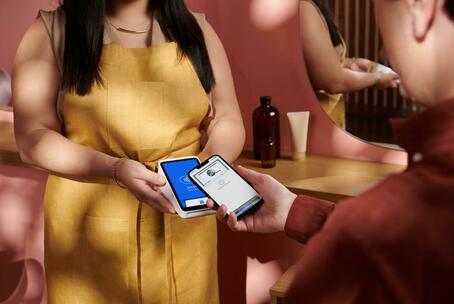
- The customer taps or hovers their device or card near the reader to start the NFC communication.
- The reader and payment device exchange encrypted information, verifying the card details and generating a one-time security code unique to that transaction.
- The payment is authorised by the customer’s bank or card provider within seconds.
- The merchant receives confirmation on their POS screen, and the payment is complete.
What is the maximum contactless payment limit?
In the UK, the contactless payment limit for card transactions is currently £100. If a customer wants to spend more than £100, they can still choose to pay through chip & PIN card payment, cash, and other forms of contactless payments, such as mobile payments, which do not have an upper limit when authenticated through biometric technologies.
What are the benefits of contactless payments?
Contactless payments have become one of the fastest and most convenient ways to pay. Some of the main benefits include:
- Speed and convenience: Transactions take just seconds, reducing customer queues and wait times.
- Security: Payments are encrypted and authenticated, making them safer than traditional magnetic stripe cards.
- Hygiene: No need to handle cash or physically touch the card reader.
- Durability: Less wear and tear on cards compared to swiping or inserting.
- Customer experience: A smoother checkout process improves customer satisfaction and encourages repeat business.
- Appeals to a younger audience: According to UK Finance’s 2024 Payments Market Report, 88% of 16-24 year olds use mobile wallets, leading the way in terms of adoption.
What are the disadvantages of contactless payments?
While contactless technology offers many advantages, there are still a few drawbacks to consider:
- Spending limits: Contactless card payments are capped at £100 per transaction.
- Device or card dependency: You’ll need a working card, smartphone, or wearable device to make payments.
- Lost or stolen cards: Although security is high, there’s still a small risk of unauthorised low-value transactions being made on a lost or stolen card, since no PIN is required for cardholder verification.
- Connectivity issues: Card readers or mobile devices may occasionally fail to connect, causing delays in payment.
- Limited awareness: Some customers, particularly those less familiar with digital payments, may still prefer cash or chip and PIN methods.
What is a contactless payment card?
A contactless payment card is a debit or credit card equipped with NFC (Near Field Communication) technology, which allows customers to pay for items by tapping or passing their card above a payment reader. Contactless payment cards are now the standard across most major providers, including Visa, Mastercard, and American Express.

Are contactless payments secure?
Yes, contactless payments are secure. Unlike magnetic-stripe cards, which store static information that can be easily cloned, contactless technology uses advanced encryption and tokenisation to protect your information.
This process replaces your credit card details with a unique digital token for each transaction – even if someone intercepted the data, this token can’t be reused, making it virtually impossible for fraudsters to steal or replicate your payment information. Mobile wallets, such as Apple Pay and Google Pay, can offer an additional layer of security as they make use of biometric and passcode authentication.
Square contactless payment systems are designed with security built in. Every transaction is encrypted, from the moment it’s tapped on a payment reader, to the time funds reach your account. Sensitive card details are also never stored on your device or Square servers – they’re securely processed through Square payment gateway, keeping data protected at every step.
How to accept contactless payments
Accepting contactless payments is simple and can help you serve customers faster while keeping transactions secure. To start, you’ll need a contactless-enabled card reader or a POS system that supports tap-to-pay transactions.
Almost all Square hardware accepts contactless payment, making it easy for businesses of all sizes to adapt to customer preferences. For example, Square Reader, Square Stand and Square Handheld all accept contactless cards and mobile wallets like Apple Pay and Google Pay, and you can also manage sales, track transactions and issue digital receipts through Square POS, keeping everything connected in one place.
What are the different types of contactless payments?
There are three main types of contactless payments: contactless cards, wearable devices and mobile wallets.
- Contactless cards: Debit and credit cards with an embedded NFC chip can be identified by the contactless symbol. These are issued by most major banks and are now standard across the UK.
- Wearable devices: Smartwatches, fitness trackers, and even payment rings or key fobs equipped with NFC can allow you to pay with a quick tap of your wrist – ideal for when you’re on the go without your wallet or phone.
- Mobile wallets: Digital wallets securely store your card details on your phone or tablet, allowing you to make payments by tapping the device on a reader. Payments are authenticated using biometrics or passcodes and can exceed the standard contactless card limit. The main examples are Apple Pay, which is available on iPhone, iPad and Apple Watch, Google Pay, which is available on NFC-enabled Android phones that run Android version 9.0 or later (and many Wear OS smartwatches), and Samsung Pay, which works on compatible Samsung Galaxy phones and watches.
Contactless payment technology: A brief history
The underlying technology behind contactless payments – such as RFID and NFC – has been around for decades. Its use cases include everything from scanning items in grocery stores to tracking luggage and tagging cattle. The UK first began rolling out contactless bank cards in the early 2010s, and one of the first major milestones in its widespread adoption was Transport for London (TfL) enabling contactless bank card payments for bus users in December 2012, with expansion to the Underground and rail network in 2014.
During the 2010s, adoption grew steadily. In 2018, the UK recorded about 7.4 billion contactless transactions, up 31% from the previous year. By 2020, contactless payments were used for over a quarter (27 %) of all UK payments, and 83% of people reported using contactless-enabled cards.
Another catalyst in the growthof contactless payment came during the COVID-19 pandemic, when avoiding unnecessary physical contact was paramount. In April 2020, the spending limit for contactless card payments rose from £30 to £45, and increased again in October 2021 to £100 – making tap-to-pay viable for a wider range of transactions.
By 2023, contactless payments accounted for over a third (38%) of all payments in the UK, with 18.3 billion contactless transactions made that year – an increase of 7% from 2022. By 2024, contactless technology dominated: a record 94.6% of all eligible in-store card transactions were made via contactless methods.
Emerging payment methods are now gaining traction. Mobile wallet and wearable payment devices are on the rise: in 2023, 42% of UK adults were registered for mobile contactless payments, and 34% used them at least once a month. Meanwhile, technologies like ‘Tap to Phone’ (turning a smartphone into a payment terminal) grew by 320% in 2024.

Contactless payment FAQs
How do I know if my card is contactless?
Contactless cards display the contactless symbol – a small wave-like icon printed on the front or back of the card that looks similar to a Wi-Fi signal turned sideways. If you see this symbol, your card is enabled for tap-to-pay.
How do I know if my phone has contactless pay?
To check if your phone supports contactless payments, look for NFC (Near Field Communication) settings in your device menu. Most modern smartphones – including iPhones and Android devices – have built-in NFC technology.
Are contactless payments safe?
Yes, contactless payments are very secure for both the customer and the merchant, especially when processed using payment systems like Square, which have end-to-end security built in. Each transaction uses encryption and a unique one-time code, meaning card details are never directly shared. This makes it far more difficult for fraudsters to clone or steal card details than it would be if a traditional magnetic stripe card was used. Mobile wallets like Apple Pay, Google Pay, and Samsung Pay add extra layers of protection through biometric authentication.