

Table of contents
Quick-service restaurants (QSRs) are designed to deliver fast, affordable meals with minimal wait times and little to no table service. At their core, they rely on streamlined operations, compact menus, efficient kitchens and standardised processes that keep service quick and consistent. Customers typically order at a counter, self-service kiosk or online, and collect their food within minutes.
Unlike large fast-food restaurants that depend heavily on global branding and largely standardised menus, QSRs can operate on a smaller scale with more flexibility in concept and menu design. For entrepreneurs, QSRs offer one of the most scalable and cost-effective entry points into the food industry. By focusing on speed, simplicity and brand identity, these businesses can meet the growing demand for convenience-driven dining while building a loyal customer base.
Read on to learn how QSRs operate, the differences between them and other restaurant models, and the key steps to opening and running one efficiently.

Features of quick-service restaurants
QSRs are known for their speed and convenience, but what really makes them work is the way they combine efficiency with consistency. Here are some of the features that make QSRs so effective.
Fast service
Whether customers are ordering at the counter, taking advantage of a drive-thru option or selecting items via a self-service kiosk, QSRs are built to get food in their hands fast. Behind the scenes, kitchens are designed and optimised to enable quick meal prep and fulfilment of a constant stream of orders, especially during traditional meal times.
Low pricing
With streamlined operations, smaller teams and simple menus, QSRs can offer meals at price points that appeal to a wide range of budgets. The low overheads keep the menu affordable for families, students and everyday eaters.
Menu simplicity
One of the reasons people love QSRs is predictability. The menu looks and tastes the same, no matter the location. On the business side, that consistency also helps manage costs, makes training faster andprep easier, while also minimising mistakes.
Minimal table service
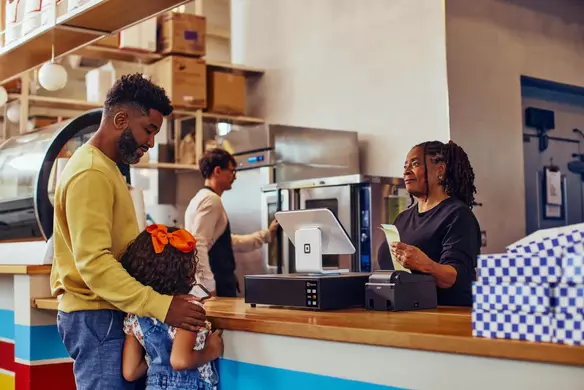
Most QSRs are built for grab-and-go convenience, with counter service or self-service at the point-of-sale (POS) and limited staff handling front of house. That means faster table turnover, lower labour costs and less friction in the ordering process.
Tech-enabled ordering
From mobile apps and digital menu boards to self-service kiosks, technology helps QSRs move fast and reduce wait times. It also gives customers more control over their orders.
Quick-service restaurant brands in the UK
QSRs are easy to find across the UK, with some of the biggest names serving millions of customers daily. Here are a few well-known brands that show how varied and successful this model can be:
- McDonald’s: Known around the world for its golden arches, McDonald’s is a feature of many UK high streets and motorway service stations, serving burgers, fries and breakfast items with incredible speed and consistency.
- Burger King: Home of the flame-grilled Whopper and ‘Have It Your Way’ slogan, Burger King offers classic fast food with a cheeky and slightly rebellious brand voice.
- Greggs: This UK institution has made sausage rolls, steak bakes and now even vegan pasties part of everyday life. Its combination of value, speed and comfort-food classics makes it a popular choice.
- Subway: With a choice of bread rolls and ingredients, Subway’s sandwiches, salads and wraps appeal to customers looking for quick but customisable meals on the go.
- Pret A Manger: Known for fresh sandwiches, salads and organic coffee, Pret helped define the grab-and-go culture of modern UK cities, with a focus on quality ingredients and fast service.
- Starbucks: A pioneer of cafe culture, Starbucks popularised everything from the Pumpkin Spice Latte to working on laptops with a flat white in hand. It’s known for consistency and customisable coffee experiences.
- Nando’s: Famous for its peri-peri chicken and casual sit-down vibe, Nando’s sits between quick service and casual dining, making it perfect for groups who want flavourful food without the formality.
- Pizza Hut: A long-standing pizza favourite, Pizza Hut mixes dine-in, takeaway and delivery, offering everything from family-friendly buffets to late-night slices.
- Pizza Express: With its stone-baked pizzas and stylish restaurants, Pizza Express combines fast service with a more relaxed dining experience.
- Wagamama: Inspired by Japanese ramen bars, Wagamama offers fresh, pan-Asian dishes, served to dine-in customers as soon as they’re ready, not in strict course order.
- Wetherspoons: While technically a pub chain rather than a QSR, ‘Spoons’ offers affordable meals and drinks with quick counter service, making it a hybrid between pub dining and fast casual.
But QSRs aren’t all big chains. Many are started by everyday entrepreneurs looking to serve great food fast, and they’ve grown into thriving businesses. Here are a few smaller businesses that show how flexible and successful the QSR model can be:
- The Salad Project – opened in 2021 by co-founders James Dare and Florian de Chezelles, this multilocation concept serves over 4,000 freshly prepared and customised salads every day for dine-in, takeaway and delivery.
- Panadera – reinventing Filipino baking traditions for London’s discerning foodies, this bakery and coffee shop is renowned for owner Florence Mae Maglanoc’s regularly changing pandesal sandwiches.
- Vegan Shack – the go-to fast-food option for plant-based food lovers in several UK cities, this sit-down and takeaway restaurant started as a delivery offer from founder and owner Dimeji Sadiq’s flat.
These brands, from household names to independent upstarts, show just how much variety fits under the QSR umbrella.
The difference between QSRs and fast-casual restaurants
Quick-service and fast-casual restaurants may look similar on the surface. But the differences show up in how the food is made, how it’s served and how much it costs.
Food prep
QSRs like McDonald’s or Pret A Manger rely on speed, often using pre-cooked or pre-assembled ingredients so meals can be served in minutes. In contrast, fast-casual restaurants like Wagamama or Pizza Express prepare food fresh to order — assembling and cooking each meal on the spot. That hands-on prep takes more time, but it creates a more personal, freshly made feel.
Menu complexity
Quick-service restaurants keep things simple with smaller, consistent menus. Think of a Greggs sausage roll or a McDonald’s Big Mac – fast to prepare and easy to replicate. Fast-casual spots, on the other hand, lean into customisation. At PizzaExpress, for example, customers can swap toppings and bases, while Nando’s offers different spice levels, sides and sauces. This flexibility gives diners more choice, but it also makes service slightly slower and requires more staff training.
Experience
The experience in a QSR is all about speed and convenience. Venues like Burger King, Subway and Pret A Manger focus on quick service, takeaway counters and click-and-collect. Fast-casual spots, on the other hand, often encourage longer stays. They may not offer full table service, but the vibe – the decor, music and seating – feels more relaxed and a little more premium than quick-service restaurants.
Price
QSRs are hard to beat for price-conscious diners. A McDonald’s meal deal or a Greggs lunch offer can be around £5-7. Fast-casual meals are a step up in both quality and price. At Pizza Express or Wagamama, mains start at around £12, reflecting the fresher ingredients and the slightly elevated dining experience.

Benefits of operating a quick-service restaurant
QSRs are built for speed, scale and consistency. And for owners and operators, that adds up to some major advantages, especially with the right systems.
High customer turnover
Because most guests are ordering on the go or using a drive-thru option, if available, quick-service restaurant operators don’t need to worry about lingering diners. That high turnover means more orders, more revenue and less space required to keep things moving.
Lower operating costs
Compared to full-service restaurants, QSRs typically cost less to run. Smaller spaces, fewer staff and less reliance on table service keep overhead costs manageable. Plus, with simpler menus and shorter prep times, you can keep labour costs and kitchen equipment to a minimum without sacrificing output.
Streamlined menu and inventory
QSRs don’t try to be everything to everyone, and that’s part of what makes them efficient. A focused menu means faster prep, easier staff training and fewer ingredients to manage. It also helps cut down on waste and makes inventory planning more predictable.
Flexible ordering options
Today’s quick-service restaurants are built for flexibility. From self-service kiosks and mobile ordering to curbside pickup and drive-thru lanes, customers can order however they prefer without slowing things down.
Franchise potential
Many of the biggest QSR brands are built on the franchise business model. That’s no accident. Standardised systems and repeatable processes make it easier for business owners to replicate success across multiple locations. Franchises benefit from built-in brand recognition, supplier relationships and proven playbooks.
Technology-driven efficiency
Digital tools have become the backbone of modern QSR operations. Online ordering, contactless payments and kitchen display systems all help to improve accuracy and reduce wait times.
QSR industry trends over time
From tech upgrades to changing customer habits, restaurant trends are changing all the time, so think about what you can bring to an evolving QSR industry.
Labour challenges are driving automation
Hiring has become one of the toughest challenges for quick-service restaurants. Between rising wages and high turnover, many operators are struggling to keep restaurants fully staffed. That’s where automation comes in. Self-ordering kiosks, mobile ordering, and even more advanced technology-led processes.For example, an AI assistant has been trialled at a Northampton drive-thru while the Big Table Group, which operates Bella Italia, Café Rouge and Las Iguanas, is experimenting with robot waiting staff.
Off-premise and digital growth
For many customers, convenience now means not eating in – figures reveal deliveries and takeaways accounted for 18.3 pence of every pound spent at participating quick-service restaurants in June 2025. Many QSRs are rising to the challenge by redesigning their stores to focus almost entirely on off-premise orders. Digital ordering, in particular, has exploded, with a recent digital transformation in the restaurant industry report showing that 85% of customers expect restaurants to offer digital ordering options, while 58% prefer pickup over dine-in when digital options are available. Apps, curbside pickup and mobile-first design aren’t just nice to have anymore; they’re now essential.
Brand consolidation and dual concepts
To stay competitive, some restaurant groups are doing more with less. One tactic that’s continued to yield results is dual-brand locations – for example, the EG Group has integrated outlets of Greggs, Subway and Starbucks in many of its petrol station forecourts, making them popular spots for drivers looking for a quick breakfast, lunch or coffee. These shared spaces help cut down on rent, labour and equipment, while giving customers more choice at a single stop. It’s a smart way to maximise resources without opening entirely new locations.
Rise of hyper-personalisation
Fast food doesn’t mean generic food anymore. More quick-service restaurants are using technology to deliver personalised experiences – whether that’s letting customers build their own meals, offering targeted loyalty rewards or adjusting pricing dynamically. This kind of personalisation helps QSRs stand out, increase order value and give customers a reason to come back without sacrificing much efficiency.
Challenges facing quick-service restaurants
The quick-service model has many advantages, but it’s not without its headaches. From staffing struggles to shifting customer expectations, QSRs today face a range of challenges.
Labour shortages and turnover
While we mentioned technology as a partial solution for labour issues, high turnover is an industry norm. Beyond automation, many QSR operators are experimenting with adding benefits and offering advanced training programmes, along with more flexible scheduling.
Rising costs and supply issues
Food prices are up. Packaging costs more. And supply chains are still bumpy. All of these make it tough for QSRs to keep their prices low without cutting into margins. Some restaurants are trimming down their menus to focus on core items or working with multiple suppliers to avoid getting stuck without key ingredients.
Tough competition
The QSR space is crowded. Legacy brands are battling it out with newer, trendier upstarts and customers have more choices than ever. That means strong branding, digital presence, loyalty programmes and standout menu items are now the baseline for staying relevant.
Changing customer preferences
Diners today are looking for more than just speed and savings. Many want healthier options, transparency around ingredients and eco-friendly packaging. QSRs have to walk a fine line: updating menus and operations to meet these expectations while still delivering the fast, affordable experience people expect.
Food safety and hygiene
Even when managing high volume and rapid service, QSRs can’t afford to slip when it comes to food safety. One mistake – especially if it goes viral – can damage a brand’s reputation overnight. That’s why regular training, strict protocols and digital systems for tracking compliance have become essential for staying ahead of food safety risks.
Tips to run a quick-service restaurant
Running a successful QSR means more than serving food fast – it’s about building systems that deliver speed, consistency and quality across every location you operate. A well-structured menu, efficient kitchen layout and properly trained staff form the foundation. But increasingly, it’s QSR technology that makes it possible to scale operations smoothly, especially if you’re managing multiple venues.
Offering flexible ordering options (like kiosks, mobile apps or drive-thru service) can also help you meet customers where they are and boost throughput without adding pressure to your front-line team. Quick-service restaurant solutions like Square can help tie all these elements together, making it easier to manage orders, payments, scheduling and inventory in one place.
Here are some key technologies that can transform the way you run your QSR:
Quick-service restaurant POS
A quick-service restaurant POS is the central hub of your operation. It allows you to take payments quickly, track sales in real time and keep menus consistent across locations. With integrated reporting, you can spot trends, adjust pricing and make data-driven decisions that help your restaurant grow.
Online ordering
Offering online ordering solutions ensures your customers can order in the way that suits them – whether for pickup, delivery or click-and-collect. Orders flow directly into your POS and kitchen systems, cutting down on manual entry and reducing mistakes.
Kitchen display systems
A kitchen display system replaces paper tickets with digital screens, streamlining communication between the front and back of house. Orders appear instantly in the kitchen, making it easier to prioritise and prepare meals efficiently – crucial for handling high volumes while maintaining accuracy.
Quick-service kiosk
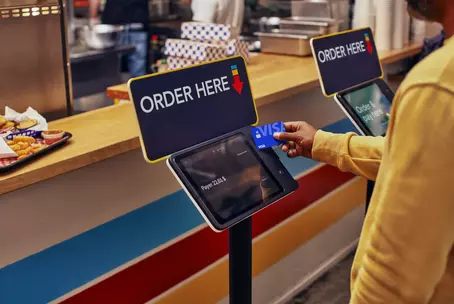
A self-ordering kiosk allows customers to browse the menu, customise their order and pay without waiting in line. Kiosks can help reduce pressure on staff during busy periods, increase average order value with upsell prompts and speed up service.
QSR staff management
Managing people is just as important as managing orders. With tools for scheduling shifts, you can build rotas, track hours and control labour costs all from one place. This helps ensure you’ve got the right number of staff at the right times, while giving employees more clarity and flexibility.
Run your QSR with efficiency and ease
The more streamlined your operation, the stronger your customer experience and your bottom line. From simplifying your menu to optimising your team’s workflow, every detail matters. With quick service restaurant solutions from Square, you can manage orders, payments, staff scheduling and inventory from a single platform, so your business runs smoothly with less effort.

Quick-service restaurant FAQs
What is a quick-service restaurant?
A quick-service restaurant (QSR) is designed to serve food fast and affordably, with minimal or no table service. Customers typically order at a counter or drive-thru window, or via mobile app, making QSRs a go-to choice for convenience and busy schedules. While the focus is on speed and efficiency, many brands now experiment with hybrid models that combine quick service with elements of sit-down dining for a more flexible experience.
Can customers tip at quick-service restaurants?
Yes, customers can tip at quick-service restaurants. While tipping used to be reserved for full-service restaurants, many QSRs now offer digital tipping options at the register or when paying by phone. With custom tipping features, businesses can make it easy for customers to show appreciation for great service, even if the interaction is quick.