




Table of contents
There’s a common misconception that an Electronic Funds Transfer (EFT) only refers to customers paying for things by swiping, tapping or inserting a payment card. In reality, EFT payments refer to any form of electronic money transfer. Let’s take a look at exactly what an EFT payment is, the different types of EFT payments, and how it all works.
What is an EFT Payment?
An EFT payment is the electronic or digital transfer of money between bank accounts, either within the same bank or between different banks.
Key characteristics of EFT payments include:
- Digital processing: Transactions happen electronically between bank accounts, without the need for a paper trail or cash.
- Covers multiple payment types: EFT includes online transfers, card payments, direct debits and automatic bill payments.
- Traceable: Both the sending and receiving banks keep digital records of every transaction.
- Secure: EFT payments move directly between verified accounts, reducing the risk of theft or human errors. When someone pays a business or an individual using a BSB and Account Number, the Confirmation of Payee function compares the account details entered to account information stored by the bank or financial institution and confirms if it’s a match. This function helps verify that the payment is being made to the right payee.
- Fast: EFT payments are cleared and settled faster compared to traditional methods like cheques.
EFT is how most Australians pay bills, transfer funds online or set up direct debits for automatic payments. Mobile wallets such as Apple Pay or Google Pay, another form of EFT payment, are becoming more popular. 2025 research from the Australian Banking Association revealed that the value of mobile wallet payments has grown by a factor of 23 since 2019, with a 28% increase in the last year alone. Aussies made $160 billion worth of payments using mobile wallets last year.
Meanwhile research from the Reserve Bank of Australia showed that cash payments have been declining rapidly – from 70% of payments when the survey began in 2007, to just 13% of payments in 2022. Even traditionally cash-only businesses, such as parking meters, food trucks, and market stalls across Australia now accept electronic payments, making physical cash a less common sight and underlining the importance to business success of enabling EFT payments.

Types of EFT payments
Most people use EFT payments every day without really thinking about it. From tap-and-go payments at a coffee shop to paying your business’s water bill online, these transactions all move money electronically between bank accounts.
1. Credit and debit cards
Every time you pay with a credit or debit card, you’re making an EFT payment. This includes using cards for in-store purchases, online orders, or even phone payments. While the money transferred might take a day or two to clear, the EFT payment system automatically confirms whether money is available, making the transaction valid instantly.
2. ATMs
When you withdraw cash or transfer money at an ATM, you’re using a form of EFT payment, even if you receive cash in your hand. The ATM communicates directly with your bank to confirm funds are available before dispensing the cash or processing the transfer.
3. Wire transfers
Wire transfers are a type of EFT payment that allows you to send money electronically between local or international accounts. While the sender may hand over cash at the counter, the funds are still transferred electronically to the recipient’s bank, often on the same day for domestic transfers.
4. Direct deposit/bank transfer
Direct deposit is an EFT payment method used by employers in Australia to pay wages to employees, and by businesses to pay invoices to suppliers or issue refunds to customers.
You can even use direct deposit to transfer money to friends and family, or between your own accounts. The process isn’t instant most transfers arrive within 1-3 business days, depending on your bank’s processing times.
Transfers made using Osko or PayID operate on the Reserve Bank of Australia’s New Payments Platform (NPP). The money transfers are usually instant or take only a few minutes to go through. Businesses and individuals can use NPP to make transfers 24/7.
5. Online payment systems
You can use credit and debit cards and mobile wallets to buy products securely via websites, invoices or checkout links.. Online payment systems allow transactions to take place over a secure connection, whether you use a card, a mobile wallet or an account balance to pay. Tools like Square Online Payments make it easy for businesses to accept digital payments and get paid faster.
6. E-cheques
An e-cheque is an electronic transfer that moves money online directly from one bank account to another and is typically used for larger payments that need a digital trail.The process is similar to writing a paper cheque, except everything is done digitally. Australia’s electronic system reads and exchanges data electronically, making it faster to pay and clear an e-cheque compared to a paper cheque.
7. Mobile wallets
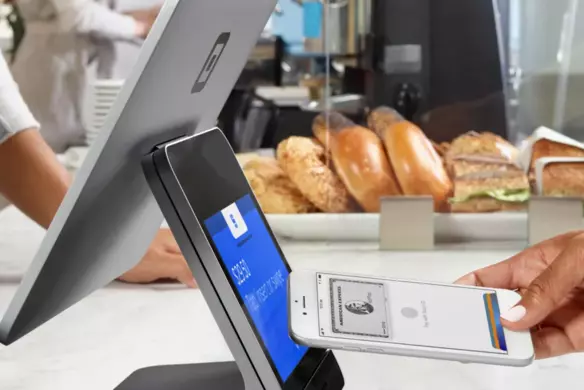
Services like Apple Pay, Google Pay and Samsung Pay allow customers to store credit or debit card details in digital wallets. Mobile wallets are tapped at checkout using a card reader or used online to make digital payments. Mobile wallets used in stores use contactless technology to make quick and secure EFT payments, ideal for smaller transactions.
8. Internet banking
Internet banking helps you make different types of transactions through your bank’s website or app without having to visit the branch. You can transfer funds between accounts in the same bank, between accounts in different banks, schedule bill payments, or set up direct debits via the Internet.

How do EFT payments work?
A lot happens behind the scenes when making a simple EFT payment in Australia. Behind every EFT payment is a secure network of banks, financial institutions and online payment systems working together to move funds between accounts
EFT payments require two parties – the receiver and the payer – to talk to each other electronically through a designated system.
When a transaction is made, the sender’s bank checks that funds are available, authorises the payment and then transfers the money through a secure network to the recipient’s bank. Once the receiving bank confirms the details, the money appears in the recipient’s account.
Most EFT payments in Australia are processed through the NPP, which allows real-time transfers between participating institutions. Some types of payments, such as direct deposits and online payments, may take 1-3 business days to clear into the recipient’s bank account, depending on their bank’s processing schedule.
It’s easy to confuse EFT and Electronic Funds Transfer at Point of Sale (EFTPOS); however, they’re not the same thing:
- EFT is an umbrella term for any digital transfer of money between bank accounts.
- EFTPOS describes the system that processes debit or credit card payments in person at a register or terminal at a supermarket or cafe. EFTPOS transactions are usually tap-and-go or chip + PIN transactions. Even though money is being transferred electronically behind the scenes, it needs a person to use a card to make a payment.
EFT vs ACH and Direct debit
If you’re unsure of how EFT differs from ACH or direct debits, these are defined below:
- Automated Clearing House (ACH): This is a term used mainly in the US to refer to a specific network that helps move funds between banks and credit unions. In Australia, our EFT systems perform the same function through networks like New NPP or BECS (Bulk Electronic Clearing System).
- Direct debit: A direct debit is a type of EFT used for recurring payments to a business or organisation. The customer authorises the receiver to withdraw money from their account on a set schedule, for example, a bill that’s paid weekly, fortnightly or monthly. Direct debit is commonly used for subscriptions, memberships and utility bills.
EFT payment processing time
The time it takes for money to move electronically from one account to another depends on several factors such as the payment type and the financial institutions involved. When you pay with a credit or debit card, the funds usually leave your account instantly, but may take a day or two to reach the merchant’s account. Similarly, direct deposits or online transfers may clear within a few business days, depending on your bank’s processing schedule.
For business owners, getting access to funds quickly is important. Square Instant Transfers let you move your money from Square to your linked bank account in minutes – even after hours, on weekends or public holidays. Access your cash flow faster without waiting for standard settlement times.
Some Australian banks also support faster transfers through Osko or PayID. For businesses, Instant Transfers through Square offer a simple and reliable way to access cash fast.
EFT payment method regulations in Australia
Electronic payments in Australia are protected under the ePayments Code, a framework developed and administered by the Australian Securities and Investment Commission (ASIC). The ePayments Code is voluntary, and sets out the rules that subscribing banks, credit unions and other payment providers must follow to keep customers safe when making or receiving EFT payments.
The ePayments Code applies to the following common forms of EFT transactions in Australia:
- EFTPOS payments
- Credit and debit card transactions
- Online and mobile banking transfers
- Internet payments and BPAY
Compliance requirements for EFT payments
Under the ePayments Code, financial institutions and payment providers that subscribe must:
- Clearly explain the terms and conditions that apply to EFT facilities such as EFTPOS, online banking and mobile payments.
- Provide secure systems and requirements like PINs and passwords for verifying customer identity and authorising payments.
- Maintain accurate transaction records and ensure customers can access them easily.
- Offer clear and straightforward processes for cancelling or disputing unauthorised transactions or errors.
- Provide customers with a receipt for transactions that show details of payments without revealing any sensitive information, such as complete card numbers.
- Clearly explain how changes to terms and conditions like fee increases, receipts and statements are to be made.
- Clearly state who pays for unauthorised transactions if they occur.
- Have a process in place to recover mistaken Internet payments.
Consumer protections for EFT payments
The ePayments Code protects consumers from financial losses caused by unauthorised transactions as long as customers have taken necessary precautions to protect their account information.
Key protections for consumers include:
- Liability limits: Customers aren’t responsible for losses beyond their control caused by system errors, technical faults or fraudulent activity.
- Transparency: Banks and payment institutions must show fees, charges, and transaction limits in plain language.
- Security: Payment providers must have safeguards such as two-factor authentication (2FA) and monitoring transactions to reduce the risk of fraud.
Since the ePayments Code is voluntary, it only protects consumers as long as the institution they’re dealing with subscribes to it.
Before your business signs up for a payment service, you should:
- Check ASIC’s list of subscribers to see if the organisation follows the ePayments Code.
- Read the organisation’s terms and conditions carefully to check if they subscribe to the Code.
How banks handle disputes and refunds for EFT payments
If someone suspects an unauthorised, duplicated or mistaken EFT payment in their transactions they can lodge a dispute directly with their bank or payment provider. Once they have lodged a dispute, the bank:
- Is required to acknowledge the complaint promptly and launch an investigation within 21 days.
- Must provide regular updates until the matter is resolved.
- Must issue a refund as soon as possible once an error or unauthorised transaction is confirmed.
Benefits of EFT
An electronic funds transfer is one of the best and most efficient ways for Australian businesses to receive or make payments. It offers many benefits for your cash flow beyond just convenience at the point of sale:
- Speed: EFT payments are processed quickly, either within seconds or a few business days. With Square’s Instant Transfers Instant Transfers, instant transfers and PayID, money arrives in minutes or seconds into your linked bank account, helping you create a steady cash flow.
- Security: Funds move between bank accounts, so you don’t have to keep cash on your premises. The bank accounts are also verified, reducing the chance of theft, loss or fake currency. Built-in security features such as 2FA and real-time fraud monitoring mean that your and your customers’ money is safe.
- Record keeping: There’s a digital record of all EFT payments, making it easier to track sales, reconcile transactions and prepare reports. When connected to a quality POS system or accounting software, all sales are instantly recorded saving time and reducing manual data entry errors.
- Convenience for customers: EFT gives customers the option to pay as suits them via mobile wallet, card or an online transfer. It creates a smooth checkout experience because it’s fast, contactless and reliable.
- Revenue growth: Offering more payment options to customers means more sales. When you accept EFT in-store, online or on the go with Square, it makes it easier for customers to buy and boosts your revenue.
- Accuracy: Electronic payments remove the risk of miscounting cash or giving out incorrect change. Every transaction is processed automatically, so the right amount is sent and received each time
Do businesses have to offer EFT payments?
No, businesses do not have to offer EFT payments. There is no law in Australia that prohibits businesses from operating as cash only. However, in today’s mostly cashless economy, not offering or accepting electronic payments can put your business at a disadvantage by discouraging potential customers who want to pay via EFT.

EFT payment FAQs
What are some common types of EFT payments?
EFT payments come in many forms. Common examples include:
- Direct deposits, such as payroll or invoice payments.
- Wire transfers for local or international bank-to-bank payments.
- Credit and debit card payments made in shops, online or by phone using a terminal.
- Mobile wallets such as Apple Pay, Google Pay and Samsung Pay.
- Online transfers including BPAY, PayID or payments made through internet banking.
Each of these methods moves money electronically between bank accounts without the need for physical cash or cheques.
How long does an EFT payment take?
Most EFT payments in Australia take between 2-3 business days, depending on the bank or financial institution. Square Instant Transfers function allows you to transfer money from the Square app to a linked bank account as soon as you make a sale. Move your money instantly when you need it, with a simple, flat 1.5% transfer fee.
Can you stop an EFT payment?
Once an EFT payment is made, it usually can’t be reversed. However, if the payment is still pending, your bank may be able to recall or stop it from going through. It depends on the payment type and timing.
Are EFT payments safe?
EFT payments are protected by bank-level encryption, fraud monitoring systems and strict identity verification processes. Australian banks and payment providers can also choose to comply with the ePayments Code, which protects consumers against unauthorised transactions and financial losses. When using secure providers like Square or your bank’s online platform, EFT is one of the safest ways to send and receive money.
What are the risks of EFT payments?
Like any other mode of electronic payments, EFT carries some risk. However, it’s easy to minimise it:
- Protect your login details. Never share codes or passwords.
- Always double-check account details, PayIDs and amounts before clicking ‘pay’.
- Transfers between different banks or outside business hours may take longer to process.
Use your bank’s secure systems, a secure network, and always follow safe banking tips to reduce the risk of fraud.


