

Table of contents
If you’ve been out to dinner recently, you may have been asked to access the menu by scanning a QR (quick-response) code. Or maybe you’ve noticed QR codes popping up to facilitate contact-free payments at your favourite bar. If you have, it’s because QR codes have become a mainstream tool for sharing information and processing transactions, and are enabling businesses to deliver faster and more convenient service.
But what are QR codes, and how do they work? In this article, we explore the world of QR codes, from where they came from to what you can do with them, and how Square can support you in using them in your business.
What is a QR code?
A QR code is a type of two-dimensional barcode – made up of black and white squares –that encodes information which can be accessed when scanned by a smart device. QR code technology was originally pioneered by Japanese company Denso Wave in 1994 to facilitate more accurate and detailed production control in the manufacturing industry. Manufacturing businesses typically involve dirt, grease and heavy lifting, meaning documents and labels are prone to staining or damage, leaving traditional barcodes unreadable to scanners. QR codes were developed with an error correction function that allowed them to be read accurately even if a code was partially obscured or missing.
In the early 2000s, QR codes started being deployed in marketing campaigns to quickly direct customers towards further information without needing to type in a URL or navigate multiple web pages, but uptake was limited by the need for third-party scanning apps.That barrier was lowered in 2017 when Apple enabled the iPhone camera to read QR codes and Android quickly followed suit.
Today, thanks to faster and more readily-available internet connections and default QR code-scanning functionality in smart devices, these unassuming black and white boxes have become a must-have tool for businesses to connect with customers, share information more easily, and process payments faster.
QR codes can facilitate a number of actions, including:
- Viewing a restaurant menu and placing orders.
- Creating secure payment links to make purchases.
- Locating and navigating towards establishments.
- Accessing Wi-Fi networks.
- Accessing websites or specific web pages.
- Downloading an app or signing up to a newsletter
How do QR codes work?
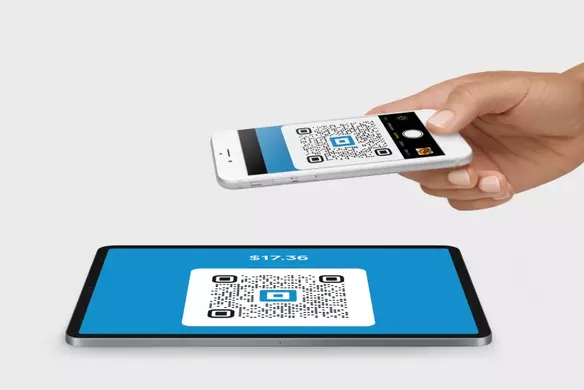
QR code generators arrange black and white squares into a unique two-dimensional pattern that encodes data. When scanned, that pattern is decoded into readable information, such as a URL, menu or payment page.
Here’s what happens when you scan a QR code:
- Your phone’s camera reads the pattern on the code.
- Your phone interprets the data encoded within that pattern.
- Based on what’s in the data, your phone performs the directed action.
- Depending on the direction, a website opens, an app is launched, or a payment page is accessed.
The standard structure of a QR code includes a number of parts playing different roles:
- Quiet zone: The white border that separates the code from surrounding graphics.
- Finder patterns: The three large black squares located in three corners of the code (top-left, top-right and bottom-left). These squares help scanners detect orientation.
- Alignment pattern: Smaller squares that are used to ensure readability, even if the code is off-centre or tilted when scanned.
- Timing pattern: A line of alternating black and white modules (usually an ‘L’ shape) that helps the scanner identify the grid structure.
- Version information: This indicates which QR code version is being read.
- Data cells: These contain the actual information that the scanner will read and consumers will use.
Types of QR codes
The two main types of QR code are static and dynamic. Each one has its benefits and limitations, depending on how and where you want to use it.
Here’s how static and dynamic QR codes differ:
- Static QR codes contain information that cannot be edited or updated. It’s contained in the code itself. These codes are useful for storing long-term information like permanent website URLs and Wi-Fi details.
- Dynamic QR codes contain links that can be updated anytime without updating the QR code. This means businesses can change destination URLs or fix errors after the QR codes are created. Single-use dynamic QR codes are ideal for accepting payments, since each transaction generates a unique and secure link to a specific bill or order.
In both cases, every QR code is completely unique, with data encoding that matches only the URL or destination portal that you specify when you create it.
How to use QR codes in your business
How to best use QR codes will likely depend on your industry and business goals. Restaurants, for example, can create them to improve ordering for customers, while retail stores can generate codes to support a contactless checkout for purchases.
Out-of-the-box solutions like Square Online make it easy for small businesses to generate and use QR codes to direct customers to key information and facilitate transactions. Since Square QR Codes are dynamic QR codes, each QR scan links to a unique ordering or payment page. With QR code ordering through Square Online, restaurant customers can scan a table- or seat-specific code to browse your menu, order, and pay from their phone. Scan to Pay prints dynamic QR codes on each customer’s bill or receipt, letting them pay instantly.
Here are six ways you can get started with using QR codes in your business:
1. Speed up payments using a familiar experience.
UK consumers are already very comfortable with contactless payments, with 59% citing a debit card, credit card or mobile wallet as their preferred payment type. QR codes can be seen as a natural next step for businesses to offer speedy, contactless payment services in bars, restaurants, convenience stores, and any other high-traffic retail settings.
2. Enhance browsing and ordering
QR codes give people the option to self-serve by scanning a barcode on their table, browsing the menu, placing an order and paying for their food and drinks. Restaurant owners can pick and choose the service level they want to offer based on the atmosphere they’re trying to create, how many staff are available on any given day, and what their customers want.
The scan-and-go world of QR codes has been helpful to bring much-needed efficiencies to restaurants, which is especially important given rising operational costs in the UK hospitality sector.
3. Create interactive ad campaigns
Businesses can add QR codes to print campaigns for customers to scan for direct access to coupons, contests, or product or service information.
4. Enhance the customer experience
QR codes can also improve a shopper’s in-store experience and even encourage higher spending by allowing customers to access additional information, see products in use, or enable demonstration of colour or design options. Research by Merkle found that one in three UK shoppers were willing to pay more for products that incorporated technologies like QR codes.
QR codes can also direct shoppers to websites that provide the story behind the product, such as its history or information about the creator or founder. Retailers can further customise the buying experience by providing customers with an easy way to gather product information, reviews, price comparisons, and recommendations.
5. Build a digital following
Retailers can also leverage QR codes to build customer relationships. Codes can direct customers to review sites that ask for feedback, or social media profiles that prompt a follow.
6. Strengthen customer loyalty
QR codes provide a fast and frictionless way for customers to sign up for a rewards programme and earn points without needing to download an app or carry a physical card. Customers simply scan a code or provide their phone number at the point of sale. If your business uses Square Loyalty, the system automatically tracks the customer’s activity across future purchases, giving you data that you can use for personalised engagement, marketing campaigns, and more.
How QR codes work for payments
There are two main ways that QR code payments work: merchant-presented QR codes and customer-presented QR codes.
- Merchant-presented codes are when the business creates and displays a QR code that the customer then scans on their phone. Once scanned, the customer is directed to a secure checkout page to complete their payment.
- Customer-presented codes are when the customer generates a QR code in their digital wallet or payment app for the business to scan to finalise the transaction.
Here’s how the transaction flows in a typical merchant-presented QR code payment:
- The business generates a unique QR code for a specific transaction. This could be printed on a receipt, displayed on a screen, or on a table sticker in a restaurant.
- The customer uses their smartphone camera to scan the unique QR code.
- The customer is automatically directed to a secure payment page on their phone to complete the transaction with their physical card or mobile wallet, such as Apple Pay, Google Pay.
- The payment is processed, and both the business and the customer receive real-time confirmation of the completed transaction.
Here’s how the payment process looks with a customer-presented QR code:
- The customer opens their digital wallet or payment app on their phone, which generates a unique, single-use QR code.
- The business uses a QR code scanner or a camera-enabled POS system to scan the code displayed on the customer’s phone.
- The payment is securely processed through the business’s POS system.
- Both the business and the customer receive confirmation of the completed transaction.
In both cases, this whole payment process takes a matter of seconds, with both you and your customer receiving instant confirmation of a successful transaction.

How to generate a QR code for payments
As QR codes become more widespread in the UK, you might be wondering how you can offer them to your customers when reaching the checkout. Square QR codes can help you accept QR code payments and balance convenience with security.
1. Provide contactless payment in person via Square POS
What it does: Prints a unique QR code on each receipt, allowing customers to scan and pay their bill directly to your Square POS from their phone.
Who can use it: Any business running in-person sales.
How it works:
- Enable Scan to Pay in your Square Dashboard
- Open the Square Point of Sale app.
- Add item(s) to cart or key in an amount and tap checkout.
- Select ‘Scan to Pay’ and a QR code will appear on the customer’s receipt.
- The customer scans, pays with a credit card or mobile wallet, and can even leave a tip directly from their device.
- The payment is processed instantly through your Square POS.
Benefit: Businesses like restaurants can finalise multiple orders, allowing customers to pay when it is convenient for them, without tying up credit card machines for individual transactions.
2. Provide contactless self-serve ordering via Square Online
What it does:& Lets restaurant customers scan a table- or seat-specific QR code to view a menu, place an order, and pay on their phone.
Who can use it: Full-service and quick-service restaurants.
How it works:
- Create or log into your Square Online store.
- Generate and print QR codes for signs, tables, or parking spots.
- Customers scan to browse the menu, customise items, add notes, and pay.
- Orders flow straight into your POS and Kitchen Display System, consolidating orders for each table onto a single ticket for smoother kitchen operations.
- Service staff deliver food to diners using a ticket with the guest’s name and table number.
Benefit: Reduces wait times, frees up staff time, and lowers the risk of order errors while giving guests more control over their dining experience.
3. Provide contactless payment in person via Square Payment Links
What it does: Allows customers to use a printed QR code to purchase an item from their phone.
Who can use it: Anyone selling a few items, offering a specific service, or taking donations.
How it works:
- Create a checkout link from your dashboard or POS app.
- Print QR code.
- Place QR code anywhere you want customers to access it.
- Customer scans QR code and is taken to a simple checkout page to pay.
Benefit: Allows businesses to accept payments from anywhere without needing a website or paying a monthly fee.
Benefits of using QR codes for payments
Speed, convenience and operational efficiency are the three main benefits businesses can gain from using QR codes to process payments.
QR code payments enable all of the following:
- Faster service. No-touch QR code payments help restaurants, bars and cafes turn tables faster, and help convenience stores and other high-traffic retail stores complete checkout without delays.
- Affordable operations. All you need is your smartphone to start accepting QR code payments, reducing the need for expensive payment hardware when starting out. As you grow, a full POS system is important to enable collection and use of business insights like inventory management, sales tracking and customer relationship data.
- Flexibility and convenience. QR code payments allow businesses to create easy scan-and-pay experiences in virtually any setting they operate in. Customers can pay for meals or goods on their own terms, using their own phone, without having to wait for staff or a credit card terminal, making for a faster and smoother process.
- Customer data and insights. Dynamic QR codes – backed by a platform like Square – facilitate collection of customer information like transaction time, location, device type, and purchase history, and make it available via the Square Dashboard. This can help businesses analyse purchasing behaviour, create customer profiles and buyer segments to fuel sales and marketing campaigns and even analyse when certain types of products are sold most often to help plan inventory and stock levels.
- Security and compliance: Every Square QR code payment is end-to-end encrypted, backed by Square’s fraud detection and monitoring tool, Risk Manager, and is tracked in the Square Dashboard for dispute protection. Square offers a wide range of products with built-in security features for the UK market.
How to scan QR codes using different devices
Use of QR codes is well established in situations where customers scan a code on a smart device, such as ordering in a restaurant or making a payment. But they can also be used by businesses to collect information from customers, such as details about loyalty schemes and product returns, and to streamline some inventory management tasks.
There are four main types of devices for scanning QR codes: smartphones and tablets, computer apps, handheld 2D scanners, and mounted 2D scanners.
Here’s how to scan QR codes using different devices:
- Smartphones and tablets: Customers use these to scan your barcodes. They simply need to open their camera app and hold their phone over the QR code. The phone then automatically finds and processes the QR code, presenting the customer with a URL or taking them directly to a payment page.
- Computer apps: These work in a similar way to smartphones and tablets but use a desktop or browser app. The user simply holds up the barcode to the computer camera and the app captures and decodes it. A customer might scan a QR code on a flyer, for example, to access your website or online store.
- Handheld 2D scanners: If you’re using QR codes internally for your business – for example, to log the date, origin, and destination of a delivery (provided by a supplier’s QR code) – you’ll need a handheld 2D scanner. These scanners, like Square Handheld, can also be used to collect information from customers. Loyalty cards have QR codes that customers can provide at checkout, for example, and returns are often processed by scanning a QR code provided by a customer.
- Mounted 2D scanners: Mounted scanners work in the same way as handheld ones but allow customers to scan without assistance. If you offer self-checkout stations or operate manned terminals where speed is important, mounted scanners are a must.

QR code payments FAQ
What is a QR code and how does it work?
A QR code is a two-dimensional bar code that stores data like text or a URL. When scanned with a smartphone or reader, the QR code is immediately decoded, and the user is taken to a URL or shown the embedded information.
What is a QR code used for?
QR codes are used to connect customers quickly to checkout pages, websites, digital content, and apps. They’re also used to collect information from customers, as in the case of loyalty cards and product return codes. QR codes are also sometimes used for complex inventory management (where businesses need to input detailed information).
How do I accept QR code payments?
You can accept QR code payments via Square Online, where customers scan a QR code to browse a menu, place an order and pay directly on their phone, or with Scan to Pay, where customers can pay their final bill by scanning a unique QR code on their receipt.
Is it safe to use QR code payments?
Yes, QR code payments are safe when processed through a POS platform like Square that uses end-to-end encryption, real-time fraud monitoring and free dispute management services to protect both the business and the customer.
Are there fees for QR code payments?
Square QR codes are free to create with a Square account, and involve the standard processing fee of 1.4% (+ 25p) for UK cards and 2.5% (+ 25p) for non-UK cards per completed transaction.
How long do QR codes last?
How long a QR code lasts depends on the platform used to create it. Square QR codes never expire, unless you set them up to, and can be used or deactivated at any time by the business.