


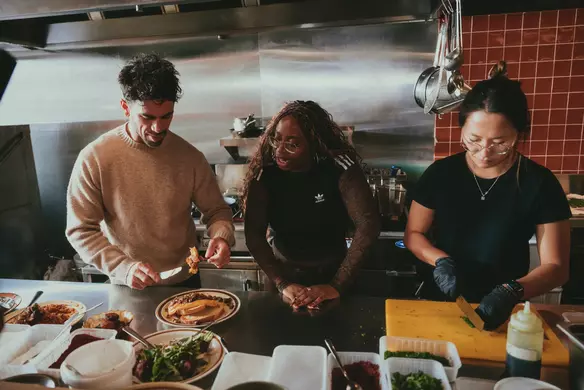


Just under two years ago, Mary Akindele flew from Melbourne to Nigeria. It was her second time visiting her family’s country. And it was the first time she contemplated bringing Nigerian cuisine back to Melbourne with her.
“I met my mum over there for a little holiday, which was incredible, but it also grounded me a lot,” Akindele says. “It instantly felt like home. I ate some amazing food and met some incredible people, amazing business owners.”
“It was just super inspiring, and I was like – I feel like I can take this and bring it to what is now my home, here in Australia.”
She brought it a year later, when she opened Mary’s, in Collingwood. It’s a café by day, restaurant and bar by night, whose two services – and their menus – represent all of the cultures that Akindele grew up with. Nigeria, her parents’ home. The UK, her old home. And Australia, her new home.
Mary’s is an amalgamation of my heritage and where I’ve come from. It’s taking all the elements and putting it all together. I really wanted to make something that represented my culture – it’s a space for me to express where I’m from.”
Mary Akindele → owner, Mary‘s
Why Melbourne’s Inner North Eats Differently | Good Neighbours season 2 episode 1: Fitzroy & Collingwood

From toasties by the beach to jollof on Johnston Street
Akindele’s Melbourne hospo story started in the same place as it does for so many new-to-town Brits: St Kilda. After studying fashion and business in the UK and working in that industry for half a decade, Akindele shifted gears when she moved to Australia and entered the hospitality industry.
As it does for so many, what started as just a way to make ends meet soon became a full-blown love affair with the biz. Before long, Akindele decided to make the move from hospo worker to hospo owner.
She did just that when she opened Sam’s, in St Kilda, not too far from the bay and its beach. The brief there is simple – toasties and coffees, executed well, served quickly and with good cheer. The formula worked. Really well. Since opening at the start of 2021, the café’s gone from strength to strength, and has ensconced itself into the routines of its locals and regulars.
Sam’s takes its name from Akindele’s late father, Samuel Akindele, who embodied the warmth and hospitality of the café that bears his name. But its menu – with toasties like pesto chicken, and ham, cheese and tomato – was all-Australian. Nothing Nigerian.
So with Sam’s serving as a love letter to Akindele’s family values, Akindele wanted her follow-up to be a love letter to her culture(s).
“My other business, a couple of years into it, was doing really well,” Akindele says. “I had the idea of Mary’s, but I didn’t know what that looked like yet.”
All she knew is that she wanted to go bigger and bolder than the first time around. Something more true to her experiences. Then she took that trip home to Nigeria, and she knew she’d found what Mary’s was supposed to be.
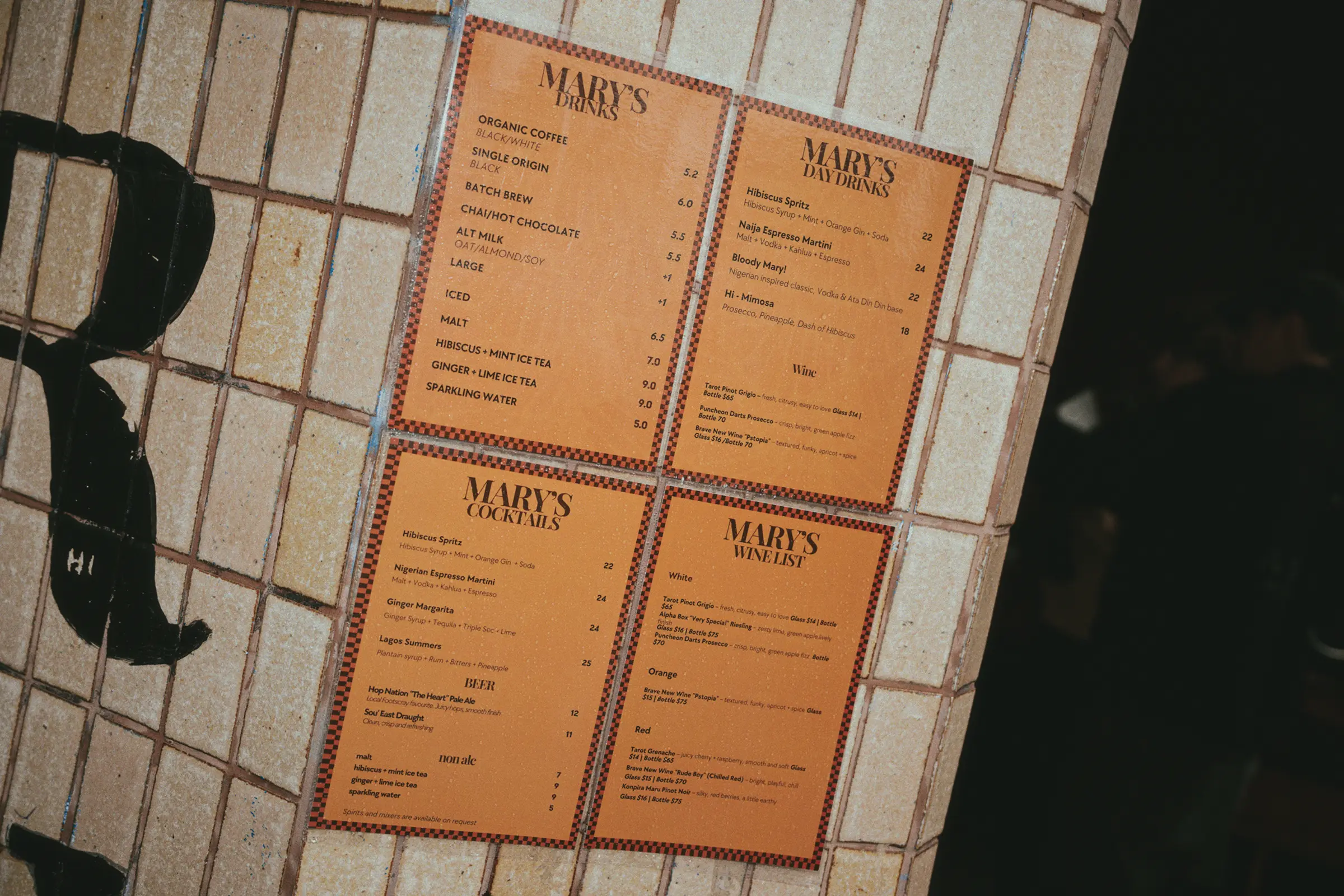
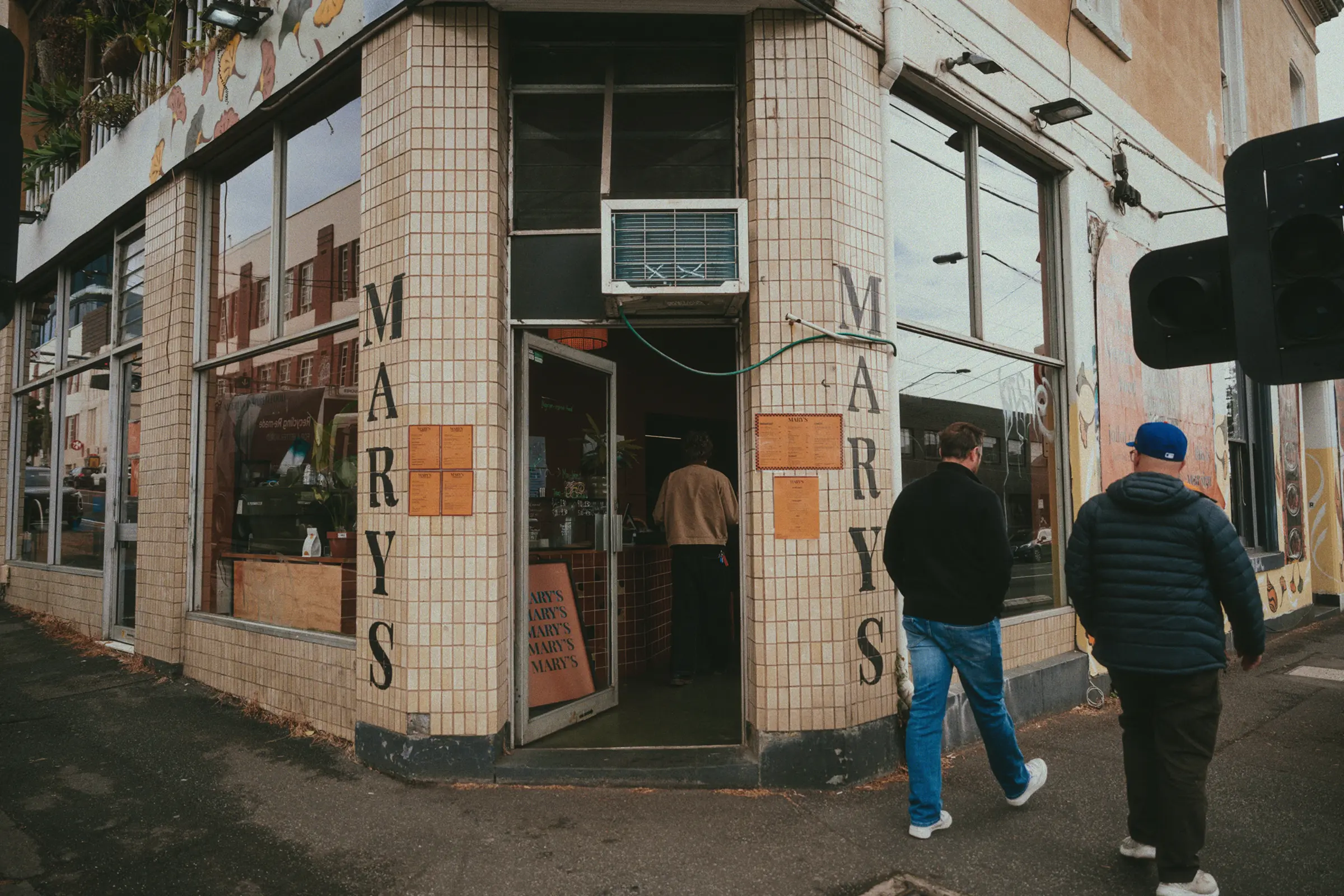

Replacing a beloved neighbourhood favourite
Once Akindele had the concept for Mary’s, all she needed was a home for it. And she found it at the beginning of 2025, when a Collingwood classic closed for good.
“This venue used to be Old Raffles Place, a Singaporean restaurant that was open for 25 years, they were a staple,” Akindele says. “I came here once and I didn’t even realise – when I viewed the venue, I was like, ‘Oh it’s the same place.”
But rather than being daunted by having some big shoes to fill, Akindele’s instead chosen to relish the challenge of redefining a space that had already earned its place in locals’ hearts.
“There were a lot of high expectations of what was going to be in here next,” she says. “People really, really did not want it to change – [but] it was super cool to be able to take that over.”
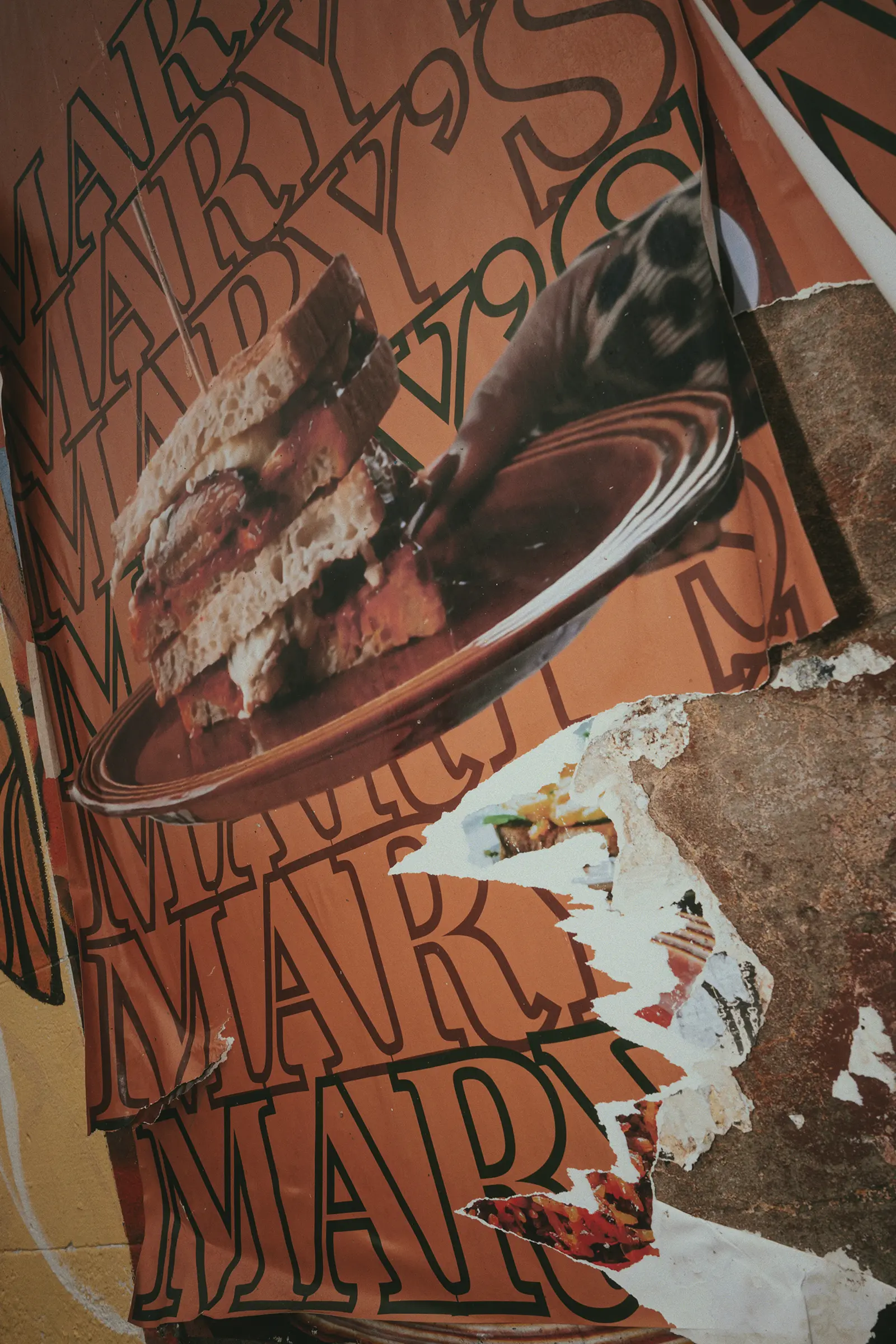
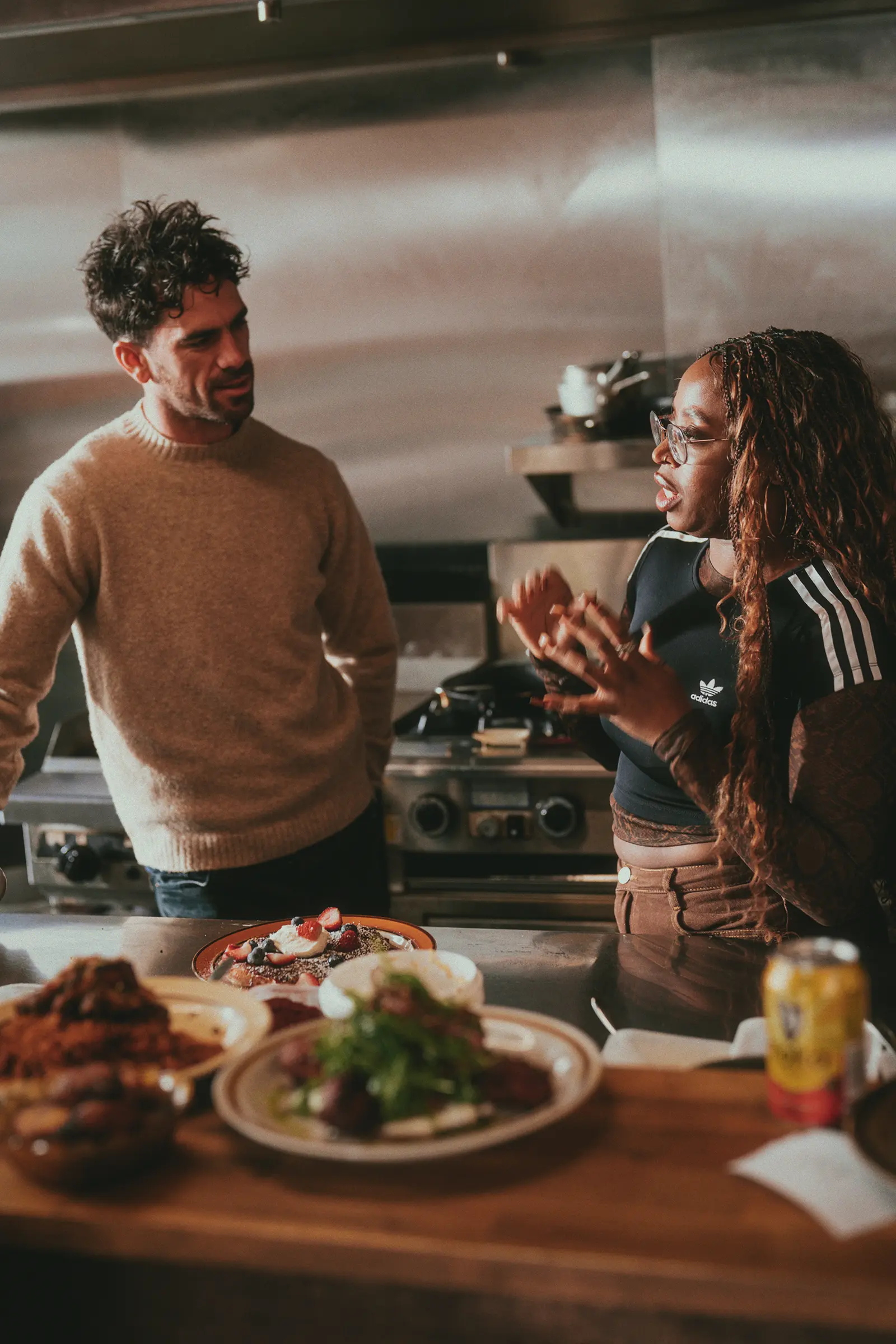
One way Akindele thought would help transition the neighbourhood from the Old Raffles Place days to the Mary’s days would be by keeping similar hours to the old shop.
“Because they operated as an evening venue, that’s kind of why I kept that going,” Akindele says. “I think when people are used to doing something, they don’t want to break the rhythm, you know?”
“Everyone’s been so incredible and receptive.”
Mary’s is me – it’s such a mixture of being Nigerian and then also being British and now being Australian. There’s a real natural mix of all these parts of me coming together.”
Mary Akindele → owner, Mary‘s
Two menus that are authentic to one person — not one culture
The menus at Mary’s aren’t fusion cuisine. They’re menus by someone that grew up with a fusion of cuisines.
Mary’s isn’t fusion cooking. Mary’s is cooking by someone that comes from a fusion of cultures.
If you went to Mary’s for breakfast or lunch and glanced over at the dishes hitting the tables around you, you wouldn’t see an obvious Nigerian influence. You’d see plates of pancakes, corn fritters, rice bowls and the ubiquitous café non-negotiable: a chilli scramble.
“You guys love a chilli scramble,” says Akindele.
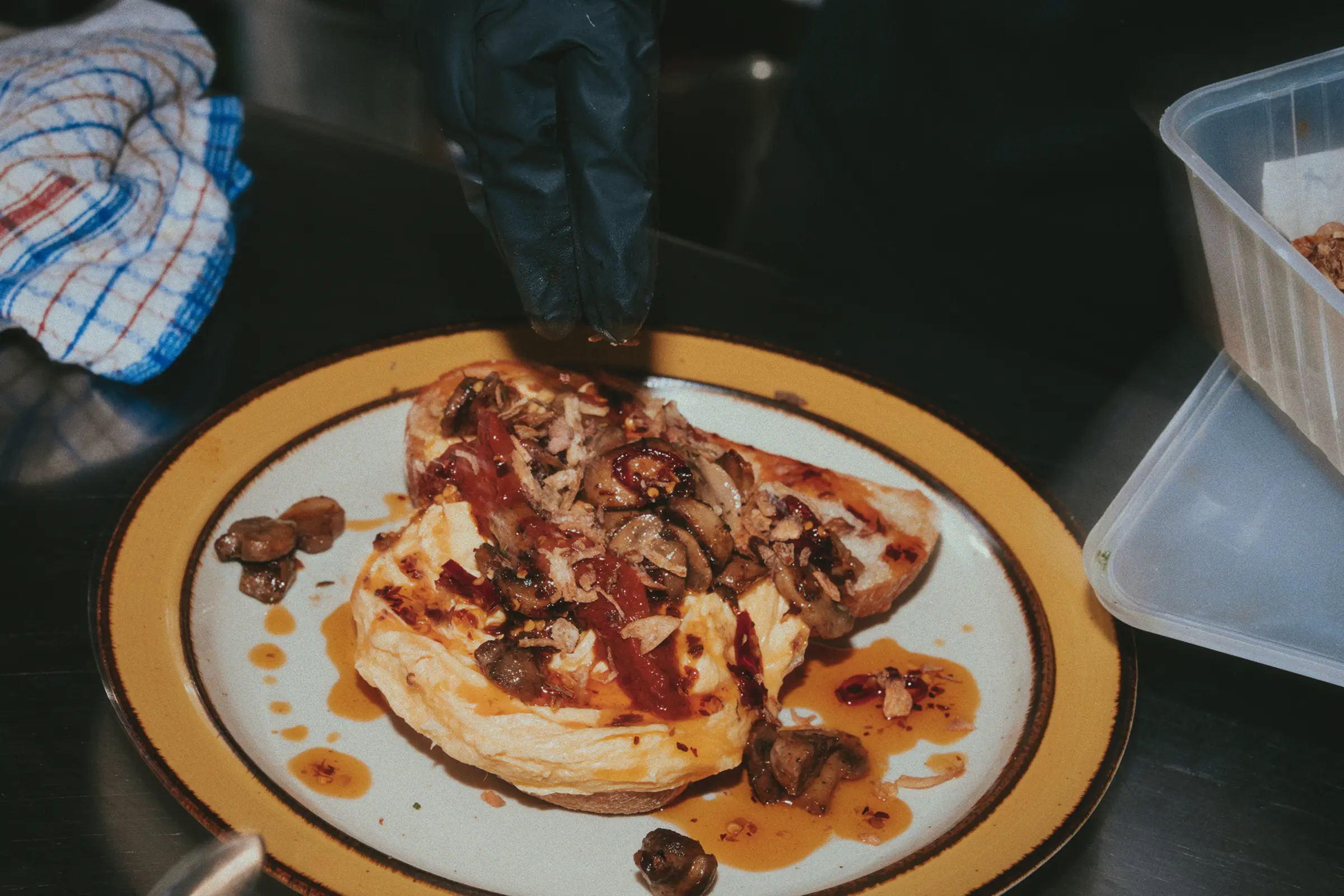
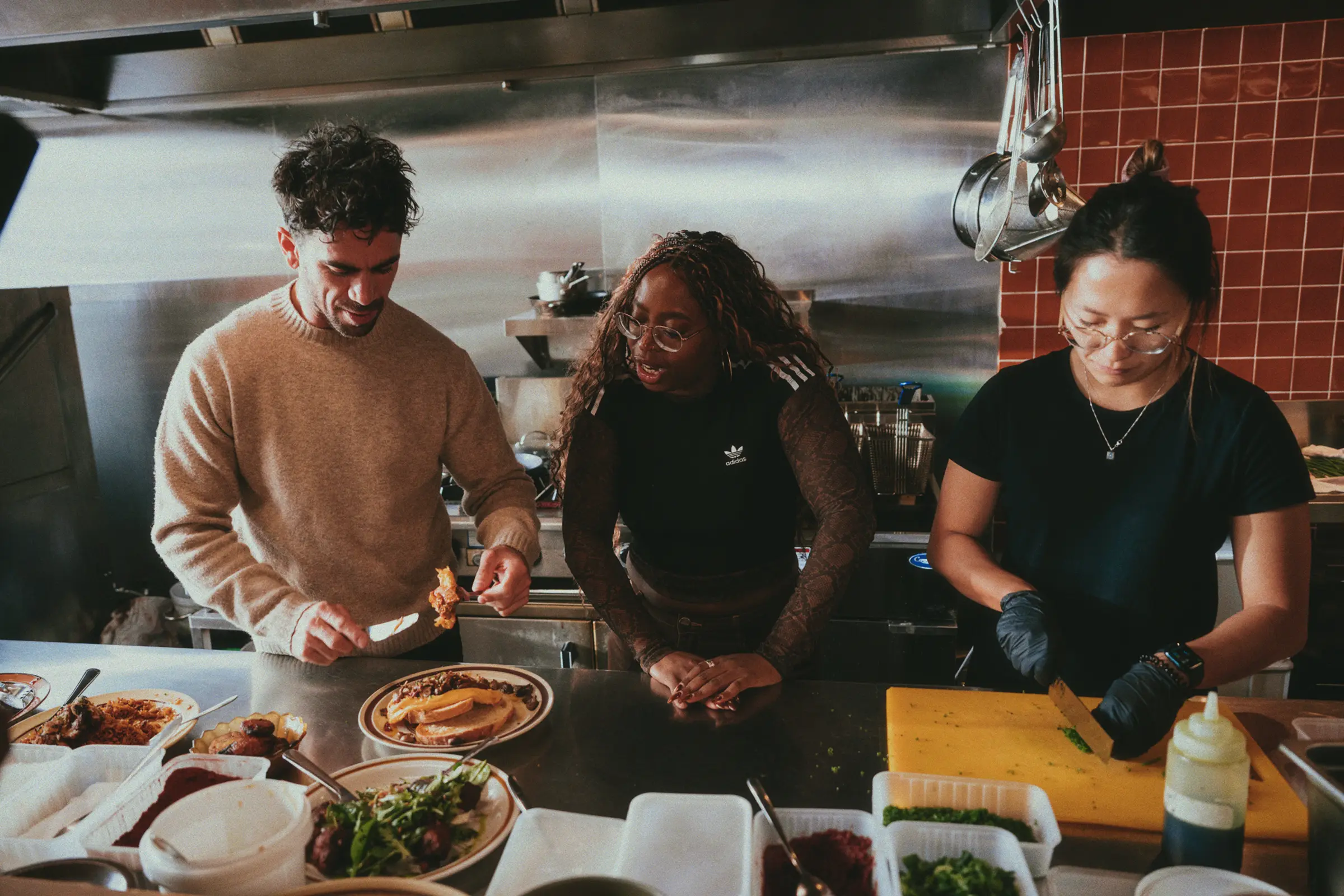
But read over the menu, and there’s barely any dish that doesn’t get refracted through a West African lens. They’re Australian, with pops of British and Nigerian influence. Just like Mary.
Pancakes are based off of Nigerian puff puff dough. Ata Din Din, a spicy pepper sauce, shows up on beans on toast and the chilli scramble. And ayemase, another staple West African sauce, makes cameos across the menu too.

“In terms of Nigerian-ness, there’s some amazing key ingredients in there, and a little bit of British, but for the breakfast menu I honestly just took all of my favourite things and added a twist – it’s more of a remix, pulling from this place and that place.”
“Dinner is more authentic.”
When Mary’s reopens for its evening service, that’s when it hews closer to tradition and the contemporary Nigeria that Akindele reconnected with on her trip back. To everything from classic family dishes, and street food, and the fresh dynamism of Lagos’ current hospitality scene.
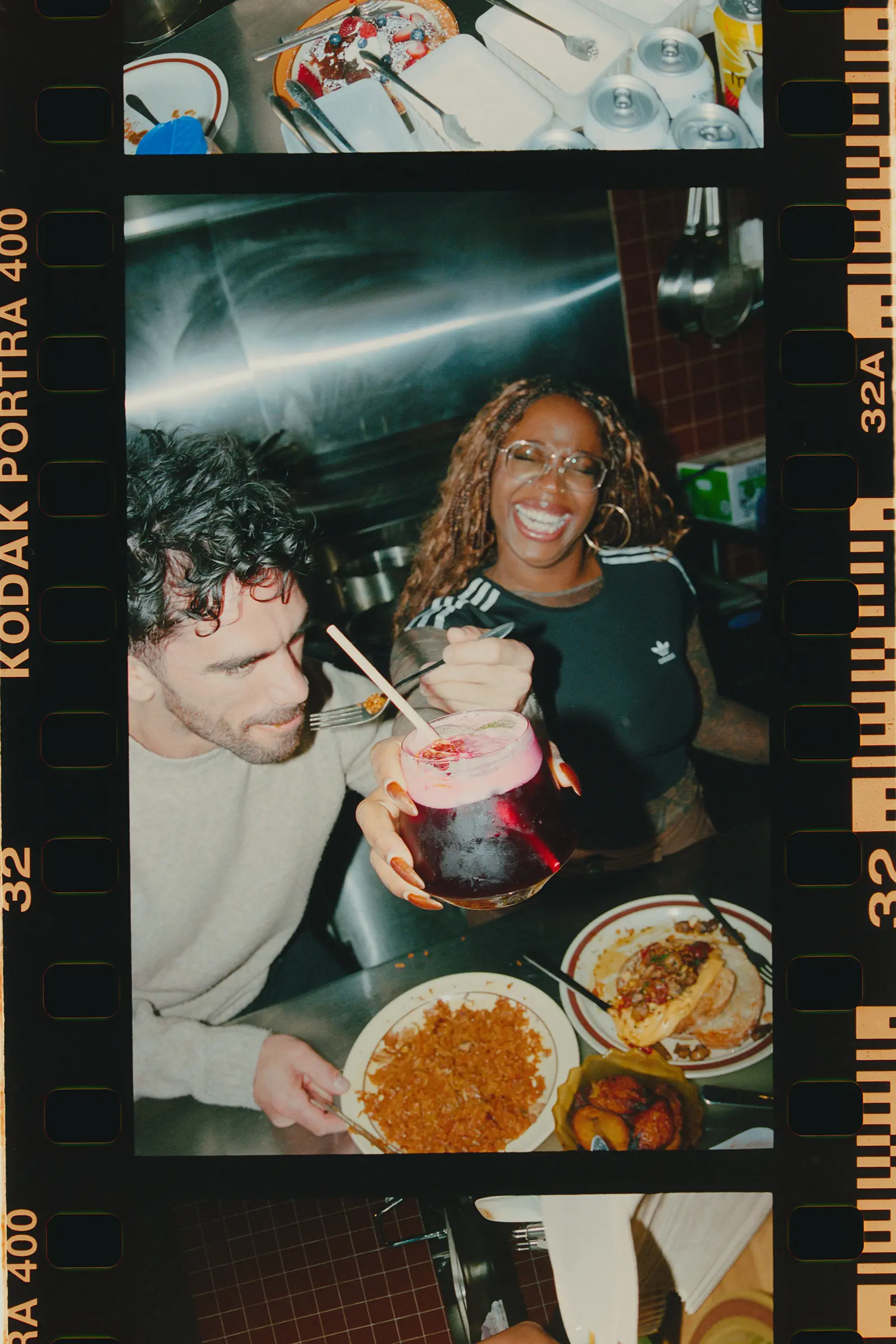
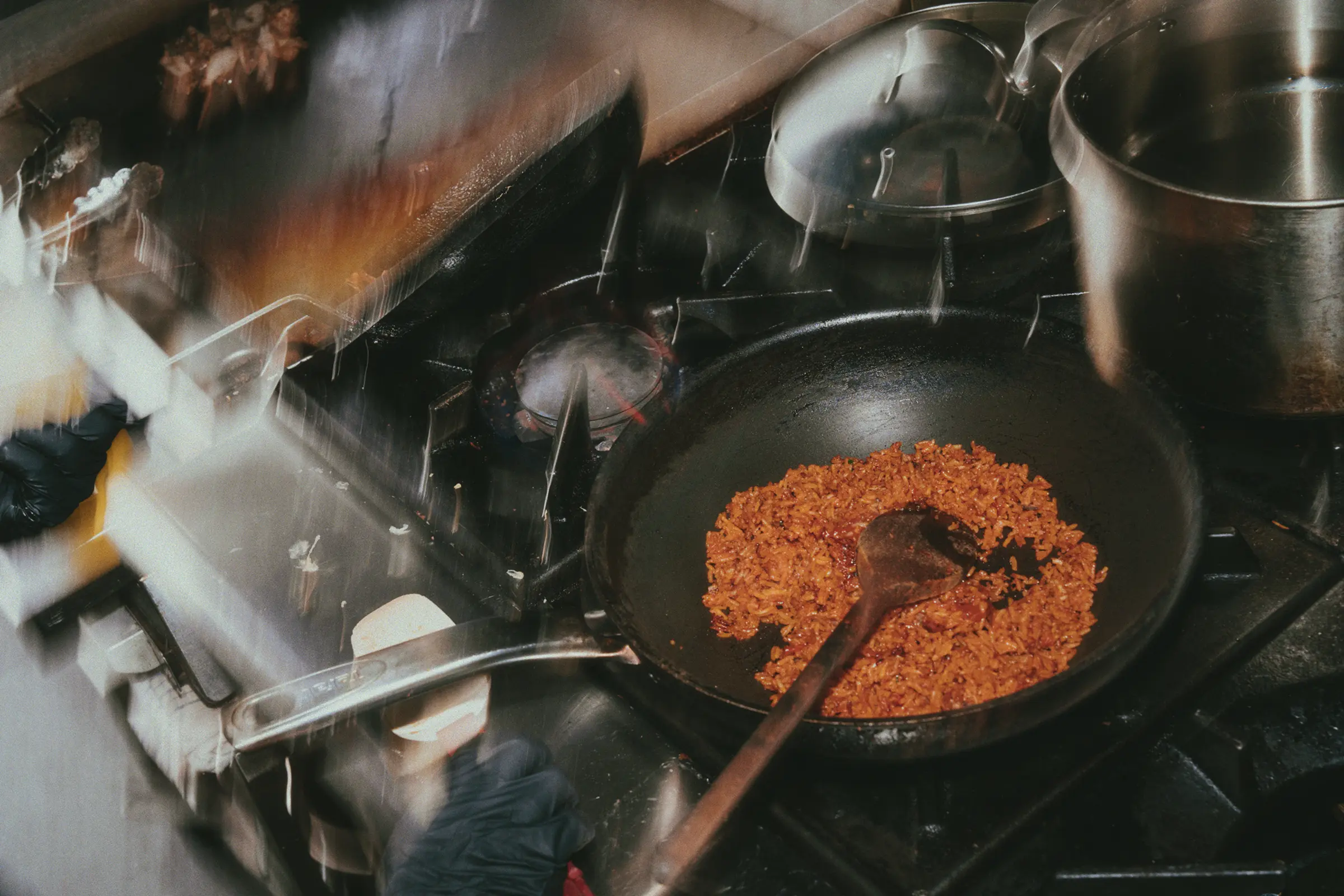
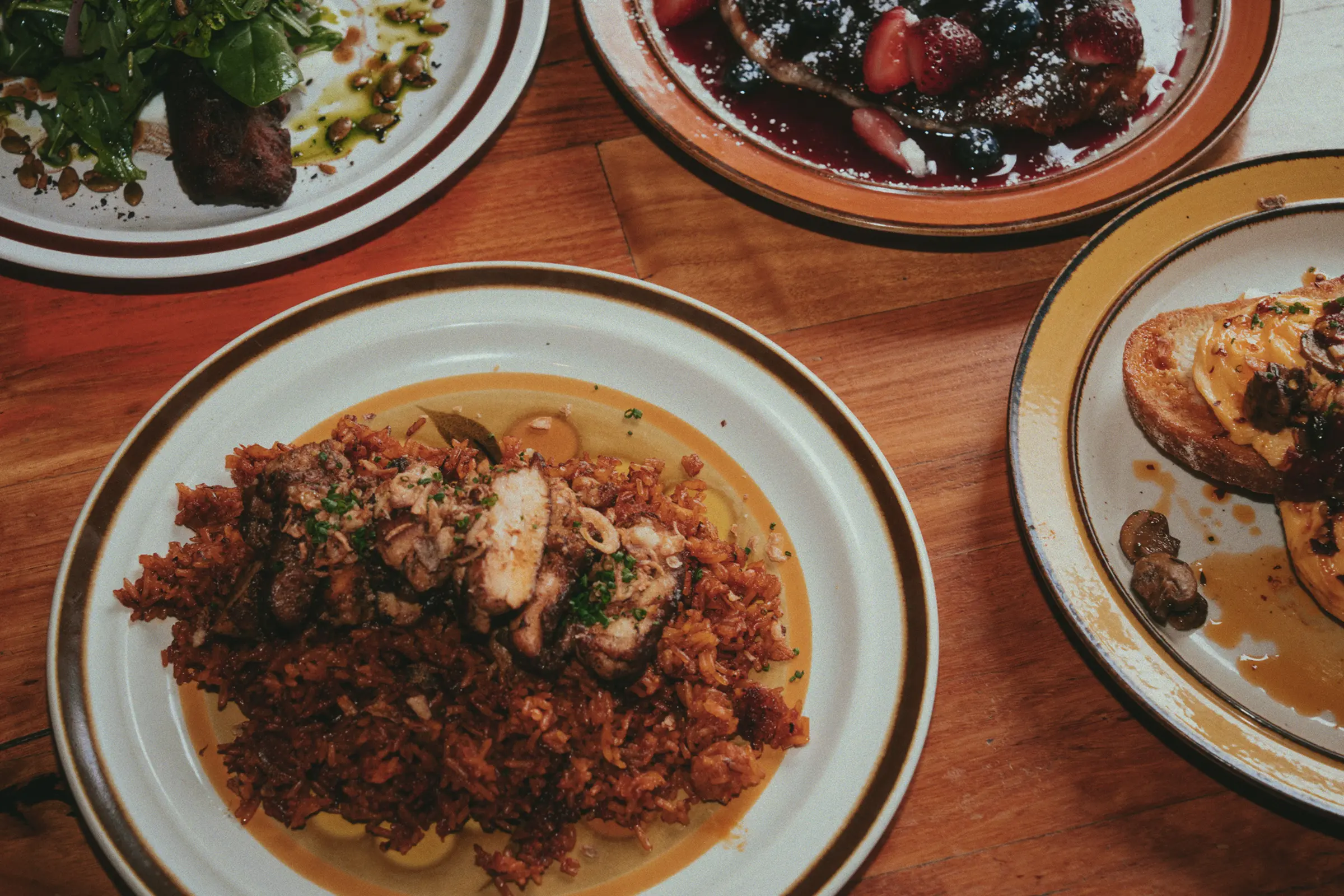

Suya – a peanut spice rub – is deployed amply throughout. Plantains are a constant. Nigerian-style jollof rice, arguably West Africa’s best-known dish, is available as a large dish or a side. But even so, plates like anchovy toast, a small dish made Melbourne-famous by Napier Quarter, nearby, are proof that Mary’s – and Mary herself – is more interested in being itself than being totally faithful to Nigerian cuisine.
Authenticity to herself is much more important than rigid authenticity and adherence to one particular culture. Mary Akindele is a product of Nigeria, the UK and Australia. And so is Mary’s.
“People think that authenticity is always exactly the same, but I think it can mean whatever it means to you personally,” Akindele says. “I’m of Nigerian heritage, but I was born and raised in England and moved here 10 years ago. All those aspects of my life have made Mary’s what it is, because it’s authentically myself.”
“But that obviously includes so many parts of myself.”
Want to know more about the melting pot of culinary ideas in Fitzroy and Collingwood? Watch the Fitzroy and Collingwood episode of our Good Neighbours series ->


