




Table of contents
Deck: Selecting the right POS system is crucial for retailers looking to streamline operations and boost customer experience. Learn essential features like inventory management, payment processing, and compliance requirements in this comprehensive guide.
Choosing a retail point-of-sale (POS) system is one of the most important decisions you can make in 2025. From tariff increases to supply chain challenges and shifting consumer expectations, Canadian retailers are facing an unpredictable retail landscape. You need tools that help you adapt quickly and thrive – and that includes your POS.
Whether you sell groceries or own a clothing store, a modern POS system helps you streamline operations, elevate the customer experience across touchpoints and access real-time insights. But in a sea of options, how do you choose the best retail POS system for your needs? This guide will help you understand the most important factors to consider and features to look for.
What is a retail POS system?
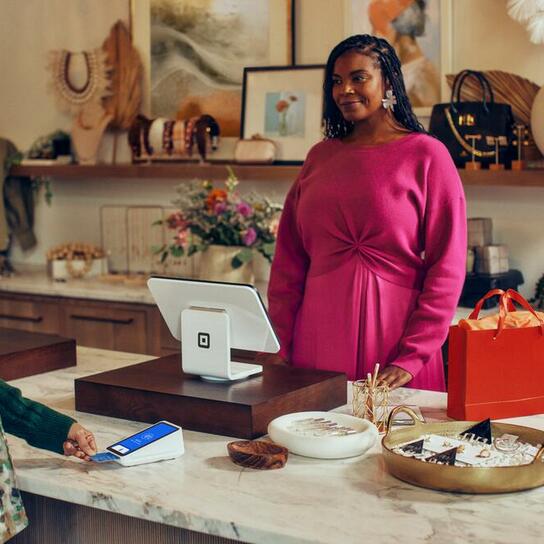
A retail POS system is the combination of hardware and software that allows you to accept payments and manage your business across multiple locations and sales channels. For modern retailers who rely on tech to stay competitive, a POS system does more than ring up sales. It powers daily operations and helps you:
- Track and manage inventory in real-time
- Seamlessly sync data across channels and locations
- Generate sales and performance reports with actionable insights
- Market to customers and foster loyalty
- Manage staff and optimize labour costs
The right retail POS saves you time and money by preventing issues like inventory blind spots and inefficient processes.
Here are three of the most common types of POS systems used in Canada:
- Cloud-based POS system: A cloud-based POS stores data online rather than on a single device. In practice, this means that you can access all your tools and information from anywhere, in real-time. This type of POS is best if you manage your business remotely and across multiple locations.
- Mobile POS system: A mobile POS runs on a tablet or smartphone. It’s great for processing payments on the go – think, pop-up shop or market stand. It also works well if you want to speed up checkout by letting staff take payments in-aisle.
- Traditional POS system: Traditional POS systems, like the ones found in legacy grocery stores, usually involve in-store servers and terminals. They offer you more control over your data, but they are slightly less flexible and may require manual maintenance.
Why is it important to choose the right POS for your retail business?
The right POS can help you achieve your goals, whether you want to open a storefront this year or significantly scale your eCommerce business within the next decade. On the other hand, the wrong system can create more admin work, cause friction and cost more than it helps. It might seem like a simple enough decision, but your POS system impacts several crucial aspects of your business:
- Streamlined sales process: The best POS for your retail business eliminates the need for manual work. You can serve customers faster and better, which translates into more sales and revenue.
- Inventory and customer management: Who is buying what – and when? A good retail POS answers those questions. It tracks stock levels so you can order items on time and prevent overstocking. It keeps tabs on metrics like the cost of goods sold (COGS) and profit margins. And it gives you the ability to foster strong relationships with customers.
- Tax compliance: Your POS system should help you comply with Canada Revenue Agency (CRA) requirements, from automatically calculating and applying the GST/HST sales tax to keeping records organized for tax filings.
- Customer experience: The right retail POS lets you offer faster checkout and flexible payment options like Interac Debit, credit cards, mobile wallets, gift cards and Buy Now, Pay Later (BNPL). It also enables the creation of personalized shopping experiences.
- Omnichannel integration: These days, a customer might see an ad on Instagram, visit your website a few days later to purchase the product they saw and end up exchanging it for a bigger size in-store. You should easily be able to sync online and in-person sales with your retail POS.
- Business intelligence: Having access to a dashboard is one thing. But using real-time data to make decisions that grow your business is another. A strong retail POS solution helps you spot trends and act on them.
- Scalability: Retail businesses come in all shapes or sizes, which means the path to expansion looks different for everyone. But your POS should match your ambitions without requiring you to switch systems or juggle multiple tools.
- Secure payment processing: A solid retail POS protects customer data, reduces the risk of fraud and keeps you compliant with Payment Card Industry Data Security Standard (PCI DSS) standards.
- Employee management: POS software streamlines tasks like scheduling, time-tracking and managing team permissions so you can spend less time on admin and more time supporting and mentoring your staff.
- Bilingual support: If you’re based in Quebec, doing business in French is a must. Regardless, it’s still a good idea to look for a POS that offers bilingual support, as you’ll be able to cater to preferences in both of Canada’s official languages.
Factors to consider when choosing a retail POS system
Not all retail POS platforms are created equal. Here are some key factors to consider when choosing one:
1. Define your retail business needs
Business type
A furniture and home goods store has different requirements than a liquor store: One deals with high-ticket items and elaborate delivery logistics, while the other is concerned with high-volume sales and factors like age verification. Your operational model affects your reporting needs too.
Business size
Do you sell a handful of specialized products or rotate through a wide variety of brands and items? You’ll have different SKU management priorities depending on the answer. Also, how big is your team? Will you be leaning on your POS for team management or requiring multiple permissions? A flexible retail POS adapts to your business.
Sales volume
How many transactions do you process on a given day, week, month or quarter? Your sales volume determines your retail POS needs. If you sell hundreds of items a day, you’ll need robust real-time inventory tracking to keep up.
Sales channels
Do you operate multiple locations? Do you have an online store? Do most of your online orders come from your email list or your social media ads? List all the touchpoints where customers interact with your business and make purchases. Your retail POS system has to streamline them.
Inventory management
Your POS should align with the way you manage and replenish stock. Do you reorder dynamically based on demand or prefer a fixed schedule? If you deal with limited-edition launches, you’ll want fast product uploads and easy categorization. If you sell perishable goods, expiry tracking is a good idea.
Payment types
Customers appreciate being able to pay in different ways. A retail POS should make it easy to accept a wide variety of payment types — like card, mobile wallets, Tap to Pay on iPhone and Android, and gift cards. If you cater to a younger demographic, consider offering buy now, pay later (BNPL) – younger Canadians (18-34) are significantly more likely to use BNPL services, according to Payments Canada.
Hardware requirements
A full countertop register isn’t always necessary. A simple tablet – or even a smartphone – can be all you need. Also, think about other accessories you may need, like barcode scanners and receipt printers.
Integration needs
Your POS should talk to your other tools, such as your accounting software or email marketing platform. It streamlines workflows and leads to more accurate, comprehensive reporting.
Long-term growth
If expanding to multiple locations is on your radar, your retail POS needs to keep up. Ryan Nesci, co-owner of Amici Food + Beverage Co., discovered that the hard way. “Managing multiple stores wasn’t possible with [our previous provider], because we didn’t have the option of choosing from which location an item would be taken from when customers ordered online. That messed with our inventory management,” he says.
The team would have to call customer support to troubleshoot issues like selling items online that weren’t actually available. Switching to Square streamlined inventory management across the board. “Now when someone places an online order, we can decide which store will fill it.”
2. Assess retail POS system costs and fees
Ready to map out your budget for a retail POS? Compare providers and break down costs across these categories:
Hardware and software costs
Some retail POS providers separate hardware and software costs. Others bundle the two. There are often recurring monthly fees associated with chargebacks, credit card compliance or advanced features. With Square, you can get started with free POS software and minimal hardware. There are no setup or monthly fees – you only pay when you take a payment.
Payment processing fees
Understanding payment processing fees is crucial to avoid surprises. Some providers may charge different rates depending on credit card type or layer on additional service charges. Square pricing is straightforward: 2.5% for all in-person credit card payments, 0.75% + 7¢ for Interac Debit, 2.8% + 30¢ for online purchases, and 3.3% + 15¢ for manually entered card details.
Support and maintenance
Some retail POS providers charge you for premium support or training. With Square, support is included – you can contact the support team by email, chat or phone whenever you need assistance.
Learn more about the total cost of a POS system in Canada.
3. Prioritize Canadian compliance
Owning a retail business in Canada comes with a unique set of considerations – and they should inform your retail POS system selection.
GST/HST tax support
Collecting and remitting GST/HST sales tax can be intimidating, but the right retail POS takes the guesswork out of the process. Look for one that automatically calculates GST/HST based on the place of supply (where you sell the product) and syncs with your accounting software.
CRA-friendly reporting
The last thing you want is to backtrack and correct errors when tax season rolls around. A good retail POS automatically generates sales reports, supports bookkeeping efforts and keeps you organized if you’re ever audited.
Bilingual functionality
Look for a POS that supports both French and English across touchpoints like displays, checkout pages and receipts. It’s a small detail that can make a big difference in terms of experience. In Quebec, it’s essential.
4. Check reviews and testimonials
Take the time to look for reviews and testimonials from Canadian retailers who run similar businesses to yours. A provider may have glowing reviews, but that won’t mean much if you have a completely different business model. Here’s what different Canadian business owners that use Square have to say.

Features to look for when choosing a retail POS system
Feeling closer to making a decision? This checklist of key features to look for in a retail POS system will help solidify your choice:
- Flexible payment processing: Look for a POS that easily accepts all payment types, from tap-to-pay to online checkout and recurring invoices, which come in handy when you sell subscription bundles.
- Inventory management: As we mentioned earlier, advanced inventory management is crucial in a retail environment. Search for features like real-time stock updates, low-stock alerts and the ability to easily edit items.
- Sales reporting and analytics: Visualizing real-time sales and performance data lets you act fast when something is selling out or tweak your marketing strategy based on trends.
- Multi-location support: If you run a multi-location retail business or plan to grow in that way, you need a POS that streamlines operations across locations. Square for Retail makes this simple.
- Omnichannel integration: As a retailer, omnichannel capabilities are no longer a luxury. Your POS needs to sync online and in-store efforts while creating a seamless experience across channels.
- Mobile payment options: Mobile payment options give you flexibility. A portable, tap-to-pay solution like Square Reader allows you and your team to accept payments fast and on the go.
- Customer management tools: Some POS tools can deepen relationships and drive repeat sales. For example, Square Loyalty lets you create and customize your own rewards program.
- Employee management: Look into features that reduce the load of managing a team, from streamlined scheduling to payroll prep. Square Shifts helps optimize your team’s time.
- Cloud-based system: A cloud-based solution means you can access your POS from anywhere and stay synced across devices and locations. Updates are made automatically.
- Secure payment processing: Protect your business and customers: Look for a retail POS that ensures PCI compliance and has built-in fraud prevention.
- Customizable receipts: Little touches like branded receipts or personalized post-purchase messages can strengthen your brand.
- Bilingual language support: Having a retail POS that adapts to both official languages is crucial in Quebec and valuable in the rest of Canada.
- Accounting software integration: Whether you use QuickBooks, Xero or Wave, look for a POS that syncs sales data with your accounting software and offer other helpful integrations.
- Customer support: Choose a POS that doesn’t charge extra when you need urgent help right before Black Friday and Cyber Monday.
- Hardware compatibility: Whether you need a credit card machine or a receipt printer, your retail POS software needs to be compatible with it.
- Cost considerations: Read the fine print and compare pricing models when shopping for a retail POS – add-ons and monthly recurring fees can impact your budget.
How to set up the Square retail POS system
With a suite of easy-to-use tools designed to meet the needs of different types of retailers, Square is the top POS choice for Canadian retail businesses. Ready to get started? Follow these simple steps:
- Sign up for Square for Retail and create your free account.
- Visit Square Shop to order any hardware and accessories you may need.
- Download the Square POS app to start taking payments from mobile devices.
- Verify your identity and link your bank account to start receiving payments.
- Create items to build your inventory. You can do this from Square Dashboard on a laptop or desktop computer or from the Square POS apps and devices. When you add, update, or delete an item, the change is reflected across the board. You can also bulk-import items.
Leveraging Square for Retail is easy even if you’re not tech-savvy. Just ask Brandon Shedden, founder of fashion label Cakeworthy. When the Cakeworthy team opened its first retail store, it needed a solution that wouldn’t come with a steep learning curve.
“Everything is so user-friendly, and so intuitive. The staff at our retail store were trained in no time,” says Shedden, who uses Square to take payments, schedule staff, manage inventory and run a loyalty program. “Using Square for Retail has been an impactful time-saver for all of us, and we are definitely experiencing cost savings by not having to use different apps for every feature.”
How to choose the right POS system for your retail store FAQ
How much does a retail POS system cost in Canada?
The cost of a retail POS system varies depending on the service provider. You could end up paying from $0 to over $300 a month for a cloud-based POS system and from $69 to over $1,200 for hardware, according to Forbes.
What’s the difference between cloud-based and traditional POS systems?
Unlike traditional POS systems, cloud-based retail POS systems don’t rely on in-person servers to store data. They sync all information automatically across locations and allow you to manage your business remotely.
Does my POS system need to support GST/HST calculations?
Yes, in Canada, it’s important for your POS system to support GST/HST calculations so you can easily stay compliant with CRA requirements.
What payment methods should my POS system accept in Canada?
Tap-to-pay methods like Interac Debit and major credit cards are must-haves for Canadian retailers, but your POS should also support mobile wallets like Apple Pay, gift cards and options like BNPL, which are gaining popularity.
Do I need to train my team to use a POS system?
A good POS system doesn’t require extensive training. Be sure to choose a retail POS system that’s user-friendly, even for people who don’t feel that comfortable with technology.