



Table of contents
As a business owner, you know that making sales is important. But every time you see the “transaction approved” message on your point-of-sale (POS) terminal or receive an order notification, there is a whole system working in the background to make the transaction possible.
This system is called payment processing, and it’s more than a technicality. Understanding how it works can help you choose the right service providers, improve the customer experience and keep your business safe.
This guide breaks down everything you need to know about payment processing in Canada, from the steps involved to the Canadian payment processing regulations you need to follow.
What is payment processing?
Payment processing is what happens between the moment someone attempts to pay for something and the moment the funds reach the recipient’s bank account. It includes all kinds of transactions, from credit and debit cards to electronic fund transfers (EFTs) and mobile payments.
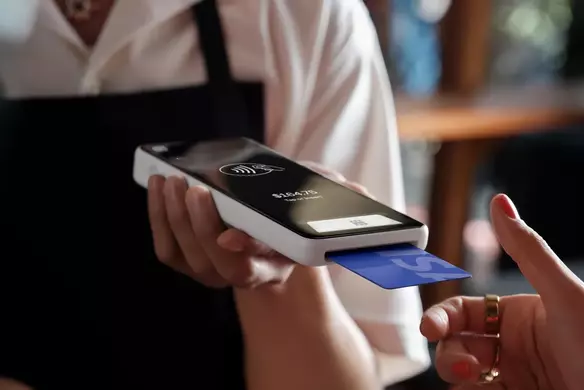
Let’s say that a customer orders a candle on your website or pays for a burger at the window of your food truck. When they enter their payment information at checkout or tap their card, they kickstart an electronic process that checks the payment information, gets the bank’s permission to go through with the transaction and moves the money.
There are a number of parties involved in the process, from the payment processor (more on that later) to banks and financial service providers. Keep reading to learn more about payment processing and how all these steps tie together.
Why is payment processing important for businesses?
While Canadians aren’t ready to ditch cash, the reality is, most transactions these days require payment processing. Digital payments make up 86% of total payment volume in Canada, according to Payments Canada. These include Interac e-Transfers, contactless debit and credit cards and mobile wallets among other electronic payment types. What does this mean for you? Here are all the ways payment processing affects your business.
Checkout experience
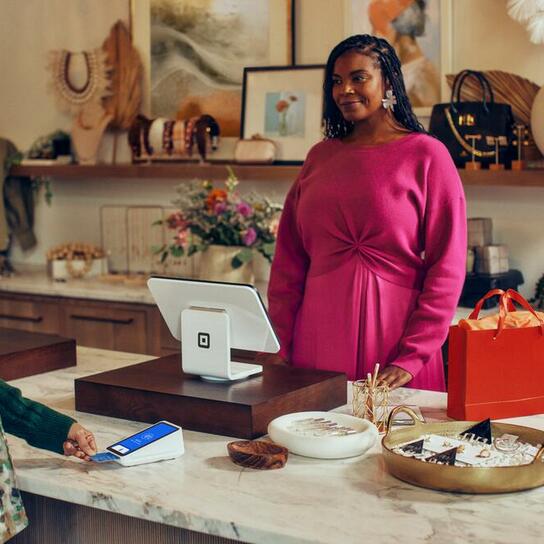
Fifty-eight percent of Canadian consumers wouldn’t return to a business that doesn’t offer a convenient way to pay, according to the Square Future of Commerce 2025 report. Customers expect smooth checkout experiences, and payment processing helps you deliver them.
Increased revenue potential
The right payment processing system allows you to accept various payment methods so you never have to say no to a sale.
Stronger cash flow
A payment processor can make or break cash flow management. For example, with Square, you can get access to your funds as soon as the next day or within minutes for a small fee.
Advanced payment security
Over half of Canadians say that concerns about fraud impact their payment preferences and shopping habits, according to Payments Canada. Payment processing helps customers feel safer thanks to advanced payment security.
Streamlined financial tracking
When sales data is automatically captured and synced with other business tools, like your accounting software, bookkeeping and tax filing becomes easier.
Less risk of human error
Digital payment processing systems can reduce the likelihood of mistakes. You don’t need to handle cash or enter information in a spreadsheet.
Regulatory compliance
With a modern payment processing system, it’s easier to stay compliant with Canadian regulations like the Retail Payment Activities Act.
Scalability
The right payment processing solutions can grow with your business without needing to change all your systems as you expand.
What is a payment processor?
A payment processor is a service provider — like Square — which facilitates electronic transactions between your business and customers. From debit and credit cards to mobile wallets like Apple Pay, payment processors help you easily and securely accept a wide range of payments.
Choosing the right payment processor is an important decision. Here’s how Square can support your business.
|
What Square offers |
How it supports your business |
|
Flexible payment methods |
From tap-to-pay to online checkout and QR code payments, Square offers flexible payment options. |
|
Secure, compliant processing |
Square protects payment data through encryption and fraud prevention practices while adhering to PCI DSS security standards. |
|
Unified sales reporting |
Square syncs sales data across channels to provide a bird’s eye view of business performance. |
|
Fast access to funds |
Get your funds as soon as the next business day with standard transfers, or link a debit card and transfer them instantly with a 1.95% fee. |
|
No contracts or hidden fees |
With Square, you only pay a small transaction fee when you make a sale. There are no setup or monthly fees and no contracts. |
|
Easy integrations |
Square seamlessly integrates with popular apps, from accounting and tax software to booking and scheduling tools, helping you streamline operations. |
What do payment processors do?
In short, payment processors enable businesses to take credit, debit cards, and other non-cash payments. But they do a lot behind the scenes, especially when it comes to credit card processing.
- Facilitate transactions: When a customer wants to buy something, the payment processor gets the payment information and delivers it securely to their bank (issuing bank) through the card network (like Visa or Mastercard). The processor also lets your company bank account (the acquiring bank) work with Payments Canada, the national payments system.
- Authentication and authorization: The payment processor checks with the issuing bank to make sure that the card information is correct and belongs to your customer, and that there is enough money in the account to cover the purchase.
- Encryption and security: Payment processors must keep consumer information safe. They do this by using encryption and tokenization, as well as following best practices like PCI DSS compliance.
- Settlement and funding: After the bank approves the payment and Payments Canada clears it, the processor helps get the money into your company bank account.
- Insights and analytics: Modern processors like Square give you access to sales data and analytics that can help you make decisions, such as offering a special deal to regular customers or stopping sales of products and services that aren’t selling well.
- Fraud prevention: Payment processors keep an eye on transactions at all times to safeguard your business and customers against fraud. They might also help if a customer asks for a chargeback.
- Support for several currencies and payment methods: A payment processor lets you accept different currencies and payment methods, whether you run a worldwide brand or a small eatery.
Key players in payment processing
Your payment processor is only one part of a much bigger system. There are many parties involved in the payment sector, and each one plays an important role in processing payments.
- Cardholder: The person who buys anything with a credit or debit card or a mobile wallet.
- Issuing bank: The cardholder’s bank, which approves the transaction if there is enough money or credit available. The banks that issue the money assume responsibility for it during the payment process.
- Merchant: The business that sells something and takes payment.
- Acquiring bank: The bank account of the business. Acquiring banks make sure that the money from a transaction gets to the merchant’s account.
- Payment networks: Often called card networks, they connect the people engaged in the transaction and set rules and standards for how payments are processed. Visa, Mastercard and Interac are some of the biggest payment networks.
- Payment gateway: A technology that safely gathers and sends sensitive payment information between a business, a payment processor and an acquiring bank.
- Payment processor: Businesses hire payment processors like Square to handle electronic transactions and help keep track of all the phases in the process.
- Payment platform: A solution made up of all the tools and systems that a business needs to accept and manage payments, from the POS system to the payment processing service.
- POS system: The set of hardware and software that lets businesses accept payments and keep track of sales.
How payment processing works in Canada
There are a lot of different financial institutions, merchants, customers and digital tools that work together to handle payments in Canada.
The five biggest banks — RBC, TD, Scotiabank, BMO, and CIBC — have long dominated the space and encouraged the adoption of digital payments through their products and online banking. But other service providers are also changing the way payments are processed in Canada. Here are some of the solutions that make transactions easier:
- POS terminals: The hardware that lets a business take card payments in person.
- Payment gateways: A type of technology that safely sends payment information during transactions.
- Encryption: A way to protect payment information by making it unreadable for a short time while it is being sent.
- Tokenization: A way to safeguard private information by replacing it with “stand-in” data.
- Fraud detection systems: Algorithms and technologies that help find and stop fraud by flagging suspicious activities.
And here’s how payment processing works in practice in Canada:
Transaction initiation
Whether you collect a payment in person when a customer taps their card, when they enter their payment details during online checkout or over the phone, this is the moment a transaction begins. Data is securely transmitted to start the payment process.
Transaction authentication
In Canada, transactions must be checked for safety before they can be permitted. Authentication makes sure that the person who is paying is the cardholder.
Common authentication methods include CVV codes (the three digits on the back of credit cards), PINs and online tools like 3D Secure (3DS).
Biometric payments using fingerprints or facial recognition for authentication aren’t mainstream yet, but nearly half of Canadians are open to them.
Transaction authorization
This is where your payment processor (e.g., Square) comes in. It sends the transaction details to the customer’s issuing bank for approval on behalf of the business.
Transaction clearing and settlement
Payments Canada, which is in charge of the national payment clearing and settlement infrastructure, makes sure that money transfers safely between banks once the issuing bank accepts the transaction.
Transaction funding
Now comes the moment a business receives money from a sale. The payment processor helps coordinate the transfer of funds from the issuing to the acquiring bank as Payments Canada settles the transaction.
Record keeping
The payment processor stores transaction information that you or other regulatory bodies can refer to later. This is important for keeping track of money, dealing with potential refunds and in the event of a dispute.
Top payment methods in Canada
The Canadian payment landscape continues to evolve, and understanding payment preferences can help you cater to them and drive more sales. Here are the top payment methods in Canada, according to Payments Canada’s Canadian Payment Methods and Trends Report 2024.
Overall payment preferences
- Canadians have an affinity for digital payments, which make up 86% of total payment volume and 75% of total payment value.
- Credit and debit are the preferred ways to pay – credit cards represent 33% of payment volume, followed by debit cards at 30%.
- Electronic funds transfer (15%), cash (11%), cheque (2%), automated banking machine (2%) and prepaid cards (2%) make up the rest of the equation.
- Online transfers like Interac e-Transfer and PayPal are the fastest-growing payment types, with volume up 14% and value up 20% year-over-year.
- For the first time ever, Payments Canada saw online transfers surpass cheques for business payments.
Contactless payment preferences
- Credit card contactless payments, which include tap-to-pay and mobile wallets, make up the largest proportion of contactless transaction volume at 57%.
- Grocery stores and supermarkets were the leading purchase category for contactless payments usage at the point-of-sale in 2023. Gas stations, pharmacies and restaurants followed.
Online shopping preferences
- Out of all payment transactions, 546 million were eCommerce transactions, a 3% increase in both volume and value from 2022.
- Three in five Canadians have purchased something online in the past month.
- Credit cards are the preferred way to pay for online purchases at 57%, followed by PayPal and debit cards at 18% each.
Emerging payment preferences
- Wearables like fitness trackers and smartwatches were used to initiate 44 million transactions.
Canada’s payment processing regulations
Serving customers is one thing, but if you own a business in Canada, you need to know how to go about it legally.
Key regulatory bodies
- Financial Consumer Agency of Canada (FCAC): The FCAC protects consumers in the financial industry. The Code of Conduct for the Credit and Debit Card Industry aims to keep things fair.
- Payments Canada: The organization is in charge of all payment clearing and settlement infrastructure in Canada, including the systems, by-laws, rules and standards that apply.
- Bank of Canada: This is Canada’s central bank. It evaluates risk, provides liquidity to financial markets and makes sure important financial infrastructure remains stable.
Key legislation
- Payment Card Networks Act (PCNA): The PCNA sets rules around the way card networks operate.
- Personal Information Protection and Electronic Documents Act (PIPEDA): PIPEDA dictates how private companies can collect and handle personal data, such as payment data.
- Retail Payments Activities Act (RPAA): The RPAA regulates payment service providers (PSPs) to protect consumers and keep their money safe.
- Proceeds of Crime (Money Laundering) and Terrorist Financing Act (PCMLTFA): This act requires businesses to participate in the detection and prevention of suspicious financial activity by reporting it.
Compliance requirements
- Security: When taking payments, pick a reliable payment processor with sophisticated data-protection and fraud-prevention features.
- Protection for consumers: When you sell goods and services, make sure to clearly explain the prices, fees and terms, including your refund policy.
- Anti-Terrorist Financing (ATF) and Anti-Money Laundering (AML): If you deal with a lot of money, you should have a way to report anything that seems suspect.
- Privacy: Keep customer information safe and use secure solutions like Square, which complies with Canadian privacy rules.
- Reporting and record-keeping: Keep transaction records safe and be ready to give them to regulators if they ask for them.
- Registration: Check to see if your payment processor is registered with the Bank of Canada under the RPAA.
Payment processing: Best practices for businesses
- Keep your payment environment secure: Work with a processor that uses strong security techniques like tokenization and encryption. Make sure that PCI DSS compliance is included.
- Offer multiple payment options: Meet customers where they are by offering multiple ways to pay, from credit and debit to mobile wallets like Apple Pay.
- Choose a reputable payment processor: A service provider like Square can help you accept a variety of payments easily and securely.
- Make sure your POS system is up-to-date: To avoid problems, keep your POS hardware and software up-to-date. A cloud-based POS from Square runs software updates automatically.
- Train your staff: Talk to your team about payment processing and coach team members who handle payments on security best practices.
- Implement fraud-prevention tools: Use tools like 3D Secure authentication to lower the chance of fraud.
- Keep an eye on transactions: Review payment activity regularly. If something seems wrong, let your payment processor know.
- Establish clear refund and chargeback policies: Be upfront to lower the likelihood of misunderstandings and disputes.
- Streamline reconciliation and reporting: Use tools that integrate with your accounting platform to save time and ensure the accuracy of information.
- Stay on top of industry trends and regulations: Stay up-to-date with the latest payment processing trends and laws to remain compliant and competitive.
Payment Processing FAQs
What is an example of payment processing?
An example of payment processing is when a customer uses a credit card to purchase something online, or taps their debit card to buy an item in-store. The transaction request is sent to the payment processor, and payment processor forwards the request to the card network. The customer’s bank then authorizes the transaction, and the payment processor confirms the sale.
Here’s a step-by-step example of payment processing in action:
- You go to your neighbourhood store and purchase a shirt.
- You tap your Visa on the Square Register.
- Square (the payment processor) encrypts your card information and sends it to the card network (Visa) via a secure payment gateway.
- Visa gets authorization from your bank (the issuing bank) to proceed with the transaction.
- Your bank checks if you have enough funds before approving it.
- Square receives the approval and confirms the sale with the retailer.
- The funds are transferred to the retailer’s account (the acquiring bank).
How can I accept credit cards?
To accept credit card payments, you’ll need a point-of-sale (POS) system like Square and a business bank account. Once your account is set up, you’re ready to start accepting payments – Square takes care of the rest.
How long does payment processing take?
The card authorization is usually instant — it only takes a matter of seconds — but it can take one to two business days to receive the funds in your business bank account.
Which payment method is mostly used in Canada?
Credit cards are the leading payment method in Canada, followed closely by debit cards, according to Payments Canada.
What does it mean if a payment is being processed?
It means that the transaction is in progress and going through steps such as verifying payment details, getting authorization from the customer’s bank and moving funds behind the scenes.
Can a processed payment be reversed?
Yes, a processed payment can be reversed in scenarios like refunds, chargebacks or unauthorized transactions.
What is the difference between a payment processor and a payment gateway?
A payment processor helps manage the transaction from start to finish between the different parties involved in processing the payment. A payment gateway is the technology that securely transmits payment information during payment processing.
How can I process payments with Square?
Square provides reliable payment processing solutions designed to help your business implement industry best practices. With Square, you get a seamless, secure, and efficient payment system tailored to your needs. Learn more about how Square can support your business.