







Please update your browser.
Download the latest version of a supported browser below to get the most out of this website:

About this seller
Daniel Harrison and Mike Ico have founded some of the most unique eateries in Sydney – each with its own identity and operating model. They share their knowledge on running several dining concepts at once and getting them to run independently.

Co-founders Daniel Harrison and Mike Ico have started several hospo brands in Sydney, including Superfreak, Soulmate and Splash.
Dive deeper into how Daniel and Mike’s venues became neighbourhood favourites
Choosing your location, knowing your area and letting the community’s needs guide your concept
How do you find a gap in the market when you’re opening a new venue?
Daniel Harrison, co-founder:
Doing your research, thinking about what the area needs, talking to customers in the area, talking to your friends and even other operators, if possible. Talk to them about what would benefit the area. It’s that combined with your gut feeling – even what you’re into at the time. And what you want to see in that place and what you envision there.
What do you do if you want to open in an area you don’t live in?
Mike Ico, co-founder:
I think something we’ve done pretty well in our 15 years of hospitality is networking. So we would generally ask other cafe and restaurant owners in the area if they think there’s something lacking. Just going out for a walk, dining out at other venues around that area is super important.
And how do you find the right location?
Mike:
We now try and find an existing food and beverage venue so there’s less money spent on the fit-out, and we also save time on applying for development applications so that we can get open quicker. A big thing for us as well is having a lot of natural light and the right footprint in terms of our equipment and how many seats we might be able to have in there. We’ve never overextended when it comes to rent – we always try to negotiate as cheap as possible. If we know it’s going to be more expensive than what we can afford, we don’t do it. We think it’s better to open in a residential area because you get that everyday trade – and you also have that community from all the local neighbours.
Once you have a location, how do you tailor your brand to what the area needs?
Daniel:
Eight or so years ago, I opened my very first venue where I grew up, out in Sydney’s West in the Hills. It was called Good Fella, and I was super into coffee at the time. I really felt that we needed to bring the high quality of specialty coffee that you found in the city to the Hills. That ended up working great – everyone felt the same way, that it was lacking. On the flipside, Superfreak, my most recent venue is a small, compact venue with a lot of good coffee competition around. So we still want to be better than everyone else, but our focus is probably more on the food at Superfreak. From a business perspective, you want to be capitalising on who’s around, at pretty much any hour. Superfreak is attached to a yoga and pilates studio, so we always wanted it to have that health-conscious aspect to it. And the area was lacking that a little bit.
Mike:
When we look for a venue, we generally find the location first and then we tailor our brand to what’s needed in the area. We’re lucky because we live in the areas that we open our cafes, so we’ve got our fingers on the pulse when it comes to what’s needed in terms of hospitality. And having so many friends in the industry and neighbours, we get a lot of feedback on what’s missing.
Opening and running several venues at once is about showing up and showing your staff how it’s done
How do you stay on top of your workload?
Daniel:
Having a good structure for your week, especially your admin time. For example we use Square for all our shops, and they’re all set up exactly the same. So even if it’s been a while since I’ve been in one shop, I can jump on the till. I can find reports in the same place. I can do all the stuff I need to do because everything’s set up the same way. Not just with Square – with all my other programs and spreadsheets. On my admin day, I do the same thing for all four shops. That creates the procedure for me to blast through it and get it done efficiently. I try to do payroll all in one day, I do wages costing, I do cost-of-goods costing, and I try to have a meeting with all my managers at least once a week. You set yourself up so you can be available for people if and when they need it.
How do you transition from a successful hands-on opening, to gradually stepping back?
Daniel:
The more venues you do, the quicker it will be. But you need to give yourself as much time as possible to succeed. There’s an element of getting your hands dirty for a while and committing a good chunk of time to setting up your procedures, finding good staff and training them. I think, as an operator, you want to be there on the ground, listening to what’s going on, so you can predict the future a bit better.
Mike:
We don’t do soft openings – our way is very unorthodox. We generally like to make as many mistakes as we can in the first couple of days, because it impacts customers less, keeps the vibe high across the venues and means we can fix any procedures we need to fix.
Daniel:
We do intensive training from the beginning and we don’t gatekeep tasks. In our shops we definitely like to bring up the young guys, work with them, show them how it’s done and give them the reins over time.
What’s the number one thing you need for running several venues at once?
Mike:
I would say it’s trusting your team. Trusting the people that you’ve hired to do the right job. If you’ve hired the right people and you’ve provided the right training, it means that you can spend more time doing things to help set them up, and you can be a little more hands off.
Daniel:
Alongside the ability and commitment to work hard, I think the most important thing is probably good time management. Being organised enough for yourself to accomplish all the things you need to while giving yourself quality time off for yourself and your family.
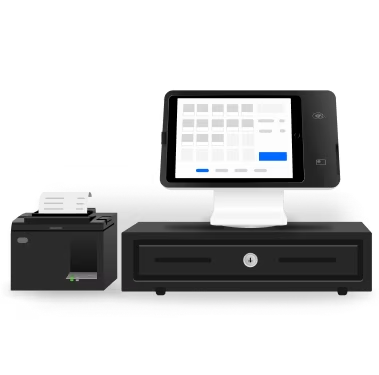
We use Square for all our shops, and they’re all set up exactly the same. So even if it’s been a while since I’ve been in one shop, I can jump on the till. I can find reports in the same place. I can do all the stuff I need to do.


How to find – and keep – great staff
How do you retain good staff?
Daniel:
It’s really challenging to retain good staff in hospitality these days, but I think it’s one of the most important things in keeping your business healthy and profitable. I think the best way to create opportunities for advancing staff is letting people grow into their positions. Almost all our managers, including myself, started lower and ended up going higher. I started from the very bottom as a junior trainee barista, and bought into the shop and yeah – the sky was kind of the limit. I think trusting that and investing in the fact people will grow into their positions more and more. I think a lot of the time, staff will surprise you if you get them doing a job that on paper they may not be ready for yet, rather than looking for the perfect employee out there that’s going to tick all your boxes from the beginning.
How can venue owners set a good example to their staff?
Daniel:
A good way to set the right example is by leading from the front. Getting your hands dirty, trying to be on the level of the staff really helps – like making sure you’re sometimes there opening early. Not just in showing them how to do the job, but being there with them.
What do you look for when you’re hiring staff?
Daniel:
The trait we look for above all is personality. Skills you can learn, but personality is the thing that really gets you longevity – making sure that someone can buy into what you’re doing. Someone who is going to listen to feedback – but at the same time speak up and contribute themselves with feedback. A big smile always helps.
Mike:
Hiring people who love people and have an eagerness to be hospitable, because that’s the industry we’re in – to be hospitable. In the interview, as long as they’re showing eagerness. I love being able to hire people that you can spend eight hours a day with. Being able to create a workplace culture that’s positive and fun every day.
Superfreak, Soulmate and Splash are proud Square sellers.
Square tools that help Daniel and Mike run multiple venues
To learn more about how these tools can help your business, please contact our team of experts.
More from In Service
Brand & Design
Finance
Catering
Restaurant
The Fresh Collective
The Fresh Collective is one Australia’s most prestigious hospitality groups, bringing cultural venues to life with cuisine and event catering that’s unforgettable. Their heads of marketing, catering and finance offer insights that can help any hospo business level up.

Brand & Design
Cuisine
Tech
Multi-venue
Restaurant
Prefecture 48
Prefecture 48 is a Japanese dining experience in the heart of Sydney with six venues under one roof. We hear from their leaders in branding, cuisine and tech to learn how restaurants can keep customers coming back – and how tech can boost efficiency.

Brand & Design
Tech
Tom Mark Henry
Tom Mark Henry is an award-winning design studio with offices in Sydney and Brisbane. They create inspiring spaces that optimise the function of restaurants. Director Cushla shares insights on how restaurants can work with interior designers to get the best results.

Real Square seller. This business was paid for their time by Square.
This content is for informational purposes only and does not constitute professional advice. For specific advice applicable to your business, please contact a professional.