



Table of contents
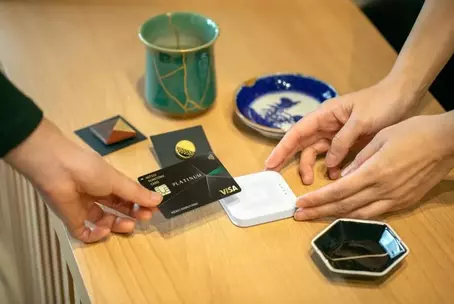
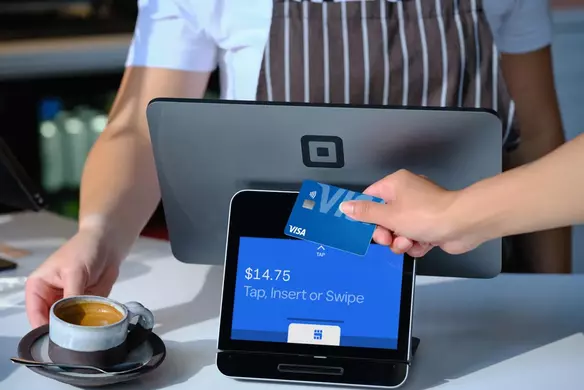
An EFT payment, or electronic funds transfer, is any form of electronic money transfer. However, there’s a common misconception that EFT only relates to how you pay for things. We’ve all tapped or inserted our card into a point-of-sale (POS) terminal, but defining the EFT meaning goes far beyond that. Let’s take a look at exactly what EFT is, the different types of payments, and how it all works.
What is an EFT Payment?
An EFT payment is a form of electronic payment that allows money to be processed between bank accounts directly. EFT payments are the most common way to transfer money and include credit card payments, online payments and automatic bill payments.
When making EFT payments, you’re essentially transferring money from one bank account to another. The accounts don’t need to be from the same bank or financial institution. Essentially, EFT means a fast, easy and very traceable way to transfer money. Even if you don’t have a physical receipt for money that you transfer electronically, there is always a digital record on your bank statement and held by your financial institution.

How do EFT payments work?
EFT payments require two parties to talk to each other electronically through a designated system. Wherever you have an electronic funds transfer, you have one source sending the money and another one receiving it. During this process, there is also a connection with the sender’s bank or financial institution to confirm availability of funds.
While banks process EFTs on behalf of customers, Payments Canada, the organization behind the country’s payment clearing and settlement infrastructure, provides the core payment systems that allow EFTs to happen. EFT payments are either cleared through the Automated Clearing Settlement System (ACSS), Canada’s retail batch payment system, or the Lynx system in the case of high-value wire transfers.
In action, EFT payments happen every day, in a variety of settings:
- A customer taps their Interac Debit card to purchase a coffee and a croissant at a coffee shop.
- A bar owner receives an invoice from their craft beer supplier and sends the payment via Interac e-Transfer.
- An eCommerce business pays its team every two weeks through direct deposit.
- Your restaurant’s electricity bill is automatically withdrawn from your account through a pre-authorized debit.
- A customer pulls out their smartphone and uses their mobile wallet to buy a pair of shoes.
- A shopper orders a couch online and pays for the purchase with Buy Now, Pay Later (BNPL).
- A nail salon owner sends the downpayment required to lease a second location via wire transfer.
Types of EFT payments
As we touched on earlier, the meaning of EFT doesn’t just refer to tapping your card while making a purchase. There are actually several forms of EFT payments out there, and you probably encounter them on a daily basis without really thinking about it.
1. Credit cards
Every time you use a credit card like Visa, Mastercard or American Express, you’re making an EFT payment. This includes using cards to buy products in a store, online or even over the phone. While the funds transferred might take a few days to clear, the EFT payment system automatically confirms that funds are available, essentially making the transfer/purchase valid instantly.
2. Interac Debit and other debit cards
Interac Debit is the leading debit payment method in Canada, and Interac Debit mobile contactless transactions are on the rise. Whether you use your debit card or smartphone to pay for a purchase, it’s an EFT payment. They are generally processed faster than credit card payments, and can also come with lower fees – for example, Square’s payment processing rate is 0.75% + 7c for a debit transaction and 2.5% for a credit card payment.
3. Interac e-Transfer
Online transfers like Interac e-Transfer have surpassed cheques based on volume for business payments, according to Payments Canada’s Canadian Payment Methods and Trends report. It’s fast and convenient, as the payments are nearly always instant.
4. ATMs
Using an ATM is a form of electronic funds transfer, even though you receive cash in your hand. This is because the ATM talks to your bank, confirming funds are available before disbursing the cash.
5. Wire transfers
Wire transfers are also electronic, even though the sender may provide cash over the counter at a bank or wire transfer facility. The funds are still transferred electronically so they are available to the recipient, who could be anywhere in the world.
4. Direct deposit/bank transfer
Electronic bank transfers can be used for a wide range of things. Most employers pay their staff using direct deposit, or you can sign up for direct deposit with the CRA to receive tax refunds. The process isn’t instant, though, and usually takes 1-3 business days for funds to transfer. On the flip side, bank transfers like pre-authorized debits (PADs) are often used to pay recurring bills, such as utility bills or insurance.
5. Online payment systems
You can use credit and debit cards to purchase products online, but there are other methods as well, like through a mobile wallet such as Apple Pay or a buy now, pay later (BNPL) service like Afterpay. Essentially, online payment systems allow for transactions to take place over a secure connection. This might be for online purchases or even paying invoices online. As a business, tools like Square Online and Square Invoices let you accept various EFT transactions and get paid as soon as the next business day.
EFT payment processing time
The time it takes for funds to transfer from one account to another varies greatly depending on several factors, such as the type of payment and the financial institutions involved. Usually, most transfers occur within 1-3 business days. If you use a debit card to buy something, the funds instantly disappear from your account but may reach the merchant on the same or next business day. With credit cards, transactions can take a couple of days to be posted on your account and deposited into the merchant’s bank account.
Using Interac e-Transfer is a faster alternative, as funds are transferred instantly (though, on rare occasions, it can take up to 30 minutes to complete a transfer depending on the bank). Payments Canada is also in the process of developing the Real-Time Rail, Canada’s new real-time exchange and clearing and settlement payment system, which will allow payments to be processed within seconds, 24/7.
EFT benefits for your business
As you can see, the technology around EFT and what they mean is always evolving. But what is EFT payment’s main benefit? Well, there are a few.
- Speed of transactions: Customers can instantly pay for items online, in-store or by phone.
- Security: Businesses can keep less cash on premises, and carry less cash when doing your business banking.
- Record keeping: There’s a record of all EFT payments. Plus, when using a modern POS system, all sales are instantly recorded for accounting purposes.
- Convenience for customers: It’s safe, easy and convenient for customers to make EFT payments.
- More revenue: The more payment options you offer, the more chance you have of increasing sales.
- Accuracy: You can’t be accidentally (or deliberately) short-changed when paying electronically.

EFT payment FAQs
What is the difference between ACH transfers and EFT?
An Automated Clearing House (ACH) transfer is a type of EFT payment. It’s an electronic transfer between two financial institutions, and it’s a U.S.-based system and term — essentially the U.S. equivalent of Payment Canada’s Automated Clearing Settlement System (ACSS). While ACH transfers fall under the EFT umbrella, the EFT meaning refers to several types of electronic payments between bank accounts, from direct deposits to Interac e-Transfers.
What is the difference between an EFT and a wire transfer?
An EFT means a range of electronic payments between financial institutions, while a wire transfer is just one type of EFT.
How long do EFT payments take?
On average, EFT payments in Canada take 1-3 business days to process, but they can sometimes be instant, like in the case of Interac e-Transfers, or take up to four days. Payment types, financial institutions, bank cut-off times and public holidays can all affect EFT processing time.
Are EFT transfers safe?
EFT transfers are some of the most secure, since they involve several security layers and regulations. Banks and payment service providers (PSPs) like Square use mechanisms like end-to-end encryption to protect payment data, as well as fraud prevention measures such as transaction monitoring.
There are also strict regulations involved, like the Canadian Payments Act and Bank Act, which govern Payments Canada and banks to establish safe systems and consumer protections; FINTRAC, which combats money laundering and terrorist financing; and PCI DSS compliance standards that apply to debit and credit transactions and protect cardholder information.
Square takes care of PCI DSS compliance for businesses and follows best practices to safeguard payment data, which can offer you peace of mind as a business owner.